
 Membership
 Network
 Regional Sites & Affiliates


 Events
 Participate
 Resources

 Training
 Credentials
 Government


 Content Channels
 Tools
Tools


 Business Overview





Disrupt the Disruptions
Prevent downtime with AI-driven predictive maintenance
Facility disruptions are rarely the result of sudden, isolated events. In most cases, failures develop gradually through small electrical or mechanical changes that go unnoticed until systems trip, equipment is damaged or operations are forced offline. For facility managers, the challenge is not a lack of systems or data. Instead, it is understanding what is happening early enough to act.
Predictive maintenance supported by artificial intelligence and high-resolution electrical monitoring provides a way to move beyond reactive maintenance and educated guesswork. By continuously observing how electrical and mechanical systems behave in operating conditions, FM teams can detect early signs of degradation, reduce unplanned downtime and improve long-term asset reliability.
Experience across data centers, manufacturing environments and critical infrastructure shows that reliability is built by understanding change over time, not by responding after something breaks.
Why failures almost always have a history
Major outages are often described as unexpected, but most have a long technical backstory. Electrical insulation degrades slowly. Connections loosen. Contactors wear. Mechanical components fall out of alignment. Harmonics increase. Voltage stability changes as loads evolve.
These issues do not appear all at once. They accumulate. Eventually, a system reaches a tipping point when a breaker trips, a motor fails or protective equipment activates. When this happens in a critical facility, the impact often extends beyond the original asset and affects connected systems.
High-profile outages across transportation, manufacturing and data center environments consistently show the same pattern. The final event is visible. The warning signs were present much earlier but were either not captured or not understood.
 Common electrical & mechanical drivers of disruption
Across facilities of all sizes and sectors, certain failure modes appear repeatedly.
On the electrical side, problems often stem from overheating, phase imbalance, insulation breakdown, contactor degradation and power quality disturbances. These issues may originate upstream from the utility or internally as equipment ages and loads change.
Mechanical and electromechanical systems experience their own gradual forms of degradation. Bearings wear. Belts stretch. Gears wear unevenly. Alignment shifts. These mechanical changes directly affect how equipment draws current and responds to voltage, even when the equipment still appears to be operating normally.
In high-density environments such as data centers, rapid load changes and large inrush currents add another layer of risk. Short electrical events that last only milliseconds can still be enough to reset servers, disrupt cooling systems or trip sensitive electronics.
Why traditional monitoring misses critical clues
Most organizations rely on tools such as building management systems, electrical power monitoring systems and data center infrastructure management platforms. These systems are valuable, but they are often limited to average or periodic measurements.
Root mean square voltage and current values provide a general snapshot of system performance. They do not show what happens during short-duration events like switching transients, inrush currents or brief voltage disturbances. These events may never appear in summary data, yet they can have real operational consequences.
This is why FM teams often find themselves with large volumes of data but little clarity. The information exists, but the resolution is not high enough to explain why equipment is failing or why intermittent problems persist.
 Seeing what can't be seen
Continuous waveform capture addresses this blind spot by recording voltage and current waveforms at high resolution across all operating conditions. Instead of taking periodic samples, the system observes electrical behavior continuously.
This makes it possible to see both long-term trends and shorter events. A voltage variation that lasts only a few cycles can still have downstream effects, especially in environments with sensitive or heavily loaded equipment.
When waveforms are captured continuously, early warning patterns become visible. For example, small voltage variations early in the day may point to a contactor beginning to degrade. Later, that same contactor may begin losing a phase. If this condition persists, a motor may be forced into single phasing, which can destroy it under load.
Catching the issue early allows a simple component replacement instead of a major equipment failure and extended downtime.
 Electrical signature analysis & mechanical insight
Continuous waveforms capture also enables electrical signature analysis, which connects electrical behavior to mechanical condition.
The principle is straightforward. Voltage reflects the power source. Current reflects how loads respond. If voltage is stable but current behavior changes, the issue is usually on the load side.
By analyzing current waveforms and converting them into harmonic spectra, it becomes possible to identify mechanical degradation electrically. Each mechanical component introduces specific frequencies into the current signal. Tracking these frequencies over time reveals how components are deteriorating.
A loosening fan belt, for example, produces a distinct harmonic tied to the motor’s operating speed. As the belt degrades, the amplitude of the harmonic increases. Tracking that change over time allows maintenance teams to intervene early, often with minimal effort and cost.
This approach is especially valuable for equipment that is difficult or unsafe to access. Staff can monitor from an electrical room rather than requiring frequent physical inspections in hard-to-reach locations.
Turning data into meaningful insight
Collecting data alone does not prevent failures. Many organizations struggle with determining whether they are capturing the right data or interpreting it correctly.
AI helps bridge this gap by identifying patterns that indicate risk. Machine learning models establish normal operating behavior for each asset and detect deviations that matter. Unlike fixed thresholds, these models adapt to changing loads and operating conditions.
Context is critical. A single anomaly may not require action, but a series of small changes over time often requires adjustments or repairs. AI excels at identifying these trends and separating meaningful signals from background noise.
This allows FM teams to move away from guess-based maintenance decisions. Instead of reacting after a failure, teams receive early, actionable insight into what is changing and why it matters.
Extending equipment life & controlling costs
Early detection directly affects equipment longevity and maintenance costs. Addressing problems while they are still minor typically requires less labor, fewer parts and less downtime.
A failing contactor may cost a few hundred dollars and minutes to replace. If that same contactor causes a motor to single phase, the result may be to replace a motor, multiplying monetary costs and equipment or facility downtime.
Predictive maintenance also improves planning. Repairs can be scheduled during planned outages. Emergency spending is reduced. Capital replacement can often be deferred as asset life is extended.
Over time, organizations that adopt predictive strategies see more stable maintenance budgets and fewer operational surprises.
Safety, comfort & operational confidence
Reliability is closely tied to safety and occupant comfort. Electrical faults can introduce fire and shock hazards. Mechanical failures can compromise cooling, ventilation and air quality.
Continuous monitoring helps identify hazardous conditions before they become immediate risks. It also supports compliance efforts by providing documented evidence of ongoing oversight and proactive risk management.
In regulated or mission-critical environments, this level of visibility is essential for maintaining trust and operational confidence.
Preparing for workforce & infrastructure changes
The face of FMs is changing. Many experienced technicians are retiring, while new equipment continues to increase in complexity. At the same time, facilities are becoming more distributed and are often located in areas where skilled labor is limited.
AI-driven predictive maintenance helps address these challenges by embedding expertise into monitoring systems. Software can recognize conditions that once required years of hands-on experience to identify.
This is particularly valuable for remote or edge facilities. Equipment can be monitored continuously, and on-site intervention can be targeted only when necessary.
Moving beyond best-guess maintenance
Traditional maintenance strategies often rely on partial information and experience alone. While experience remains valuable, it is no longer enough in environments where milliseconds matter and systems are tightly interconnected.
High-resolution monitoring combined with intelligent analysis allows FM teams to move beyond best-guess maintenance. Decisions are based on measurable trends, clear diagnostics and historical context.
The result is fewer disruptions, longer asset life and a more resilient facility.
Building a predictive maintenance strategy
Effective implementation begins by identifying critical assets whose failure would have the greatest operational or safety impact. Starting with these systems allows facilities to demonstrate value quickly.
Predictive insights should complement existing systems, not replace them. When integrated effectively, they enhance the value of building management, power monitoring and infrastructure management platforms.
Finally, FM teams should establish clear processes for responding to alerts, reviewing trends and refining maintenance strategies. Predictive maintenance improves over time as more data is collected and understood.
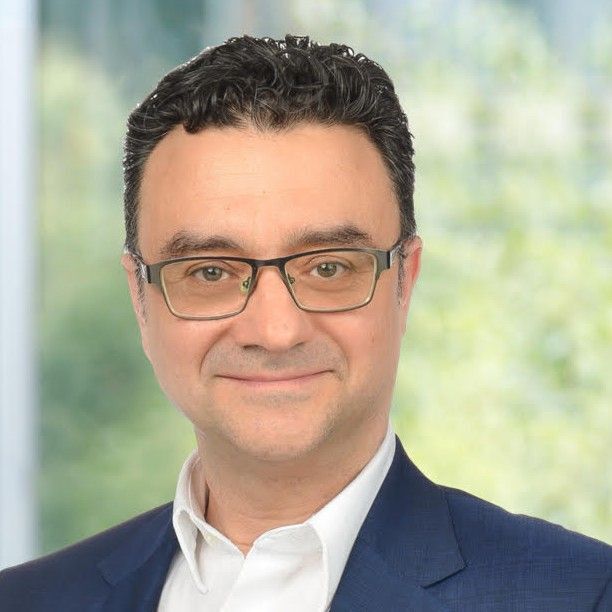
Dr. Denis Kouroussis is a Ph.D. computer engineer and serial entrepreneur who co-founded Atom Power, creator of the first UL-listed solid-state circuit breaker. Now CEO of Volta Insite, he leads development of advanced electrical signature Analysis predictive maintenance technology to detect issues early, prevent downtime and transform power system reliability.
Read more on Facility Technology & Data Management and Facility Operations or related topics Project Management and Asset Management
Explore All FMJ TopicsRelated articles
-
Artificial Intelligence in FM
The stakeholder’s perspectiveBy Dr. Jake Smithwick & Dr. Kenneth Sullivan & Nneka Ubi05.01.2024 -

Don’t Drop the Ball
How a CMMS can make or break an FM organization’s successBy Michael Carmean09.17.2024 -

Beware of Growing Cyberthreats
Why it’s time for stronger facility cybersecurityBy Andrew Harris & Eric Headington10.30.2024
