 Membership
 Network
 Regional Sites & Affiliates


 Events
 Participate
 Resources

 Training
 Credentials
 Government


 Content Channels
 Tools
Tools


 Business Overview





Existing Building Commissioning
A missing opportunity for FM
Buildings gradually lose performance throughout their operational life, even when they are properly maintained.
In many facilities, different service providers maintain different building systems. One contractor may maintain the chillers, another the pumps, and another the air handling units. Although each system may be maintained properly, limited coordination and data sharing can gradually reduce overall building performance. Existing building commissioning (EBCx) evaluates the building as one integrated system rather than a collection of individual equipment.
EBCx provides a holistic review of building performance rather than focusing on individual systems and a structured process to identify performance drift, improve system efficiency and restore the current facility requirements (CFR).
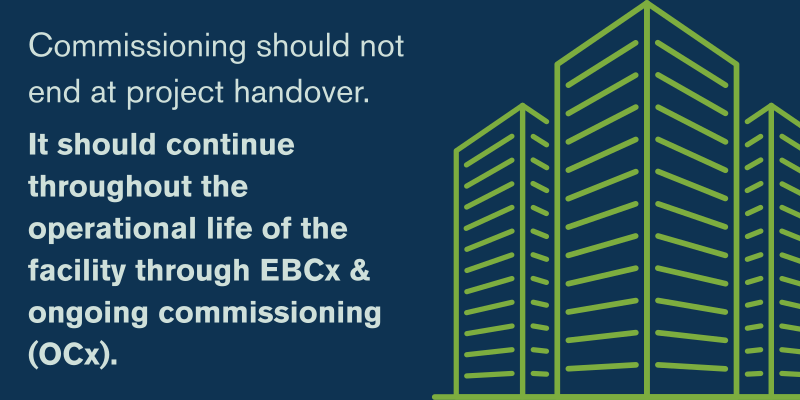
The importance of EBCx is also supported by extensive industry research. A study by Lawrence Berkeley National Laboratory found that EBCx projects achieved median whole-building energy savings of approximately 16 percent while also improving overall building performance.
Buildings change over time
Buildings continue to evolve after handover. Occupancy changes, tenant modifications, software updates, equipment replacements and revised operating schedules gradually move systems away from the original design intent. Temporary adjustments often become permanent without a formal technical review. EBCx helps identify these changes, understand their impact and restore system performance before they affect reliability, energy efficiency or occupant comfort.
When should a facility consider EBCx? Typical indicators include increasing energy consumption, frequent occupant complaints, indoor environmental quality issues, indoor air quality concerns, difficulty maintaining temperature or humidity, recurring equipment failures, safety issues, major building modifications, changes to building management system (BMS) control strategies, and increasing operating costs without a clear explanation. These indicators do not always mean equipment has failed. They often indicate that the building is no longer performing as originally intended.
Maintenance is not always enough
Routine maintenance is essential, but it cannot answer every performance question. Preventive maintenance verifies that equipment is operating correctly. EBCx verifies that the entire building is performing as intended. Both activities are essential and complement each other. One focuses on equipment reliability, while the other focuses on overall building performance.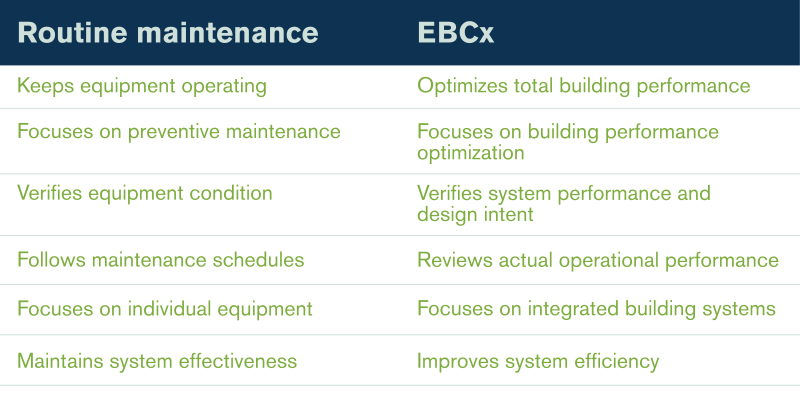
EBCx helps answer the following performance questions:
-
Is the HVAC system operating as originally designed?
-
Is the BMS controlling equipment correctly?
-
Are sensors properly calibrated?
-
Are leaking control valves causing low Delta-T?
-
Have operating schedules changed over time?
-
Is the building consuming more energy than necessary?
Preventive maintenance keeps a system effective.
EBCx keeps the building performing as intended.
Together, they provide the foundation for safe, efficient and sustainable facility management.
EBCx is a structured process
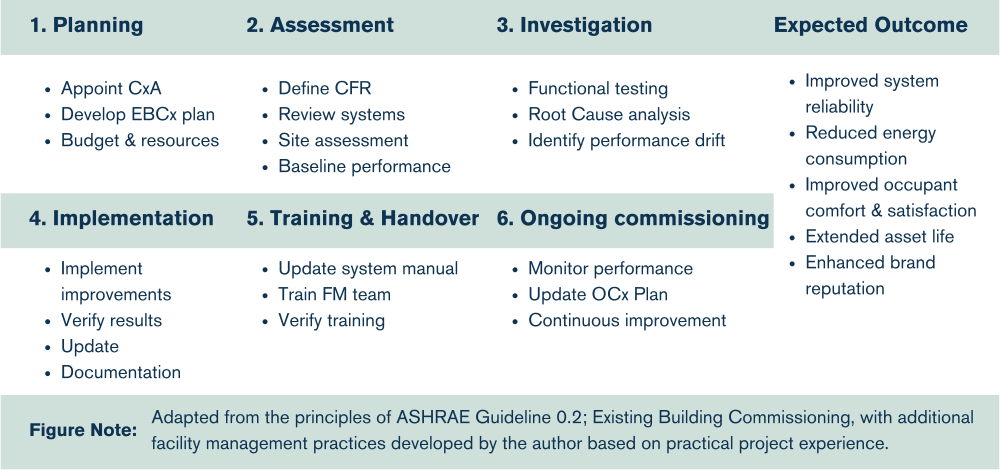
EBCx follows a structured process rather than a one-time inspection. The following process chart is adapted from the principles of ASHRAE Guideline 0.2 with additional FM practices.
Each stage of the EBCx process has a clear objective.
-
The planning phase establishes the project scope, priorities, resources and CFR. For organizations with multiple facilities, priorities should be based on business criticality, operational risk, energy performance and available resources.
-
The assessment phase develops the building performance baseline by reviewing energy consumption, maintenance records, system trends, occupant feedback and existing documentation.
-
The investigation phase identifies performance drift through functional testing, trend analysis and root cause analysis while evaluating testing risks. Preventive maintenance records provide valuable information on equipment condition, maintenance history and operational trends. This information supports trend analysis and helps identify performance drift during the investigation phase.
-
The implementation phase focuses on correcting identified issues, verifying improvements, updating documentation and transferring knowledge to the FM team. OCx continuously monitors performance and supports continuous improvement. Owners should also allocate an annual operational budget for ongoing commissioning activities.
 How to start an EBCx program
-
Review current building performance.
-
Collect operating and energy data.
-
Identify performance drift.
-
Carry out functional assessments.
-
Implement corrective actions.
-
Verify improvements.
-
Continue monitoring through ongoing commissioning.
Benefits for FM
EBCx improves reliability by reducing unexpected failures and supporting business continuity. It lowers operating costs, reduces energy consumption, improves occupant comfort, extends asset life and supports sustainability objectives. EBCx is most successful when owners, FM teams, commissioning professionals, service providers and occupants work together throughout the building life cycle.
The human factor
Technology alone cannot maintain building performance. People remain the most important asset in facility management. EBCx should also evaluate the effectiveness of handover training. Refresher training and additional coaching may be required as systems evolve or new personnel join the facility management team. A knowledgeable team is essential for maintaining the owner's original design intent throughout the building life cycle.
The commissioning authority (CxA) can assess the FM team’s knowledge, confidence and operational capability during the commissioning process. Based on this assessment, additional coaching can be provided, and future commissioning champions can be identified to support OCx and continuous performance improvement. This approach also supports operational efficiency, reduces unnecessary expenditure and helps the organization achieve its long-term financial objectives.
Practical Example 1: Chilled water plantAlthough the chilled water plant appeared to operate normally, energy consumption remained unusually high. Maintenance records showed no major equipment faults. However, the EBCx assessment identified leaking control valves and incorrect control sequences that created a low Delta-T condition. Correcting these issues restored plant efficiency without major capital investment, demonstrating the value of performance-based assessment. Key lesson: Maintenance kept the system operating. EBCx restored its efficiency. Practical Example 2: Restaurant lightingThe lighting control system was operating correctly, and no faults were reported. However, the original design intent had gradually changed because the beam angles and spotlight positions were not restored during routine maintenance. EBCx helped identify the difference between equipment operation and system performance. This reinforced the importance of preserving commissioning records and providing periodic refresher training for the FM team. Well-maintained aesthetics enhance the occupant experience and strengthen the property's brand reputation. Key lesson: Performance drift is not always caused by equipment failure. Small operational changes can also reduce building performance. |
Conclusion
EBCx should not be viewed as another maintenance activity. It is a practical facility management strategy that supports long-term building performance.
Routine maintenance and EBCx complement each other. One keeps systems operating, while the other ensures they continue to perform efficiently throughout the building life cycle.
Research has shown that EBCx commonly delivers energy savings between 10 percent and 30 percent, depending on building type, system condition and operational practices. These findings demonstrate that EBCx supports both operational excellence and long-term asset performance.
Preventive maintenance keeps a system effective. EBCx keeps the building performing as intended.Together, they provide the foundation for safe, efficient and sustainable FM.

Pardeep Anand, BCxP, is a Commissioning Manager with more than 20 years of experience in building commissioning, electrical systems, testing and commissioning, and facility management across airports, hospitality, transportation, and mixed-use developments. He is an ASHRAE-certified Building Commissioning Professional (BCxP) and has led commissioning activities on large international projects. His professional interests include existing building commissioning, energy performance, emergency preparedness and improving long-term building performance. He enjoys sharing practical lessons learned to help bridge the gap between commissioning and facility management.
References
ASHRAE Guideline 0 – The Commissioning Process
ASHRAE Guideline 0.2 – Existing Building Commissioning
ASHRAE Standard 202 – Commissioning Process for New Buildings and New Systems
Lawrence Berkeley National Laboratory (LBNL) – Building Commissioning Research
U.S. Department of Energy – Building Commissioning Best Practices
Top image via Getty Images.
Read more on Facility Operations , Facility Technology & Data Management and Sustainability or related topics Building Commissioning , Sustainable Facility and Facility Technology
Explore All FMJ Topics