 Membership
 Network
 Regional Sites & Affiliates


 Events
 Participate
 Resources

 Training
 Credentials
 Government


 Content Channels
 Tools
Tools


 Business Overview





Flooring
Key types & maintenance considerations
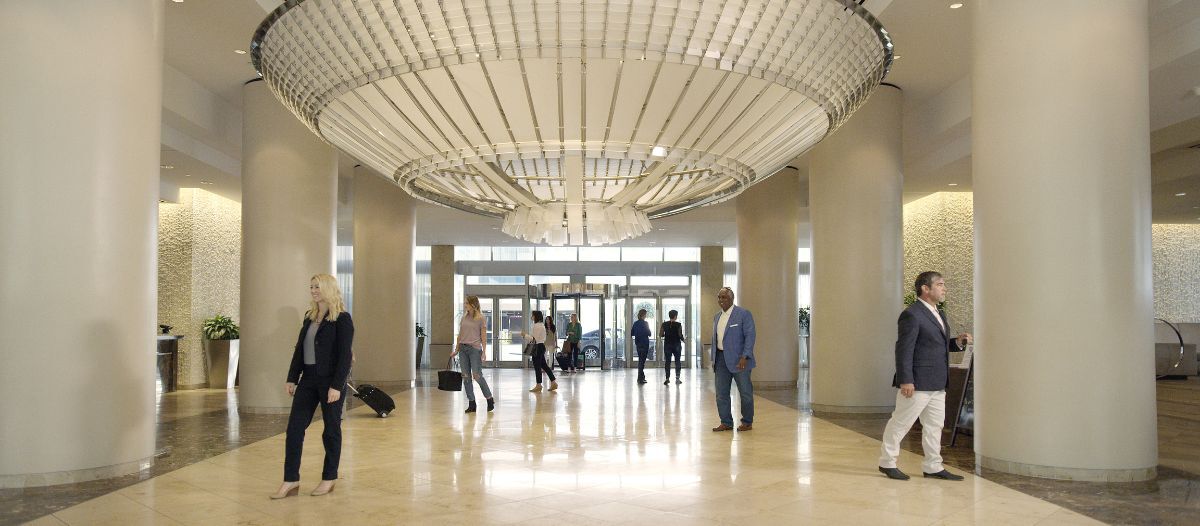
When it comes to floor surfaces, material selection and cleaning methodologies have gone through many different trends over the years. No matter which new technologies are on the horizon, one truth always remains: quality matters. Nowhere is this truer than in the flooring chosen for a facility. No matter the type of facility, quality materials and quality maintenance contribute to a healthy bottom line and a healthy facility.
Stone, terrazzo and carpet are consistently three of the most popular surfaces found in facilities. Chosen for their durability and good looks, there are key maintenance fundamentals and best practices every facility manager should know when selecting and caring for these materials.
Stone
Stone will never go out of style, and if properly maintained this surface will last the life of the facility. From marble and granite to travertine and limestone, stone has been used for centuries. Not limited to flooring, stone is used for architectural finishes, on vertical and horizontal surfaces alike, due to its attractive appearance and durability.
Quarries around the world extract these stunning materials from the earth using sophisticated technology and machinery to provide flawless cuts and expert polishing. The selection of stone currently available is impressive because of innovative quarry technology.
Different types of stone may look beautiful side by side or throughout contiguous areas, but stone selection should not be made by aesthetics alone. Stone surfaces, whether vertical or horizontal, interior or exterior, require different care based on material, traffic patterns and usage.
For example, it is not a good idea to pair marble and granite or marble and terrazzo together. Variations of density and hardness, and incompatible maintenance requirements, could cause harm to neighboring stones. Choose stone from the same family or stone with similar maintenance needs, such as marble and limestone, and combine quality installation with a tailored routine surface care plan. This helps ensure the stone will last for centuries.
There is a special safety consideration with stone. After the January 2017 effective date of the Occupational Safety and Health Administration (OSHA) 1910.21 subpart D, Walking-Working Surfaces and Personal Protective Equipment (Fall Protection Systems), more facilities began choosing textured stone surfaces and finishes.
The updated law is designed to “help prevent and reduce workplace slips, trips, and falls, as well as other injuries and fatalities associated with walking-working surface hazards.” Under 1920.21, OSHA defines general industry “walking-working surfaces” as floors, stairways, steps and aisles, among other horizontal, vertical and inclined or angled surfaces.
Textured granite is one of the most popular textured stone surfaces found in commercial facilities today. Textured floors provide a desired level of traction, but many facility managers and designers don’t realize the texture adds to cleaning requirements and appearance headaches and there could be potential safety issues.
Textured floors hold more dirt than smooth floors because there are more nooks and crevices for dirt to hide. Once cleaned, textured floors are harder keep clean for an extended amount of time. Appearance is important, but even more so is safety. When cleaning chemicals are misused or applied incorrectly to textured floors, detergent, grease, oil and dirt can build up and bond to the surface. The industry term for bonded layers of buildup is plasticization. Once plasticization has occurred, cleaning materials can continue to bond to the surface, making it incredibly hard to clean, and when the floor gets wet, it becomes slippery – the exact opposite of the purpose of a textured floor.
Thankfully, a carefully planned cleaning and maintenance routine can help solve this problem — or prevent it from becoming a problem to begin with. Stone floors, whether textured or smooth, are exceptional architectural finishes for just about all types of facilities. Choosing high-quality materials is the first step in creating beautifully designed spaces. Have an expert surface care consultant provide a long-term maintenance strategy, cost analysis and surface recommendations before the flooring investment is made. A qualified consultant can provide a field assessment and offer recommendations for existing floors that may involve restoration and an ongoing cleaning and maintenance plan.
Terrazzo
Terrazzo originates from Italian craftsmen who learned to mix marble scraps, discarded material and mortar to make new floors. This surface has come in and out of popularity over the years, but one thing is certain: No one considers terrazzo to be a short-term commitment. Institutional facilities like schools, hospitals and government buildings are known for having terrazzo floors. However, the materials fell out of favor in other types of facilities decades ago because it was difficult to install and maintain.
Times have changed. Maintenance technologies and advancements in materials have contributed to terrazzo’s growing popularity.
Terrazzo has gone from being a cementitious material to today’s modern epoxy. It can now be installed at 3/8 inches (approximately 9.5 mm) or less. This helps the material blend with tile and other neighboring surfaces and makes construction much easier. The epoxies can be colored and formed into countless appearances much more efficiently, making it an option for company branding opportunities.
In addition to traditional marble scraps, companies have chosen to personalize their floor by adding recycled glass, branded colors and logos, stainless steel and even computer chips.
The resurgence of terrazzo in commercial facilities, specifically single-tenant buildings, is followed by an evolved maintenance strategy. New terrazzo does not yellow and is not as hard to maintain as it was in the past, but there are new challenges to be mindful of.
Muted terrazzo floors are trending, but muted floors don’t always function as the design was envisioned. Muted coatings are difficult to install because they are thin by nature and they do not conceal imperfections. For example, every scratch, scuff mark and piece of dirt is visible under cross lighting. As layers of coatings are applied, the floor will start to lose a muted appearance and often looks dirty and requires more care.
Terrazzo is often installed in exterior applications. Because of its pure, flat nature, when it gets wet from rain, spills or sprinklers, the surface becomes slick. Options to add traction to terrazzo are possible, but not ideal. Similar to other textured floors, textured terrazzo can be difficult to clean and often appears dirty. Knowing where to install and how to care for these floors are key components to their success.
When caring for any type of terrazzo, there are many factors to take into consideration – environment, traffic patterns, usage and proper tools to name a few. There is a fine line between grinding, honing and polishing. While they may sound like the same process, there are important differences. It is common to see terrazzo cut through to the subfloor in high traffic areas due to poor “over” maintenance using improper tools and methods. The result is usually patching or replacing the damaged area. Patching and replacing terrazzo is never a good look because the color and finish rarely match and are highly visible.
Although most maintenance equipment and supplies are available to the public, a specialized craftsman understands the physics of the job and how to combine the right tools, frequency and methods for the best possible result. Do some due diligence when hiring a consultant or maintenance provider. Interview, check references and have them perform a test area to demonstrate their capabilities and expertise.
Carpet
Nylon and wool, cut pile and loop, tiles and rolls — when it comes to carpet, there are endless possibilities. Unlike stone and terrazzo surfaces, almost all facilities have carpet in at least one space. Unlike other surfaces, carpet is rarely considered a long-term commitment. However, with proper care a facility’s carpet can stay on the floor, and out of landfills, well beyond the scheduled replacement date. The environment and the budget will be thankful for that.
Over the past few decades there has been a steady shift away from the science of carpet cleaning, and prospective maintenance partners are now rarely required to demonstrate their capabilities before they are hired. Specifically, the trend has moved away from side-by-side live demo comparisons, which validate the credibility of providers and examine the services competing companies are promising for the proposed cost.
When it comes to production rates, for example, if a company is promising 10,000 square feet (approximately 929 square meters) of carpet cleaning per hour, then run. Yes, that company may be able to perform the task at that rate of speed, but the soil will not be properly evacuated from those spaces. The result will be poor appearance and fiber damage over time.
A process called encapsulation has become popular in recent years. Encapsulation has a place in the carpet cleaning matrix, but it is a value-engineered process that mimics deep cleaning, but it is not certified as a deep cleaning method. When used correctly, it is an acceptable option for interim cleaning between CRI-certified deep wet or dry extraction methods.
Used correctly is the key term. The last critical step when using encapsulation is thorough vacuuming. The fundamentals of proper vacuuming are slipping away in the industry, and some cleaning companies are even eliminating vacuuming all together for cost containment.
Proper vacuuming after encapsulation is a critical step because encapsulation has soil release finishes. Vacuuming at an appropriate rate of speed using a commercial-grade dual-motor vacuum, with one motor strictly devoted to the motor and the other to the beater bar, and triple filtration, will yield the best results. If the soil and product residue are not immediately removed, they will bond to the carpet and will mute the fiber, among other damaging side effects, over time.
Think of carpet fibers as a clear plexiglass tube filled with dye sites and the soil found in carpet as sand paper. Once plexiglass has sand paper applied to it for a few passes, the finish is scratched and damaged, sometimes beyond repair, and has a cloudy or muted appearance preventing you from seeing the color within. The same happens to carpet when dirt, sand and other abrasive particulates are not evacuated properly after encapsulation or on a general routine schedule. Colors become muted and visible traffic patterns appear, possibly past the point of restoration, and costly replacement is necessary.
A best practice when evaluating carpet care providers, chemistry and methodologies is to return to the fundamentals of demos and quality control checks. Filter tests in a three-foot by three-foot (approximately one-meter by one-meter) area. This is one of the easiest ways to check on the status of soil removal. Also, work with a company that has an online data management portal with real-time before and after photos, work orders and other essential reports. This will help tremendously for performance evaluations.
New technologies
One major change coming to the floor care industry is robotics. This technology will become a standard part of a facility’s hard and soft surface care in the next five years. The combination of robotics, chemistry and maintenance expertise will ensure consistent surface appearance and help control costs. In addition, these tools will provide more performance data than available today.
Dos & don’ts of floor careDON’T
DO
|

Dan Abitol is SOLID Surface Care, Inc. director of operations and has experience within the hospitality industry instilled an unwavering commitment to customer service and the ability to coach his operations team to achieve greatness beyond their expectations. At SOLID, He has more than two decades of soft and hard surface experience and continues to lead the industry in selecting world-class chemistries, equipment and designing processes that continually delight clients.
Phil Calabritto, SOLID Surface Care, Inc. Global Technical Director, is a third-generation craftsman with over four decades of experience. His passion for his craft and mentoring the next generation of hard surface care experts is contagious. He is driven to keep the art of restoration alive while being a pioneer in advancing hard surface maintenance technology and methodologies. As a contributor to safety and surface care initiatives at facilities organizations, Calabritto continues to be an influential leader at SOLID and in the industry.
References
Top image provided by SOLID Surface Care, Inc.
Read more on Facility Operations or related topics Operations and Maintenance Planning
Explore All FMJ Topics