 Membership
 Network
 Regional Sites & Affiliates


 Events
 Participate
 Resources
 Training
 Credentials
 Government


 Content Channels
 Tools
Tools


 Business Overview



From Corporate to Community
How locker & cabinet locks are changing the built environment
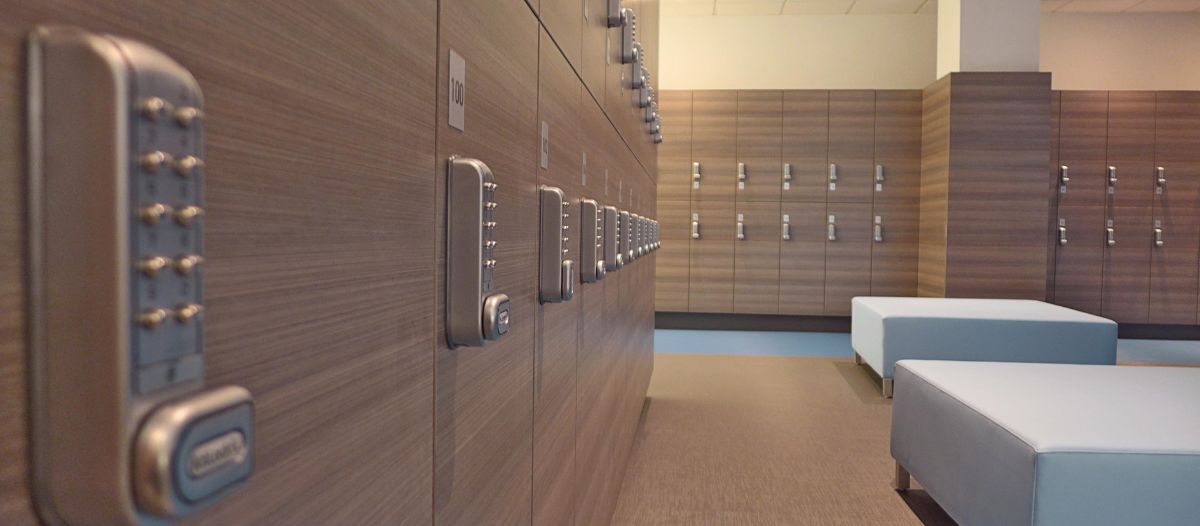
The built environment is being shaped by several emerging trends. Facility managers must create spaces that draw people to them, especially now that large sections of the workforce are remote and hybrid workers. They must also meet sustainable standards and targets, reducing emissions and material waste where possible. At the same time, as more people get used to sharing commodities, different types of buildings must keep pace, becoming more flexible to meet the demands of the shared-use economy.
Yet, at a time when almost every square foot of space is being reimagined, access control is playing an essential role. From office pods to community facilities, controlling access has become more than just managing entry points. It is now a central design consideration when creating spaces that are flexible and suitable for today’s modern, self-service and multifunctional needs.
 Lockers in destinations & destination offices
Nowhere is the need for smart, purposeful access control more prominent than in the rise of amenity-rich offices. So impressive and attractive are these spaces that they have become known as destination offices, built with employee experience as a guiding principle. They give staff a real reason to forgo the benefits of working from home by creating environments that employees want to commute to. And that is no easy task when organizations factor in the average 30-minute commute time that office workers get back at the bookends of their days. These offices also provide attractive meeting locations to impress clients, partners and collaborators.
Locker locks are crucial to the design of these environments, enabling the truly flexible and shareable features and functions that employees want. Fitness centers, for example, require locker systems that accommodate people’s varying schedules and even allow employees to reserve spaces during peak morning and lunch hours. Wellness rooms and meditation spaces benefit from cabinet storage for yoga mats, blankets and personal items. These places could use keyed locks, but for the potentially large numbers of staff regularly using them, managing keys becomes a time-draining headache that can also be expensive if any are lost.
Lockers like this also allow for multipurpose pick-up points that serve several needs, like package and food deliveries – something that was not common, but in the last three years has dramatically increased.
As well as offices, other traditional destinations are turning to locker solutions to cater to people’s needs while making their spaces more attractive. One of the biggest applications with growing popularity is storage lockers for events. These types of lockers are now showing up in concerts, festivals and sports environments to let people safely store their belongings while enjoying themselves. These venues have recognized that the traditional coat-check model does not scale very effectively: venue operators need staff to have a coat check for stadiums full of people, for example. But they are also aware that people need places to safely store their belongings.
Applications like this could prove more than just difficult to manage when using keys – it could become a logistical nightmare. But using coded locks capable of granting unique time-sensitive access to different users via email or SMS alleviates that burden, letting locker operators and FMs focus on other tasks than overseeing lockers. Furthermore, time-sensitive codes shared via SMS create an effortless, frictionless user experience. In turn, this helps keep people moving and helps larger venues improve people’s experience.
Making retrofit & repurposing easier
Appearing in tandem with the rise of destination spaces is a mounting demand for sustainability across the built environment. This is one of the highest-emitting sectors, due to the energy used for heating and cooling buildings, and because of the emissions produced during construction and the manufacturing of materials.
Emissions, materials and energy consumption are now often front of mind when creating spaces.
Against this backdrop, and with decades-low occupancy rates for office buildings, it is unsurprising that many commercial spaces are being refitted, retrofitted and reused. According to the U.S. Green Building Council’s report, Driving Action on Embodied Carbon in Buildings, up to 6 percent of total emissions come from the embodied carbon in buildings. Research quoted in the report shows that 75 percent of those emissions can be saved through reusing rather than building new.
Modern access-control solutions are increasingly retrofit-friendly, being modular, wireless and incredibly power-efficient. For example, rather than replacing entire locker units or even sections, many lockers can be easily retrofitted with modern locker locks, preventing waste while upgrading the lockers’ functionality.
For large commercial buildings, reusing materials can add up. It can reduce the demand for virgin materials and the energy-intensive processes associated with their extraction, manufacturing and transportation. This also makes the embodied carbon – the emissions that went into the materials and construction process to make a product – of any retrofitted lockers drastically lower.
The imperative to choose to retrofit lockers compared to buying new ones might not be so strong for some buildings or FMs who are not concerned with emissions. But the ease of installation, combined with the lower cost, should be good reasons, too.
Installation timelines are dramatically shorter for retrofitting lockers compared to a completely new locker bank. Upgrades to existing lockers can often be completed in a matter of hours rather than the days or weeks required for full replacement. Though this may be less of a concern for spaces that are already closed while they are being refurbished, other facilities must stay open during retrofits. This type of minimal downtime is crucial for those facilities that cannot afford extended closures or disruptions to operations.
Compatibility considerations are equally important. Modern retrofit-friendly lock systems are designed to work with virtually any existing locker infrastructure, regardless of manufacturer or age. If an organization chooses the right locker locks, then there is little need to match obscure specs or worry about specialist or proprietary mounting systems. The locks simply replace the old mechanical components while the structural lockers continue serving their purpose. For building owners and FMs juggling multiple priorities and limited budgets, this flexibility turns locker modernization from a major investment into a manageable upgrade – saving money and landfill in the process.
Helping to enhance shared-use applications at third places
Over the years, due to a multitude of overlapping factors, there has been a decline in the use of spaces that are neither work nor home. These third places are important for enabling people to live full, flourishing lives. And, as many have discovered with the growing popularity of work-from-home in the last half-decade, they provide an environment to relax, destress and socialize, free from home or work obligations.
Such environments can be enhanced with lockers in several ways, helping to make them more popular through better features and facilities. For example, makerspaces and workshops are a form of third place that allow community members to work on multiday or week-long projects, whether it is woodworking, pottery or other creative outlets. Lockers can be used for tools, letting multiple people access craft tools for their projects or for project storage, giving makers a place to safely keep their creations.
In some places, this has been taken one step further. Many communities have created tool libraries that cater to whole cities by providing rentable tools. These shared-use applications need ways to provide controlled access to large numbers of different people, and lockers with the right locks are an effective and easily managed way to do that.
Likewise, community centers, sports facilities and libraries can all provide new activities using access-controlled lockers and cabinets. Providing secure lockers for children and teenagers to store their school bags, sports equipment or personal items helps maintain order and prevent loss. If lockers can enhance the value and appearance of a facility, parents are more likely to bring their children back to do their activities. By using convenient and easy-to-use locker locks to add services and activities, third places like these can hope to attract more people.
Convenient access control can be especially important for those youth centers that have expensive, specialist equipment, too. For example, many youth centers have areas like music studios, rehearsal rooms and video editing suites. Here, those responsible need to provide shared access to costly equipment but have a way to safely store things when not in use. Coded lockers are ideal.
Form follows function
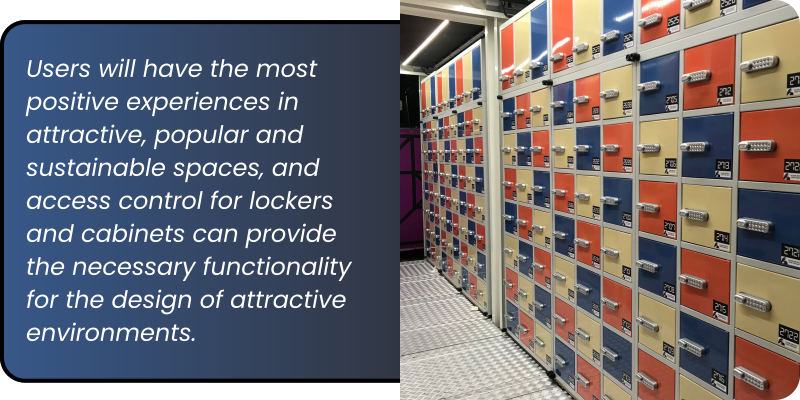
The design and redesign of new and retrofitted spaces is informed by the function of the space. What offices, libraries or destination spaces feel like is determined by what those spaces can do and what people do in them. Users will have the most positive experiences in attractive, popular and sustainable spaces, and access control for lockers and cabinets can provide the necessary functionality for the design of attractive environments.
The right locker arrays, for instance, enable flexibility and remove friction from people’s daily lives. They allow a single space to serve multiple purposes throughout the day, accommodating different users with different needs without requiring constant intervention and leading to unnecessary costs. Whether it is corporate headquarters or community centers, thoughtful access control solutions can help turn good spaces into great ones – places where people genuinely want to spend their time, attracting people and helping them to thrive.
Whether retrofitting for sustainability or designing vibrant, flexible destination spaces, locker locks and cabinet access solutions help transform how people interact with their environments. From empowering third places to enabling hybrid working, these systems bring functionality, convenience and efficiency to modern life.

Read more on Facility Operations or related topics Occupant Services , Space design and planning and Quality Improvement
Explore All FMJ Topics