
 Membership
 Network
 Regional Sites & Affiliates


 Events
 Participate
 Resources

 Training
 Credentials
 Government


 Content Channels
 Tools
Tools


 Business Overview





From Reactive to Predictive
Transforming FM through data, AI & human insight

The world’s most complex and high-performance facilities reveal a clear truth: the difference between reactive and predictive maintenance is the difference between surviving and leading. Traditional maintenance once relied on human intuition and scheduled routines; however, the future now belongs to systems that listen, learn and predict.
Drawing from extensive operational leadership across giga and mega projects and critical infrastructure, the integration of IoT-enabled predictive maintenance has redefined how assets are managed, interventions planned and reliability sustained. Real-time data flowing from connected pumps, HVAC systems, chillers and electrical panels not only enhances monitoring but also transforms decision-making.
When every vibration, pressure fluctuation and temperature spike is captured and analyzed through intelligent sensors, maintenance is no longer an afterthought. It becomes a strategic tool that prevents failures, optimizes performance and aligns operations with sustainability and efficiency objectives. Predictive maintenance through IoT is not simply a technological upgrade; it is a philosophical shift. It empowers facility management teams to move from being responders to forecasters, ensuring systems are both functional and future-ready.
 Facilities are no longer viewed as static physical assets but as dynamic ecosystems that contribute directly to productivity, brand reputation and carbon reduction goals.
Operational leaders across corporate, commercial, residential, industrial and giga-scale projects — including complex oil and gas facilities — have witnessed firsthand how data-driven FM strategies can redefine asset performance, reduce costs and elevate client satisfaction. The transformation is not just about maintaining buildings, it is about managing experiences, optimizing environments and enabling sustainability.
FM has become a strategic enabler of organizational and national progress. Its influence extends beyond maintenance to include energy management, waste reduction, carbon footprint tracking, smart mobility, occupant well-being, and environmental, societal and government (ESG) compliance. Well-executed FM strategies ensure facilities are not just functional but intelligent, capable of learning, adapting and improving through continuous feedback loops powered by digital technology.
FM professionals are expected to integrate real-time analytics, asset performance dashboards and KPI-based service delivery models into their daily operations. The modern FM department collaborates directly with corporate leadership, architects, sustainability experts and technology partners to design and operate environments that are resilient, efficient and human-centered.
This holistic approach has turned FM into a key pillar of national competitiveness. Saudi Arabia’s giga projects, for example — huge, complex developments that are not only architectural marvels but proving grounds for smart, sustainable, predictive FM models — are creating economic, social, infrastructure and environmental opportunities throughout the Kingdom.
In essence, the transformation of FM represents a paradigm shift from maintenance to mastery, from reacting to problems to predicting and preventing them. It is about transforming data into foresight, technology into empowerment, and operational reliability into strategic value.
Shaping the future
In the Middle East, the FM industry reflects a steady maturation and adaptability to changing global standards; but the future potential of both the industry and the built environment is unfolding in Saudi Arabia, providing global benchmarks for long-term operational excellence. Guided by the Vision 2030 framework, a new wave of innovation is reshaping the built environment and redefining approaches to infrastructure, sustainability and the human experience. The Kingdom is not merely investing in futuristic cities, but fostering a mindset that integrates technology, creativity and purpose. These developments are not just architectural and construction feats; they are living laboratories of innovation, where every system, every process and every operational model is designed to deliver the highest standards of efficiency and sustainability. These projects are the ultimate convergence points for engineering precision, digital intelligence and environmental responsibility.
One of the most striking aspects of this transformation is how the FM industry has evolved into a strategic backbone of progress. Whether through energy optimization, waste management or predictive asset monitoring, FM is no longer an afterthought; it is embedded within the very foundation of each development. This is where data, AI and human insight converge to ensure that giga projects are not only visually impressive but also operationally intelligent and environmentally resilient.
FM’s new frontier
Historically, FM teams operated in a reactive mode responding to breakdowns as they happened. The traditional “fix when broken” approach dominated operations, resulting in unplanned downtime, inefficiencies and escalating costs. The introduction of preventive maintenance marked a step forward, introducing scheduled checks and routine servicing to reduce unexpected failures. Even preventive strategies rely on fixed time intervals rather than actual asset condition, which can lead to both under- and over-maintenance.
The FM industry is amid a paradigm shift toward predictive maintenance, the next quantum leap in operational intelligence. Predictive FM leverages AI, Internet of Things (IoT) sensors, data analytics and computer-aided facility management (CAFM) systems to forecast equipment failures before they occur. Instead of reacting to faults or following rigid schedules, organizations can now predict precisely when and why a component might fail, allowing targeted interventions that optimize resources and minimize disruption.
This approach represents a fusion of engineering, data science and operational insight. IoT sensors continuously capture real-time data temperature, vibration, energy consumption, flow rate and pressure transmitted through integrated CAFM or building management systems (BMS). AI algorithms then analyze these parameters to identify patterns and anomalies invisible to the human eye. When early signs of wear, imbalance or inefficiency appear, alerts are triggered, enabling technicians to act before the situation escalates.
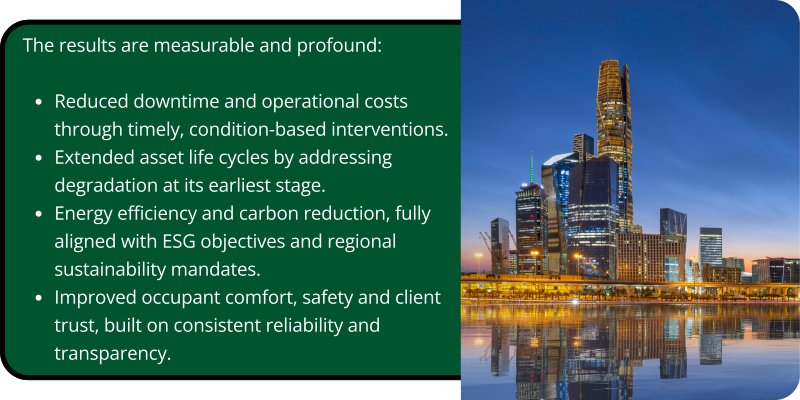
Predictive FM transforms maintenance departments from cost centers into value creation partners. By using foresight instead of hindsight, FM becomes a driver of continuous improvement optimizing performance, preserving asset value and enhancing overall business continuity.
Technology as the backbone
Modern FM functions within an integrated technological ecosystem, where digital tools form the foundation for predictive intelligence and decision-making.
-
Smart IoT networks: These interconnected systems provide continuous data from HVAC equipment, chillers, generators, pumps, lighting, waste compactors, hygiene dispensers and even food recycling units. Real-time monitoring ensures every asset is tracked for efficiency, safety and compliance.
-
AI-based analytics: Artificial intelligence processes thousands of data points per second, identifying deviations, inefficiencies or potential faults. Through pattern recognition, AI enables energy optimization, root-cause analysis and long-term performance benchmarking.
-
Digital twins: By integrating BMS, CAFM and CMMS platforms, a digital twin creates a live, virtual replica of the facility. This allows operators to visualize asset performance, simulate maintenance scenarios and make predictive decisions before deploying teams on site.
-
Mobile workflow automation: Frontline technicians are empowered through mobile dashboards and digital work orders. This ensures instant visibility, quicker response times and seamless coordination between supervisors and teams.
-
Unified FM platforms: The integration of hard, soft and sustainability services into a single intelligent system allows for real-time insights into asset health, energy trends and operational KPIs, transforming data into actionable intelligence.
These innovations are already embedded in Saudi Arabia’s major giga and mega projects, where operational resilience, energy efficiency and sustainability are contractual obligations and performance benchmarks.
The integration of technology with human insight creates an environment where decisions are data driven, interventions are strategic, and operations are not just maintained but continuously optimized. Predictive FM is not merely about preventing failures; it is about achieving operational foresight, ensuring that every building, asset and system performs at its peak efficiently, sustainably and intelligently.
Human insight: The critical differentiator
Technology alone cannot replace human expertise. Continuity in leadership personnel who have been with a project from mobilization to operation ensures:
-
Deep understanding of client behavior and communication culture.
-
Comprehensive knowledge of asset performance and historical challenges.
-
Smooth transitions and minimized service disruptions.
A predictive system may indicate when a chiller will fail, but experienced managers determine how to prevent the failure from escalating, ensuring operational continuity. The most successful FM strategies blend data-driven insights with human judgment, empathy and decisive action.
The predictive future of FM
The evolution of FM from reactive to predictive mirrors a broader transformation with the potential to reshape economies, infrastructure and leadership vision. What was once a discipline focused on repair and routine maintenance has evolved into a science of foresight driven by data intelligence, AI integration and human expertise.
In the predictive era, FM teams no longer wait for alarms; they anticipate them. Sensors and analytics detect subtle changes in vibration, temperature or energy consumption long before they escalate into failures. Dashboards translate complex data into actionable insights, empowering facility leaders to plan strategically rather than reactively. This shift not only minimizes downtime but also redefines operational reliability and strengthens client confidence.
Predictive FM represents the convergence of technology, sustainability and strategic leadership. Digital ecosystems integrating IoT, CAFM, BIM and digital twins now work seamlessly to create intelligent environments that learn, adapt and evolve. AI-driven algorithms forecast energy peaks, optimize workforce deployment and extend asset life cycles, ensuring that every operational decision contributes to broader ESG goals.
In this transformation, the human role remains paramount. While machines monitor, predict and analyze, human intelligence interprets context, exercises ethical judgment and aligns technology with organizational purpose. Predictive FM, therefore, is not a replacement for people but the evolution of leadership through digital empowerment.
Predictive FM integrated into design and operations from inception, serves not as an optional enhancement but as a fundamental standard of excellence.
Predictive FM is more than a technological progression; it represents a strategic mindset. It transforms maintenance from cost to value, from schedule-based to intelligence-driven, and from reactive response to proactive innovation.
When these three forces operate in harmony, FM transcends traditional service delivery, becoming a cornerstone of futuristic infrastructure, sustainable operations and global leadership.
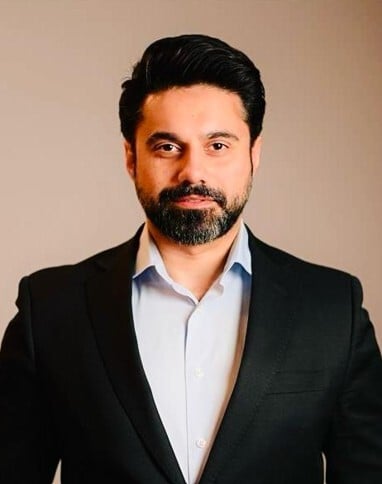
Haris Ali Shaikh, CFM, FMP, ISO, RIGS, is the assistant director operations at EFSIM Facilities Management Co. He has more than 15 years of specialized integrated FM operations in the Middle East.
Read more on Real Estate , Leadership & Strategy and Facility Technology & Data Management or related topics Asset Management , Best Practices and Building Systems
Explore All FMJ TopicsRelated articles
-

Plugged In
Solving the data disconnect in real estate and FMBy Amanda Muzzarelli & James Waddell07.01.2024 -

Food for Thought
Installing pop-up food programsBy Stafford McKay09.18.2024 -

Guarding Against Graffiti
Protocols that help prevent & remove graffiti on college campus buildingsBy John Lesak & Sarah Brummett11.26.2024
