
 Membership
 Network
 Regional Sites & Affiliates


 Events
 Participate
 Resources

 Training
 Credentials
 Government


 Content Channels
 Tools
Tools


 Business Overview





From Reactive to Resilient
Improving reliability & ROI with preventive & predictive electrical maintenance

Electrical power systems form the backbone of modern facilities, supporting life-safety systems, production processes, data infrastructure and building operations. When these systems fail, the impact extends well beyond downtime, affecting safety, regulatory compliance, asset integrity and financial performance. As facilities grow more complex and tolerance for service interruption declines, reactive approaches to electrical maintenance increasingly expose organizations to unnecessary risk.
Preventive and predictive electrical maintenance programs provide a structured, reliability-focused alternative. Inspections, testing and condition assessments are foundational to these programs, as they enable early identification of deterioration, informed maintenance planning and targeted corrective action. When applied consistently, proactive electrical maintenance improves system reliability, extends asset life and delivers measurable returns on investment across a wide range of facility types and operating environments.
Why electrical assets degrade
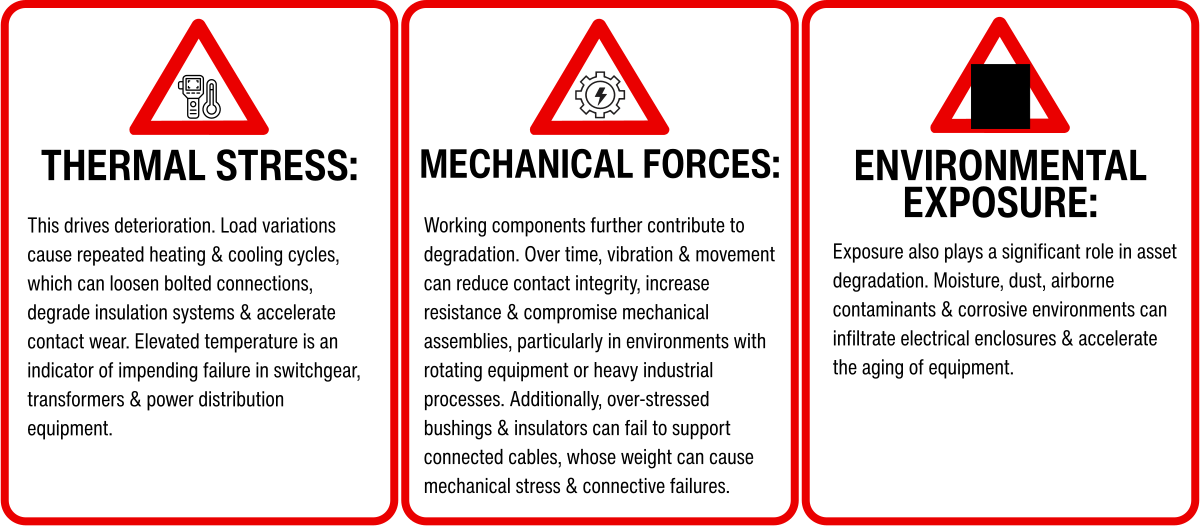
Electrical equipment is continuously exposed to stressors that contribute to gradual degradation. These mechanisms are often progressive and difficult to detect without formal inspection and testing.
 Supporting reliability through inspection & testing
Preventive electrical maintenance is built on systematic inspection, testing, and servicing designed to preserve equipment reliability and safety. The objective is to identify deficiencies early, correct known failure modes, and establish repeatable benchmarks for equipment condition.
Core preventive maintenance activities typically include visual and mechanical inspections, verification of electrical connections, cleaning of insulation systems and functional testing of protective devices and components. The NFPA 70B Standard for Electrical Equipment Maintenance — which transitioned from a recommended practice to a mandatory standard in 2023— provides essential guidance on inspection methods, test procedures, and maintenance intervals to ensure safety and compliance.
Managing risk through condition data
Predictive maintenance builds on preventive programs by incorporating condition-based diagnostics that assess equipment health and identify early indicators of failure. Rather than replacing preventive maintenance, predictive methods enhance decision-making by providing deeper insight into asset conditions.
Common predictive and diagnostic techniques include infrared thermography, ultrasonic inspection, partial discharge testing, and insulation or oil analysis. These techniques detect early-stage degradation that may not be visible through routine inspections. Trended condition data allows corrective actions to be prioritized based on likelihood and consequence rather than fixed schedules.
 The value of proactive electrical maintenance
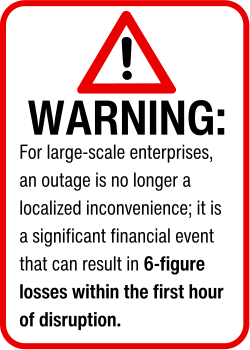
The financial case for preventive and predictive electrical maintenance is primarily anchored in the mitigation of unplanned downtime. As modern infrastructure becomes more interconnected and automated, the cost of a single hour of lost power has escalated. For large-scale enterprises, an outage is no longer a localized inconvenience; it is a significant financial event that can result in six-figure losses within the first hour of disruption.
The fiscal impact of unplanned downtime
The cost of an "idle hour" varies significantly by facility type, but industry-wide trends indicate that the fiscal impact of downtime often outpaces standard inflationary costs due to the complexity of modern systems:
-
Manufacturing & industrial environments: Facilities with continuous production lines are highly vulnerable to electrical interruptions. When a power failure occurs, the loss includes not only stalled output but also the labor costs of idle teams, the potential for damaged raw materials, and the extensive time required to safely restart specialized machinery.
-
Health care facilities: In clinical environments, the impact of downtime is measured in both financial and operational terms. Electrical reliability is critical for maintaining life-safety systems, diagnostic imaging and electronic health records. Disruptions in these environments often necessitate emergency diversions and can result in significant revenue loss due to deferred procedures.
-
Mission-critical infrastructure: Data centers and telecommunications hubs face severe penalties for service-level agreement (SLA) violations. Power-related issues account for 54 percent of impactful outages, according to the Uptime Institute’s 2025 Annual Outage Analysis. In such high-stakes environments, even momentary fluctuation can lead to cascading system failures and high recovery costs.
Proactive intervention vs. The cost of failure
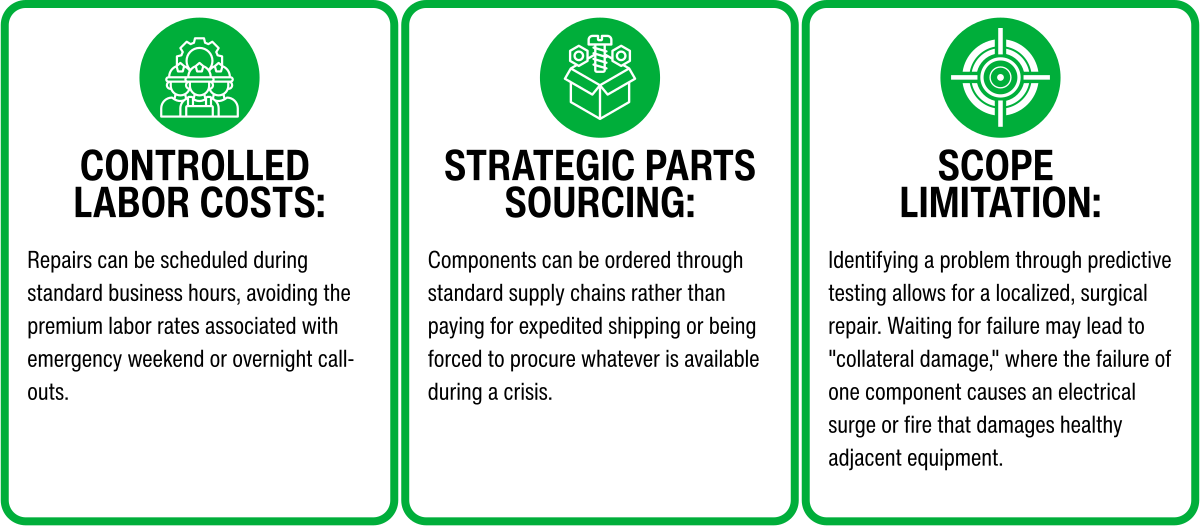
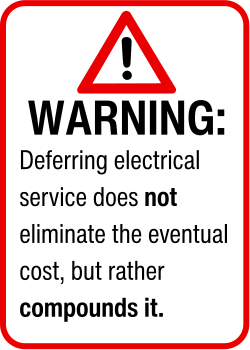
A common pitfall in facility management is the assumption that delaying maintenance preserves capital. However, deferring electrical service does not eliminate the eventual cost, but rather compounds it. When maintenance is delayed, the inevitable failure is rarely isolated. A single faulty connection can lead to thermal damage that destroys an entire bus duct or switchgear line, turning a minor repair into a major capital replacement. Proactively addressing a problem is significantly more cost-effective because it allows for:
Direct financial returns & cost avoidance
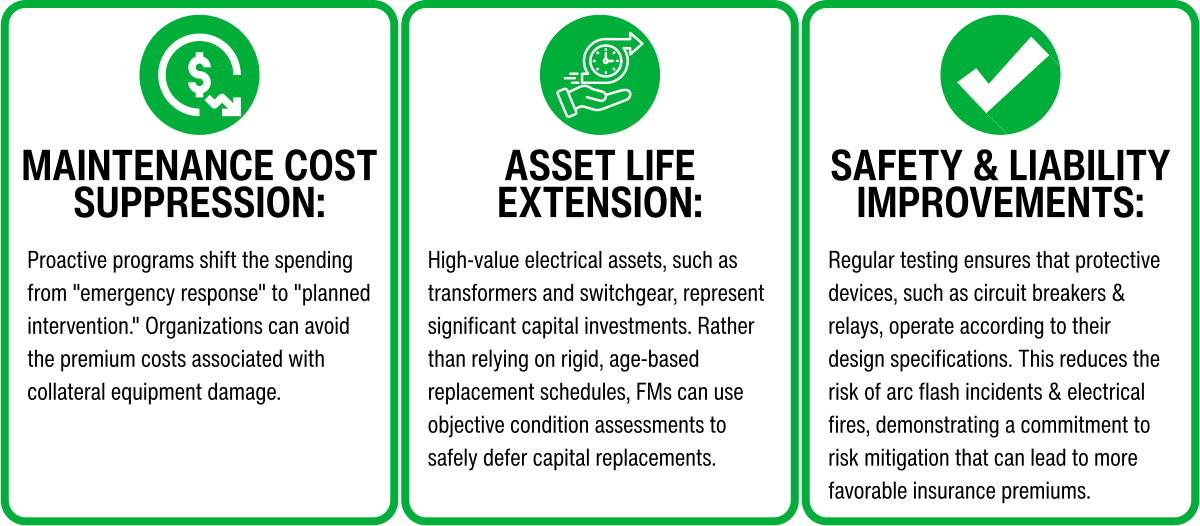
When maintenance is grounded in systematic inspection and condition-based monitoring, the return on investment (ROI) is realized through several key channels:
 Applying proactive maintenance across facility types
Inspection- and testing-based maintenance programs apply across nearly all facility categories. In mission-critical environments, condition assessment and predictive diagnostics support high availability requirements. Health care facilities rely on electrical reliability to support life-safety systems and clinical operations, making proactive maintenance essential for patient safety. Industrial and commercial facilities benefit from minimized production interruptions and stronger long-term asset performance. Because these principles are universally applicable, they remain effective regardless of geographic region or facility age.
 Building an effective EMP
Building a comprehensive electrical maintenance program (EMP) requires more than just scheduling annual inspections; it demands a systematic approach to asset management, data collection and safety compliance. Under the current NFPA 70B Standard, an effective program is constructed on four foundational pillars: accurate inventory, criticality assessment, condition-based scheduling and continuous documentation.
1. Developing an accurate asset inventory
The first step in any reliability program is establishing a complete and verified inventory of electrical assets. Maintenance teams cannot manage what they do not track. This process involves a physical walk-down of the facility to catalog every major component of the electrical distribution system, including switchgear, transformers, panelboards, motor control centers and disconnect switches. Crucially, this inventory process must verify that the facility's single-line diagrams (SLDs) are current and legible, as accurate drawings are a mandatory requirement for safe maintenance execution.
2. Defining asset criticality
Not all electrical assets carry the same operational weight. A transformer serving administrative offices does not have the same risk profile as a transformer serving a surgical wing or a main production line. Therefore, a "one-size-fits-all" maintenance schedule is inefficient.
Assets ranked as "high criticality" warrant more frequent predictive inspections, while "low criticality" assets may remain on a standard preventive schedule. This risk-based approach ensures that limited maintenance budgets are directed toward the equipment that matters most.
3. Optimizing maintenance intervals
Once assets are inventoried and ranked, the maintenance plan is developed. Under NFPA 70B, FMs can choose between prescriptive intervals (standardized time-based schedules) or performance-based intervals (schedules adjusted based on equipment health and history).
While standards like NFPA 70B and ANSI/NETA MTS provide the baseline for what tasks need to be performed, the frequency must be adjusted based on the condition of maintenance. Equipment located in a climate-controlled data center typically degrades slower than equipment in a steel mill exposed to conductive dust and extreme heat. By tailoring inspection intervals to specific environmental stressors and the equipment’s physical condition, organizations can optimize resource allocation while remaining compliant.
4. Documentation & trend analysis
The final pillar of an effective program is robust documentation. A maintenance event is only as valuable as the data it generates. The goal is to move beyond "pass/fail" reporting to trend analysis. For example, tracking the insulation resistance values of a large motor over five years allows the maintenance team to see a gradual decline in performance. This trend line serves as an early warning system, allowing the team to plan a refurbishment or replacement during a scheduled shutdown rather than reacting to a catastrophic failure.
Electrical maintenance as a reliability strategy
Preventive and predictive electrical maintenance programs represent a disciplined shift from reactive response to proactive reliability management. By grounding maintenance decisions in inspection, testing, and condition assessment, FM teams can reduce risk, improve safety and optimize life cycle costs. Structured electrical maintenance programs are a core component of operational resilience, asset stewardship, and long-term facility performance.

Steve Park, PE, is the director of training and employee development at Electrical Reliability Services. He has more than 45 years of experience in the power systems industry, with a background that includes work as a power system maintenance lineman, electrical design engineer and system studies specialist. His technical expertise includes short-circuit analysis, selective coordination, load-flow modeling, arc flash mitigation, harmonics, and medium- and high-voltage testing and maintenance. A former U.S. Air Force instructor and registered professional engineer, he also serves as a technical editor for NETAWorld and contributes to updates of the NETA Test Specifications. Park holds bachelor’s and master’s degrees in electrical engineering from Purdue University and a Master of Business Administration from Indiana Wesleyan University.
References
Top image by Getty Images.
Read more on Real Estate , Risk Management and Facility Operations or related topics Asset Management , Building Systems and Maintenance Processes
Explore All FMJ TopicsRelated articles
-

Plugged In
Solving the data disconnect in real estate and FMBy Amanda Muzzarelli & James Waddell07.01.2024 -

Food for Thought
Installing pop-up food programsBy Stafford McKay09.18.2024 -

Guarding Against Graffiti
Protocols that help prevent & remove graffiti on college campus buildingsBy John Lesak & Sarah Brummett11.26.2024