Membership
 Network
 Regional Sites & Affiliates


 Events
 Participate
 Resources

 Training
 Credentials
 Government


 Content Channels
 Tools


 Business Overview





Get Out & Stay Out
Reducing pest intrusion at warehouse openings
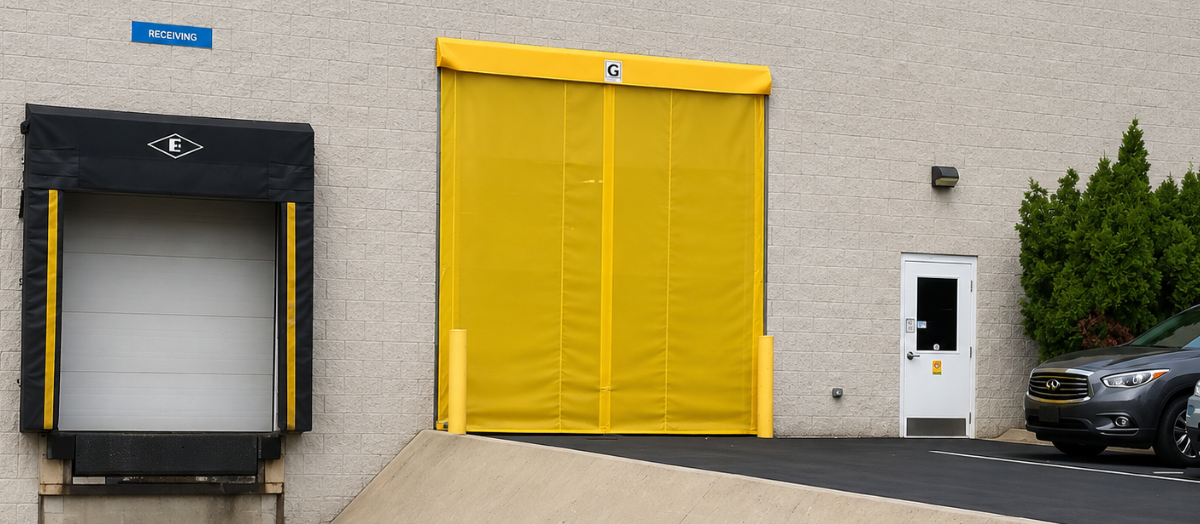
For facility managers, the challenge extends beyond housekeeping. Pest intrusion can affect sanitation programs, employee comfort, product protection and maintenance requirements.
In food-related facilities, the consequences can be particularly significant. The World Health Organization (WHO) estimates that unsafe food sickens roughly 866 million people worldwide each year and costs an estimated US$310 billion annually in lost productivity and medical expenses. At the individual facility level, the exposure is just as real. Grocery Manufacturers Association (GMA) places the average direct cost of a food recall at roughly US$10 million, and most affected companies report total losses above that figure once lost sales and reputational damage are counted.
Simply keeping every exterior opening closed is rarely practical. Loading docks exist to move people and materials, and some facilities intentionally use open doors to support natural ventilation. Effective pest management therefore requires a balance between exclusion and operation.
The most successful approach begins by understanding why pests are reaching an opening, correcting avoidable conditions, then selecting physical barriers based on how that particular opening is actually used.
Why warehouse openings attract pests
Loading docks combine many conditions that can contribute to pest activity. Constant vehicle movement, frequent door cycles, exterior lighting, nearby landscaping, waste containers, standing water and seasonal weather can all increase pest pressure around building openings.
During warmer periods, flying insects may be attracted to illuminated entrances and activity around loading areas. Birds can seek shelter around canopies, structural members and dock equipment, while rodents may exploit gaps around doors, dock equipment and building penetrations.
Organizations that process food, package consumer goods or maintain controlled environments can face greater consequences when pests enter. Intrusion can complicate sanitation programs, increase maintenance requirements and introduce additional risks around stored products and processing areas.
Understanding an opening’s conditions is therefore an important first step. A recurring insect problem at a dock door may not be caused solely by the door itself. Lighting, waste, water or damaged perimeter seals may be contributing to the problem.
Start with operational best practices
Before investing in additional equipment, FM teams should review the everyday practices that may unintentionally encourage pest activity.
Several relatively low-cost improvements can make a meaningful difference:
- Limit the amount of time dock doors remain open when they are not actively being used.
- Keep exterior waste containers clean, covered and positioned away from loading openings whenever practical.
- Eliminate or reduce standing water near entrances and loading areas.
- Inspect dock seals, weather stripping and building openings for gaps that could provide entry points.
- Review exterior lighting, particularly fixtures positioned close to openings where insect activity is concentrated.
- Maintain consistent housekeeping on both sides of the opening.
- Include exterior loading areas in routine pest-control and facility inspections.
These measures can reduce pest pressure before additional equipment becomes necessary. They can also help determine whether the problem originates at the opening or from conditions surrounding it.
Match the barrier to the opening: A simple assessment
Every warehouse operates differently. Even openings located next to one another may have very different requirements depending on traffic, trailer activity, ventilation needs and environmental exposure.
A short opening assessment can define the problem before comparing solutions.
1. Identify the opening's primary function.
Determine whether the opening primarily supports shipping, receiving, ventilation, personnel access or a combination of activities.
2. Observe actual traffic.
Record how frequently the door cycles and the approximate volume of forklift, equipment and pedestrian traffic. Observations should take place during normal operations rather than when the opening is idle.
3. Document the opening & surrounding conditions.
Measure width and height and note available mounting space, dock equipment, trailer interfaces and visible gaps around the perimeter.
4. Review sanitation & maintenance requirements.
Consider cleaning procedures, inspection requirements and the ability to maintain the barrier after installation.
5. Consider seasonal conditions.
An opening may operate differently throughout the year. Ventilation may be important during warmer months while temperature separation becomes the priority during colder periods.
This process helps prevent a common mistake: selecting a barrier based primarily on initial cost rather than operational requirements. High-cycle shipping openings often need different solutions than openings that remain stationary for long periods.
Matching the system to actual usage generally produces better long-term performance.
Selecting the right physical barrier
Once the opening has been assessed, FM teams can compare available barrier types against the conditions identified during the review.
Mesh or bug screen systems
For openings that need to maintain natural airflow while limiting flying insects and birds, mesh or bug screen systems provide a physical barrier without completely closing the opening.
These systems can be useful in manufacturing facilities, distribution centers, food-processing environments and warehouses where exterior doors remain open for extended periods, but need help meeting FDA, AIB and other regulatory standards.
Depending on traffic and building conditions, screen systems may be manually operated, motorized or horizontally sliding. The appropriate configuration depends on factors such as opening size, frequency of use, available mounting space and how quickly access must be restored when traffic approaches.
The primary advantage is straightforward: airflow can continue while a physical barrier remains across the opening.
Screens should still be incorporated into routine inspections. Tears, damaged edges and gaps around the perimeter can reduce their effectiveness even when the rest of the system remains operational.
PVC strip curtains
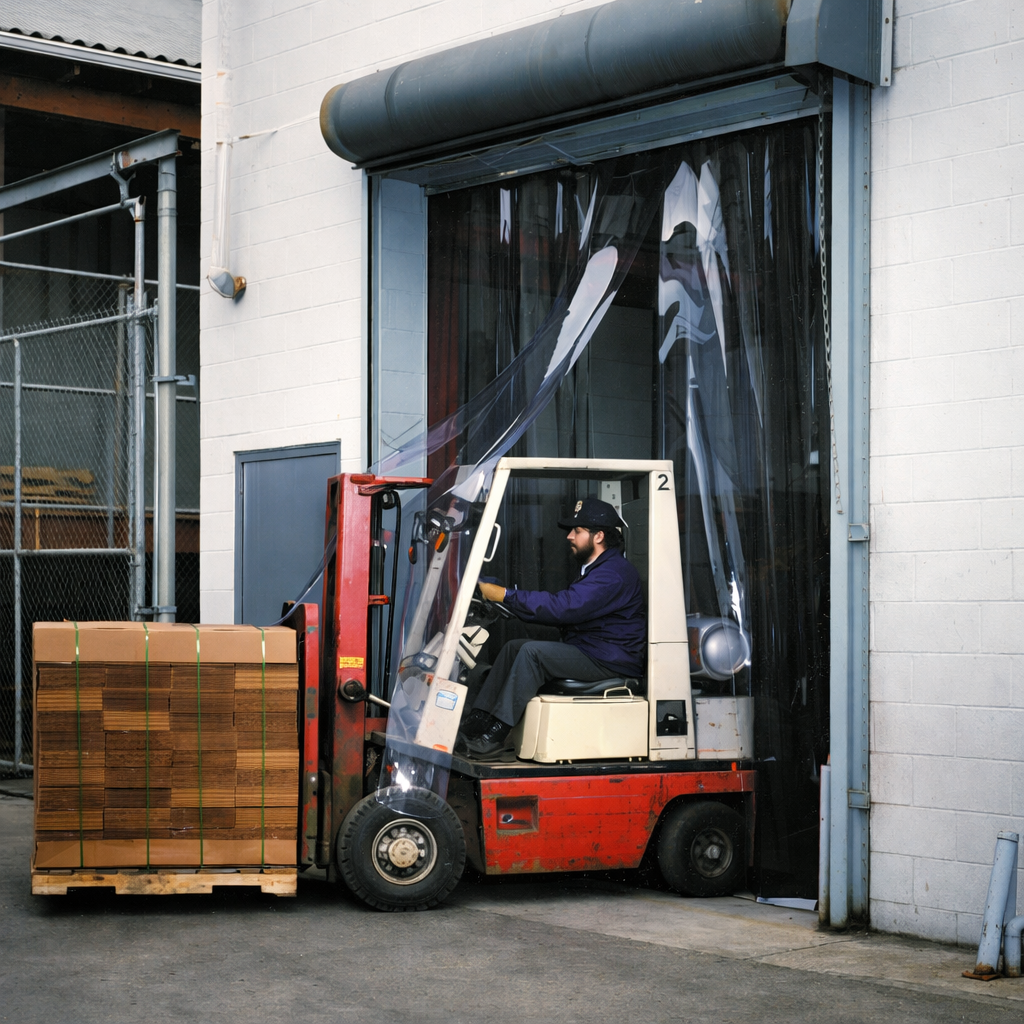
Polyvinyl chloride (PVC) strip curtains remain a practical solution for many industrial openings, particularly where personnel or equipment pass through frequently.
Flexible strips allow forklifts and personnel to move through the opening without waiting for a complete door cycle. Transparent material can also preserve visibility between adjoining spaces.
PVC strips can help reduce flying-insect entry and provide some environmental separation, but they do not create the same continuous barrier as a fully enclosed screen or closed door. Their effectiveness also depends heavily on condition and overlap.
Missing, damaged or displaced strips create openings that can reduce performance. High-traffic applications therefore require periodic inspection and replacement of worn material.
Flexible vinyl roll-up & sliding doors
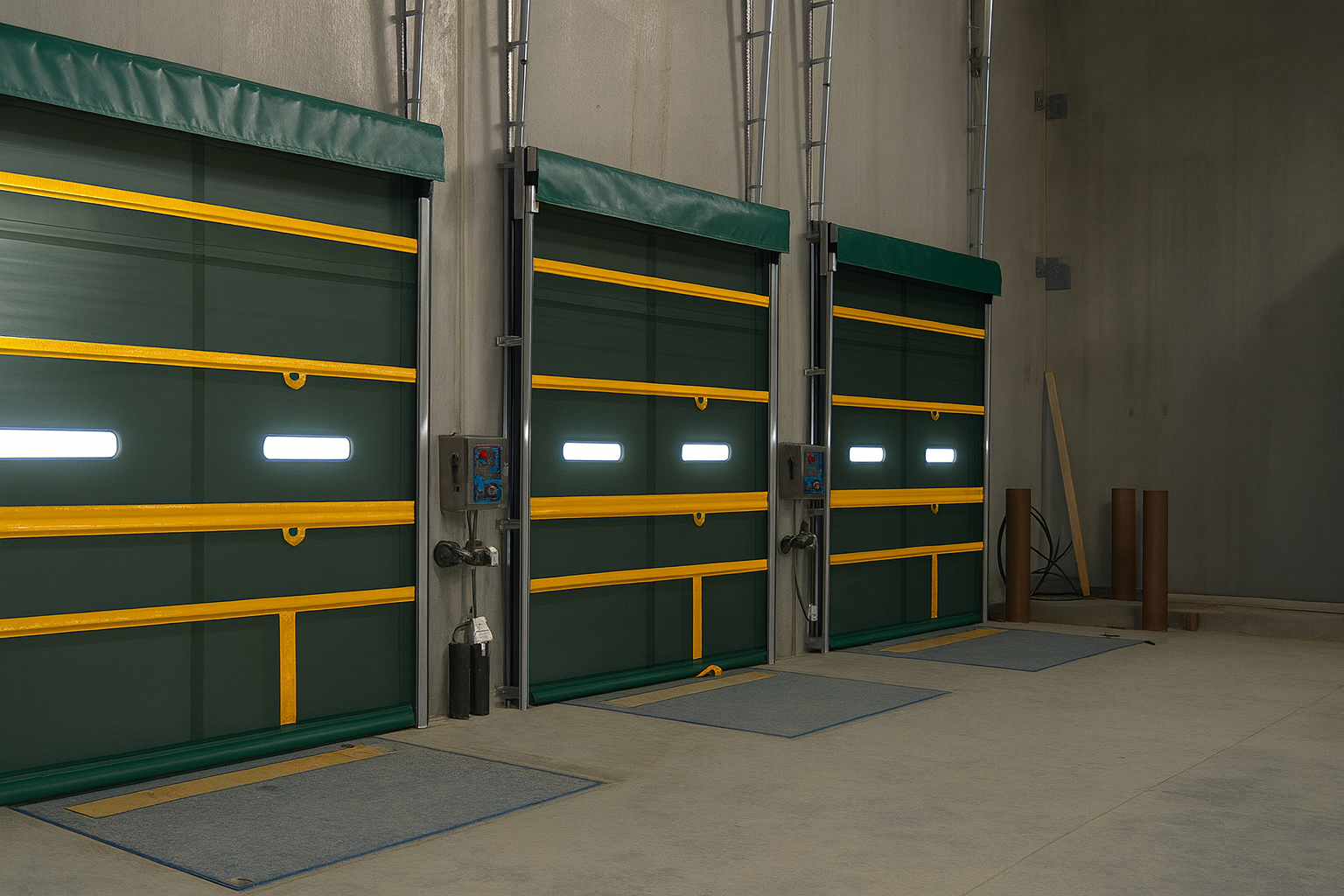
In some facilities, environmental separation is as important as pest exclusion. Flexible vinyl doors are commonly used where openings need to close between traffic cycles while still allowing regular access.
When closed, the barrier can help limit insects, birds, dust, wind and outside air from moving through the opening.
Roll-up configurations can be useful where floor space around the opening must remain clear, while sliding configurations may fit applications where overhead conditions or the surrounding structure make other arrangements less practical.
Because these systems must move out of the way for traffic, operating requirements should be considered carefully. A barrier that is inconvenient or unnecessarily slow for the application may eventually be bypassed or left open by employees.
The most effective configuration is one that provides the required separation without interfering with normal workflow.
Dock seals & dock shelters
The perimeter surrounding a parked trailer is another potential pathway for insects, birds, dust, precipitation and outside air.
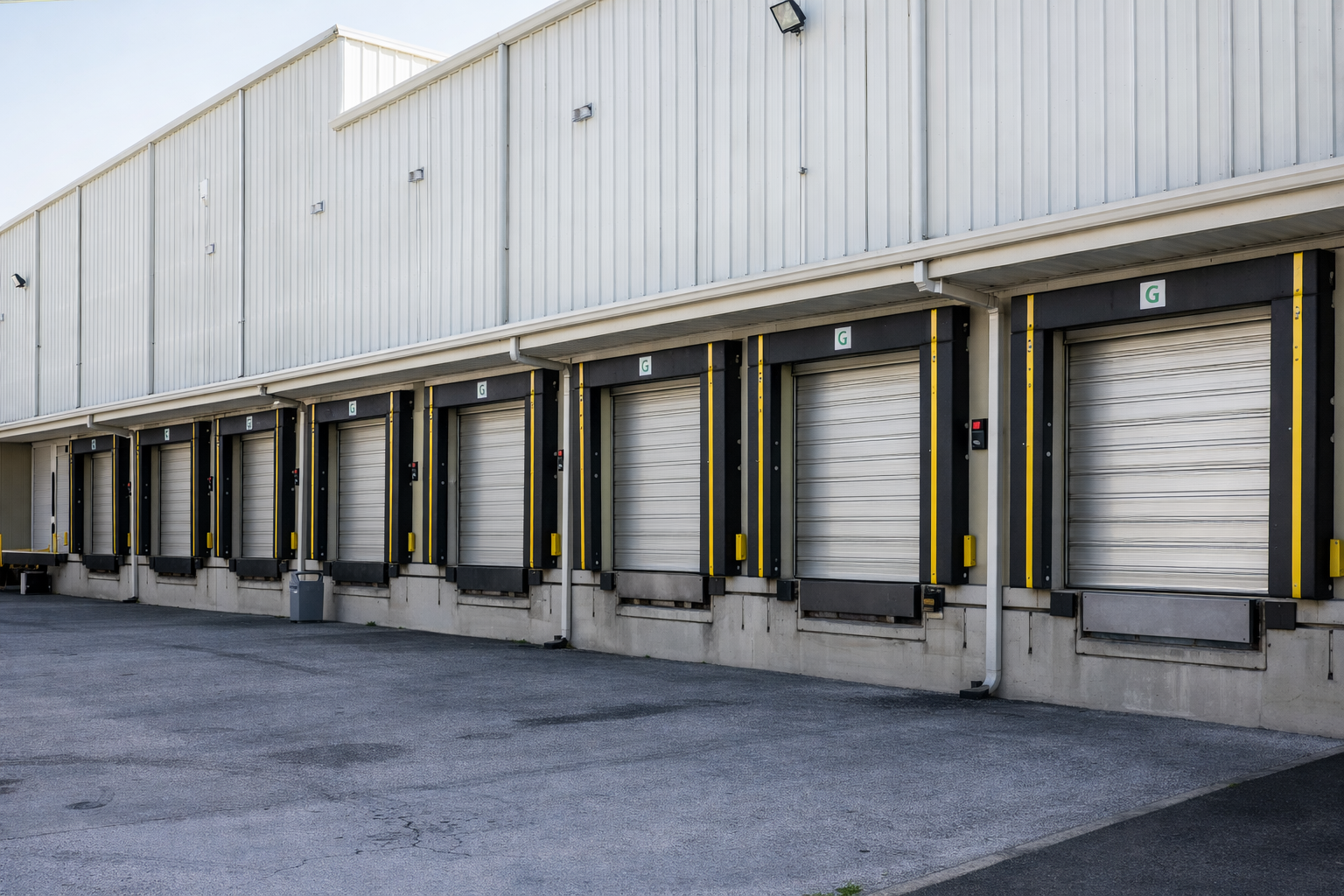
Dock seals and shelters help reduce gaps between the trailer and building while loading or unloading is taking place. These components should be evaluated as part of the complete opening rather than treated as unrelated dock accessories.
Condition is especially important. Torn material, damaged components, excessive wear or poor contact with trailers can create gaps even when the dock equipment appears functional.
The energy case is substantial. A peer-reviewed field study measured air infiltration roughly 21 times higher with a door open than closed, and interior temperature about 5 C higher.
Even a modest one- to two-inch gap between trailer and dock can behave like a 2.5-square-foot hole at a single bay — worth an estimated US$600 to US$1,200 per opening each year in lost conditioned air.
For facilities with multiple loading positions, small deficiencies repeated across an entire dock line can create a much larger building-envelope issue.
Comparing the options
No single barrier is appropriate for every opening, and facilities may use different solutions throughout the same building.
|
Solution |
Airflow / ventilation |
Flying insects & birds |
Temperature / environmental separation |
Best-fit use |
Relative cost |
|
Mesh bug screen systems |
High — keeps natural ventilation |
High — continuous physical barrier |
Low — open mesh, no thermal break |
Openings held open for long stretches; manual, motorized or sliding to match traffic |
Moderate |
|
Polyvinyl chloride (PVC) strip curtains |
Low — mostly closed, gaps between strips |
Moderate — reduces entry, not a continuous seal |
Moderate — helps hold temperature |
High forklift traffic; where through-visibility matters |
Low |
|
Flexible vinyl roll-up/sliding doors |
None when closed (full barrier) |
High — blocks insects, birds, dust and wind when closed |
High |
Openings closed between cycles; climate-controlled or washdown areas; energy priority |
Moderate–high |
|
Dock seals & shelters |
N/A — perimeter seal, not an opening cover |
Supplementary — closes trailer-perimeter gaps |
High — seals the "fourth side" losses |
Any trailer-served dock; layers with the options above |
Low–moderate |
Costs are relative and can vary significantly based on opening dimensions, configuration, installation conditions and local labor costs.
The comparison should serve as a starting point rather than a specification. Traffic, sanitation requirements, weather exposure and maintenance capabilities can change the appropriate solution.
In many facilities, the best result may involve multiple measures. A dock seal, for example, addresses the trailer perimeter but does not solve the same problem as a screen across an open doorway. Effective pest exclusion frequently comes from addressing several vulnerabilities rather than expecting one piece of equipment to control the entire opening.
Look beyond initial purchase price
Initial cost is only one part of the decision.
FMs should also consider maintenance requirements, expected service life, replacement components, cleaning requirements, downtime and the labor associated with operating or resetting a barrier.
Workflow should be part of the calculation as well. A low-cost barrier that repeatedly interferes with material movement or is routinely bypassed may deliver less long-term value than a solution better suited to the opening.
The objective is not to install the most sophisticated barrier available. It is to select the simplest solution that reliably performs the required function and can be maintained by the facility.
Maintenance that protects the investment
Even a correctly selected barrier will gradually lose effectiveness without routine maintenance.
Inspection frequency should reflect operating conditions rather than relying exclusively on a fixed calendar. A high-cycle shipping opening exposed to forklift traffic, weather and frequent contact may require more attention than an opening used only occasionally.
Routine inspections should include:
- Screens for tears, pulled edges or other damage.
- PVC strips for missing sections, wear and inadequate overlap.
- Moving components for smooth operation.
- Tracks and guides for accumulated debris or damage.
- Bottom and perimeter seals for gaps and deterioration.
- Dock seals and shelters for tears or compression damage.
- Mounting hardware and fasteners for movement or loosening.
- Surrounding walls, floors and penetrations for newly developed gaps.
Timing also matters. A preventive inspection before periods of increased insect activity gives maintenance teams an opportunity to repair damaged screens, replace worn seals and address other vulnerabilities before pest pressure increases.
Recurring problems should also be documented. If the same screen, strip, seal or component repeatedly suffers damage, the issue may indicate that the barrier does not match the traffic pattern or operating conditions at that location.
Doing so turns pest exclusion from a seasonal reaction into a repeatable FM process.
A layered approach delivers the best results
Reducing pest intrusion is rarely accomplished through a single product or one-time change.
The strongest approach combines disciplined housekeeping, sound operating procedures, pest monitoring, maintained dock equipment and physical barriers selected according to the demands of each opening.
The process should begin with observation rather than equipment selection. Understanding how long an opening remains exposed, what moves through it, what attracts pests around it, and what environmental conditions it faces provides the information needed to make a better decision.
That layered approach can improve sanitation, support employee comfort, preserve airflow and protect efficient warehouse operations without unnecessarily restricting activity at the loading dock.

Mike Ruiz has more than 15 years of experience in the commercial and industrial door industry, working with facility teams, contractors and industrial operations across a wide range of applications. His experience includes helping organizations evaluate door applications, operating requirements, mounting conditions and other factors that affect long-term performance. He founded SB3 Doors, drawing on that industry experience to focus on practical application support and industrial door solutions. Ruiz's work centers on helping organizations identify the right solution for the opening based on how it is actually used.
References
- World Health Organization — Food safety fact sheet: who.int/news-room/fact-sheets/detail/food-safety
- Peer-reviewed field study on air infiltration and energy loss through open doors (IOP Conference Proceedings): iopscience.iop.org/article/10.1088/1757-899X/609/3/032069
Read more on Facility Operations or related topics Site Management , Retrofitting , Operational Technology , Occupant Health and Facility Improvement
Explore All FMJ Topics