 Membership
 Network
 Regional Sites & Affiliates


 Events
 Participate
 Resources

 Training
 Credentials
 Government


 Content Channels
 Tools
Tools


 Business Overview





Global Adaptation
New demands for aerospace & defense FM
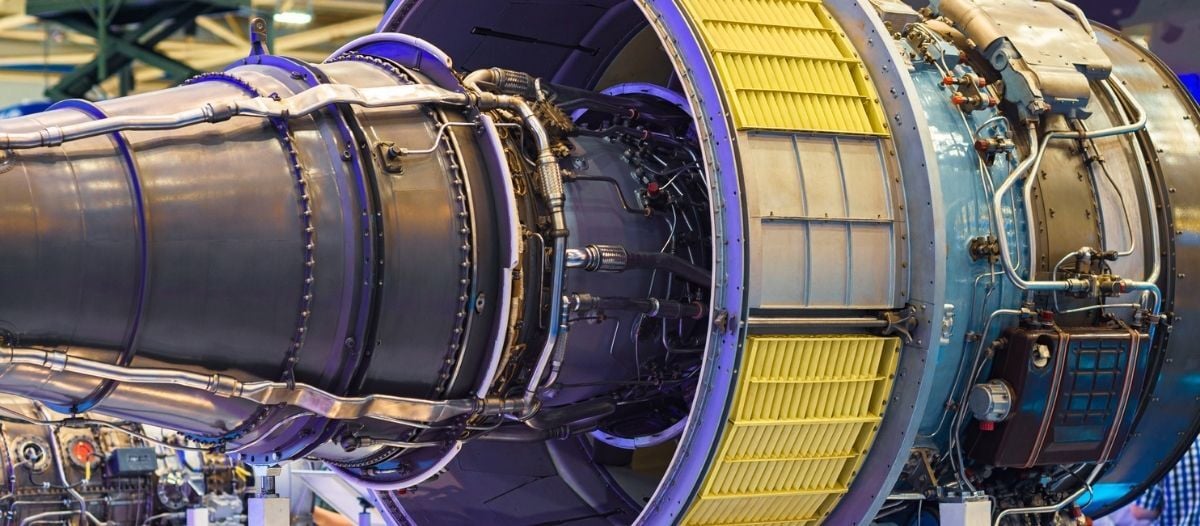
Across regions, the aerospace and defense industry is undergoing an adjustment. With a historic focus on munitions, tanks and large aircraft, many companies are adding new technologies, such as sophisticated drones and electric vertical take-off and landing (eVTOL) aircraft to their focus.
Facilities are evolving too, as aerospace and defense companies seek greater agility to respond to changing business demands. Now, facilities management professionals in the sector must adapt their outlooks and skills sets to future-proof their facilities.
The global aerospace and defense industry is poised for change in response to shifts in trade and defense policies emerging in many countries. In the United States, for example, aerospace and defense contracting continues to see record growth. According to JLL’s Aerospace and Defense Trends to Watch: 2026 Global Real Estate Outlook, global defense expenditures are accelerating, with G7 countries seeing an increase of nearly 25 percent from 2017 to 2024.
In fiscal year 2024, 14.3 percent of the total U.S. federal budget was allocated to defense. Across the federal government, facilities-related services spending increased 12 percent between 2020 and 2024, with the Department of Defense (DoD) significantly outspending other agencies. In 2025, the requested budget for the Facilities Sustainment, Restoration and Modernization (FSRM) program, which provides funds to keep DoD facilities in working condition, amounted to more than US$13 billion — a 4.5 percent increase from the prior year.
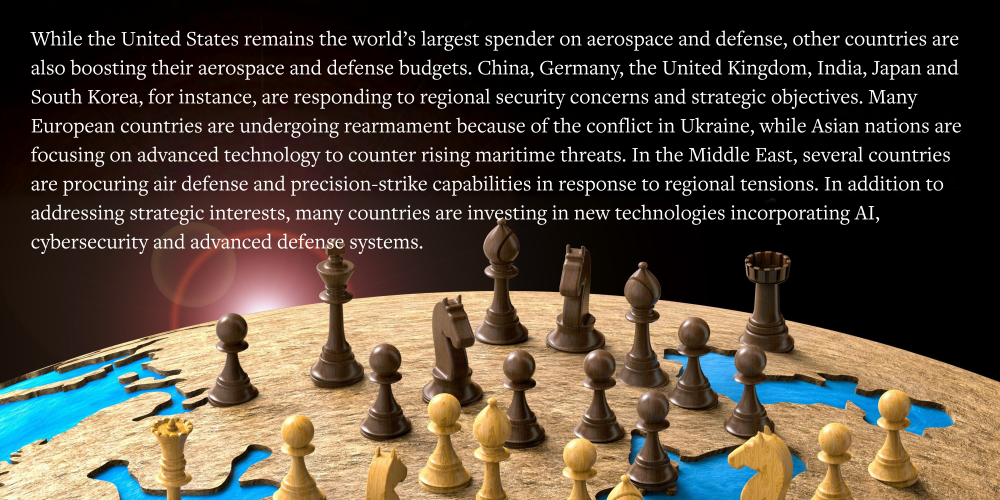
The steady flow of funding into the aerospace and defense sector is accelerating facility investments to align with government spending priorities. At the same time, expanding requirements for secure space and evolving regulations are driving defense contractors to seek the most cost-effective facilities solutions.
Changing facility designs
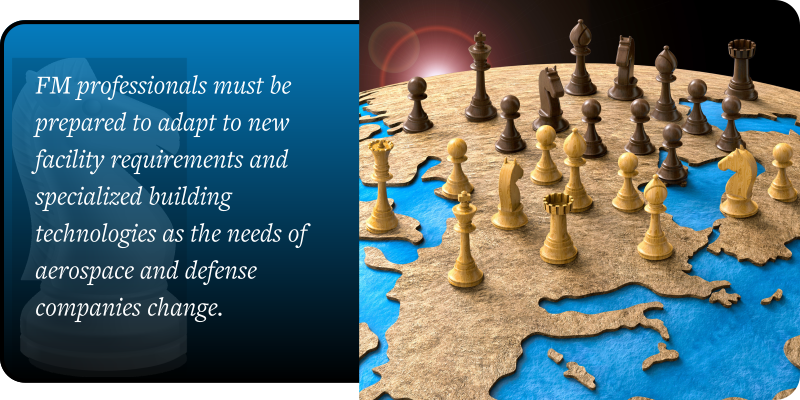
As the aerospace and defense field expands its focus to include autonomous systems and technology, facilities are also evolving – from data centers and manufacturing facilities to testing environments and administrative spaces. FM professionals must be prepared to adapt to new facility requirements and specialized building technologies as the needs of aerospace and defense companies change.
Aerospace and defense organizations are making calculated investments in specialized facilities and infrastructure upgrades that support mission-specific requirements. Adaptable spaces that can simulate a variety of operational environments – while maintaining security protocols – are becoming essential in a significant departure from traditional infrastructure.
The manufacture of autonomous systems and drones, for example, requires complex testing environments that offer a combination of physical and digital capabilities. Companies are responding with investments in dedicated spaces for testing equipment performance with digital twins; indoor-outdoor environments to simulate various conditions; and secure radio frequency (RF) chambers that create a controlled environment for communications testing and data security.
Cybersecurity is increasingly driving real estate decisions for sensitive defense work, influencing everything from site selection to building design. Facilities that offer robust physical separation capabilities and redundant power systems, while also accommodating advanced security protocols for classified operations, are in high demand.
Manufacturing spaces get smaller & more resilient
Throughout the aerospace and defense sector, companies are adding smaller spaces and more distributed locations, in addition to their traditional long-term manufacturing programs. According to JLL’s research, U.S. aerospace manufacturing funding is following this shift.
Distributed operations can boost resilience against supply chain risks and other potential disruptions. Many aerospace and defense companies are making targeted investments in small facilities in secondary or tertiary locations to house specialized capabilities. Other motivations for locating operations away from traditional aerospace and defense market clusters include access to strong talent pools and cost advantages, as well as proximity to specific customers.
The limited supply of highly specialized talent in many markets globally is a continuing challenge. However, highly specialized roles such as aircraft assemblers, inspectors, technicians, and industrial and aerospace engineers still comprise almost 25 percent of employees in the industry. The talent pool of qualified employees is limited in areas with a less established presence of aerospace and aviation companies.
FM technologies supporting modern facilities
FM teams in leading organizations are adopting increasingly complex, advanced FM technologies tailored for environments that require high security protections. These advanced technologies include:
-
IoT (Internet of Things) systems for monitoring equipment performance;
-
AI-powered predictive analytics equipment management tools with strict data governance protocols; and
-
digital twins for optimizing secure environments without exposing critical systems to operational risks.
These tools require strictly controlled implementations, including the creation of secure “digital islands” that physically and digitally isolate sensitive systems and data from facility technologies.
When implemented properly, remote monitoring and predictive maintenance technologies offer significant operational benefits in secure spaces. These tools can help aerospace and defense FM teams enhance building system performance and prevent equipment failures without compromising security protocols. Aerospace and defense companies are increasingly investing in condition-based maintenance approaches that reduce operational disruptions, while maintaining the strict access controls and network protections that are necessary in classified environments.
 Aerospace & defense facilities of the future
Today’s aerospace and defense facilities trends — including smaller footprints, increased technological integration and versatile manufacturing capabilities — are likely to persist over the next decade. To support agility, the next-generation defense campus will feature modular designs with distinct security zones and integrated digital infrastructure. In addition, companies will tap into advanced technologies and AI to enhance operational efficiencies and inform real estate portfolio strategy decisions.
The aerospace and defense facilities of the future will also emphasize sustainability and workforce experience to attract and retain talent in a competitive labor market. Creating and maintaining attractive workspaces is particularly important to talent recruitment and retention in this sector because employers tend to prioritize in-office work over hybrid work options. For example, 73 percent of Fortune 100 companies offer hybrid attendance policies, and more than 70 percent of non-DoD U.S. government employees telework. In contrast, more than 50 percent of U.S. DoD employees report that they rarely or never telework.
With regard to sustainability, many government defense agencies globally have established carbon-reduction goals and look to their suppliers to help achieve emissions targets. For example, the U.S. Army and Navy aim to reduce building emissions by 50 percent by 2032, while the U.S. Air Force is transitioning to 100 percent carbon pollution-free electricity on a net annual basis, including 50 percent 24/7 carbon pollution-free electricity, by 2030.
As the industry evolves, companies are making thoughtful adjustments to accommodate next-gen aerospace technologies and create environments that support cross-functional collaboration while maintaining appropriate security controls. One common strategy is to develop specialized zones within facilities for different security classification levels while enabling necessary collaboration across disciplines.
Aerospace and defense companies are also exploring co-location opportunities as more organizations recognize the advantages of working alongside certain strategic partners. While co-location creates unique security challenges that require careful planning, some companies are addressing these concerns by developing specialized innovation zones for controlled collaboration.
Navigating new challenges
Adapting to shifts in the aerospace and defense industry presents a distinct set of FM challenges. The following are key capabilities and practices that aerospace and defense FM teams will need to position their organizations for the future.
Enable agility.
 With FM teams increasingly required to create environments that support rapid innovation cycles, forward-looking FM teams are incorporating features like movable walls, modular utility connections and versatile production cells that can be repurposed quickly to accommodate frequent changes in production requirements. In office spaces, FM teams can develop modular, reconfigurable spaces that can be quickly transformed into different work modes, rather than making permanent, inflexible changes. Adaptability should extend to furniture systems, technology infrastructure and space allocations.
Support smart expansion strategies.
 In aerospace and defense companies that are growing rapidly, FM teams must balance the need to scale rapidly with maintaining security standards in their facilities. One emerging practice is to deploy a phased approach, securing the most sensitive operations first, while developing parallel tracks for facility expansion. These “secure envelopes” within larger facilities can be expanded over time without compromising ongoing operations.
Support the workplace experience with advanced workplace data management & analytics tools.
 Today’s technologies enable FM teams to leverage occupancy, lease and workplace experience data to create efficient and productive workplaces and reliable production environments. The leading practice is to implement standard quantitative and qualitative space utilization measurement methods, including real-time data and employee feedback, to inform investments in collaboration spaces, wellness and cultural amenities to enhance employee engagement. The right platform will uncover utilization patterns; generate real-time, predictive insights; and enable agile space allocation for dynamic workplace management.
Invest in FM technology expertise.
 As aerospace and defense facilities increase their complexity, FM professionals must enhance their expertise in integrating sophisticated facility technologies within their specialized environments. For instance, smart building systems provide efficiency and building performance advantages — but must be strategically deployed to avoid security risks and network architecture conflicts, and may require extensive security certification processes. One option is to partner with a service provider that can provide access to leading technologies and experience in incorporating advanced FM technologies within highly secure environments.
As global defense strategies and technologies continue to evolve, aerospace and defense organizations will need facilities that are flexible and highly secure – both physically and digitally. FM professionals in the sector must also adapt to ensure that their capabilities are keeping pace with a changing industry.

Tom Taylor is the managing director of JLL’s Aerospace and Defense (A&D) group. Leading a team of over 600 professionals, Taylor oversees delivery of specialized real estate services including transaction and public/private partnership (P3) advisory, facilities management, project management, energy management and portfolio strategy solutions to meet the unique needs of the aerospace and defense sector.
References
Read more on Facility Operations and Facility Technology & Data Management or related topics Cybersecurity , Physical Security and Strategy
Explore All FMJ Topics