
 Membership
 Network
 Regional Sites & Affiliates


 Events
 Participate
 Resources
 Training
 Credentials
 Government


 Content Channels
 Tools
Tools


 Business Overview



Higher Returns
3 steps to help FMs rethink cleaning protocols

Sustainability, comfort and employee engagement are just some of the pressure points topping the facility management charts in 2025 and beyond. Facility managers are also under increasing pressure to lower operational costs and maximize budget efficiency.
These are large drivers behind the automation-first approach taking off in the built environment. AI-powered technology has helped FMs maximize operational efficiency while keeping a closer eye on carbon emission reductions and occupant satisfaction.
Yet there is one stone that has been left unturned, a largely unnoticed strain on day-to-day management, finances and even staff well-being. Harsh chemicals in cleaning products take a toll on people and the planet alike, undermining the environmental, social and governance (ESG) efforts of FM.
Cleaning protocols also inadvertently affect productivity. Studies reveal a link between indoor air quality (IAQ) and employee productivity. Cleaning products are notorious for releasing harmful airborne fumes and pollutants that undermine IAQ.
1. Identify the hidden risks
In certain cases, cleaning products and protocols end up doing more harm than good. Many products include volatile organic compounds (VOCs), such as formaldehyde and acetone, and are known to cause environmental and health issues.
The World Economic Forum (WEF) emphasizes that poor indoor air quality is a global issue, but is often overlooked. Crucially, VOCs are directly tied to poor air quality, causing illnesses and lost productivity.
It is well documented that maintenance staff and other building occupants with long-term exposure to VOCs and other harsh chemicals can end up with a slew of health issues, such as asthma and rhinitis. Nausea, headaches and upper respiratory issues like congestion are just some of the fallouts. What appears to be a common cold could be a consequence of exposure.
Tackling sick building syndrome (SBS), which is predominantly known to affect office workers, should be a top concern for FMs. Unplanned absenteeism costs trillions of dollars globally, and U.S. employers more than US$600 billion a year, while presenteeism, or working while sick, adds another US$150 billion annually.
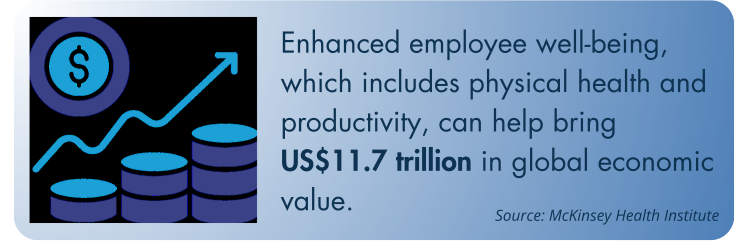
Moreover, a Harvard study revealed a link between weakened cognition and poor indoor air quality. People struggling to focus have deep economic impacts. A report from McKinsey highlights that enhanced employee well-being, which includes physical health and productivity, can help bring US$11.7 trillion in global economic value.
Shockingly, cleaners have a 40 percent higher chance of developing asthma due to fumes from cleaning products. Not only is this worrying from the standpoint of protecting people’s health, but a weakened team can seriously impede building operations overall.
By tackling health issues surrounding cleaning, facility managers have a direct role in strengthening economic outcomes and maintaining a healthy and functioning workforce. It is a factor that cannot be ignored, especially when finalizing ESG strategies.
But it is not just people’s health that takes a hit. The environmental imperative for an overhaul in cleaning protocols is undeniable. Toxic by-products from cleaning chemicals contribute to the destruction of natural habitats. Compounds from cleaning products are known to contaminate water bodies like lakes, rivers and ponds.
Airborne chemicals are also major contributors to indoor air pollution, wreaking havoc on IAQ and occupants’ health, meaning ventilation systems have to work harder to literally clear the air. That is ramping up energy consumption, which is a massive concern for most FM from a sustainability and operational perspective.
Another aspect to consider is that these chemicals erode materials, such as wood, metal and fabrics. FMs are inadvertently piling up operational costs by leaning on harsh products that corrode equipment, damage surfaces such as carpet and flooring, and even wear down building infrastructure. The more frequent replacement of cleaning equipment because of chemical erosion increases material waste. It is a lose-lose situation on all counts.
FMs who continue to depend on highly toxic and polluting chemicals are creating a paradox. Although clean spaces are undoubtedly intrinsic to people’s well-being, dangerous chemicals in cleaning products can undermine wider ESG strategies in facility management.
2. Keep a pulse on key metrics
Once these risks have been identified, a plan needs to be put in place to overcome them. Tangible progress requires metrics that enable FMs to keep a pulse on what is and is not working.
There are multiple dimensions to consider when addressing environmental and health issues that arise from cleaning protocols. First, FMs must appease both internal and external stakeholders, which include property owners, building staff and occupants, as well as regulatory bodies and investors. Having a measurable framework in place that considers health, sustainability and assets is at the crux of appeasing all relevant stakeholders’ needs as well as keeping track of progress. Carefully monitoring and measuring certain elements also turns cleaning protocols into profit powerhouses.
There are various areas to be mindful of, and these usually cross over with one another. From a sustainability standpoint, IAQ needs to be closely monitored. Specialized technology to gauge fine particulate matter (PM2.5) and CO2 is incredibly useful. All recordings should be benchmarked against reputable standards, such as the WELL Building Standard.
 FMs can also examine how improvements are made in carbon reduction. For instance, improved IAQ can lead to less strain on HVAC systems, thereby cutting energy consumption and GHG emissions. This doubles as an operational win, too, especially if fewer maintenance calls occur from this improvement. It is vital to succinctly record those maintenance cycles, too.
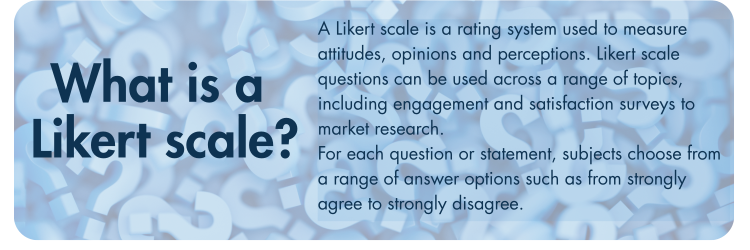
Tune into occupants’ feedback, as well. Surveys with Likert scales to measure satisfaction are an easy way to translate subjective feedback into actionable insights. Alongside this, FMs can also check the number of sick days taken by occupants and building staff and investigate how these correlate with cleaning protocols that better support well-being.
It is also worth noting that these metrics can be powerful illustrators of tangible ESG outcomes. Not only can this help FMs achieve higher sustainability ratings for their buildings, but it can also win over prospective investors and raise the financial appeal of property assets, because investors and financial institutions actively seek out verifiable ESG metrics to assess risk.
3. Make audits a regular must-have
Accountability is non-negotiable for cementing better cleaning protocols that have wide-ranging benefits. It is one thing to set in place an action plan, but another challenge altogether to ensure it is properly adhered to.
Audits keep people and processes in check. They are necessary for external reporting and aligning with regulatory requirements. Yet audits can fail when not properly set up. Missing or inaccurate information and irregular check-ins are just a couple of the reasons audits fall short.
FMs must ensure all relevant data is up to date and complete. Depending on their individual operational and strategic needs, including regulatory requirements, these audits should be scheduled on a frequent basis. That might be once a quarter, twice a year or annually, depending on the aforementioned factors. If they are not occurring sporadically, audits need to be penciled into the calendar as a routine step.
 But what is the data that FMs need to keep a pulse on when implementing cleaning audits? Beyond an inventory of cleaning products and schedules, there are other useful, actionable insights to be aware of.
Start with baseline metrics such as IAQ recordings and ventilation performance, guaranteeing that these are measured regularly and there are no gaps in data. Automated tracking via sensors can help FM teams stay on top of this. Inventory management should also note products with high VOCs and how frequently these are used in daily cleaning and store this information electronically on a shared system.
Digital records are much more useful for logging where data is sourced and its destination, which is fundamental to accountability. This digital-first approach to records also strengthens accountability and visibility, which are key to future-forward auditing.
FMs should benchmark metrics against reputable industry standards. Depending on location, compliance needs might vary. Benchmarks also help lock in KPIs, which are a must-have for any strategy to improve cleaning processes, such as increasing IAQ by a certain amount over a set period of time or reducing material waste from cleaning products like bottles and equipment. Every little bit counts, and a comprehensive approach to tracking and reporting on progress is paramount.
Staff must be on board with audits and understand the value of total visibility and accountability. Tangible outcomes like better occupant comfort scores and smaller carbon footprints can also be hugely motivating for facility teams to stay on track and continuously improve. Communicating the value of changes to cleaning protocols via real-world outcomes in audits plays a huge role in driving that.
Additionally, teams must be trained in how to manage, collect and collate data for these audits. That will likely involve getting them accustomed to using digital-forward mechanisms, including AI-powered technology. It is vital for staff to understand their role in working alongside digital tools and how to oversee them. Sometimes technical failures or glitches arise, and they must be equipped with intervention steps to ensure things stay on track.
Even one seemingly small part of FM carries huge weight across multiple fronts. Cleaning protocols are often the hidden culprit for many FM challenges, which is why a comprehensive approach is needed to translate woes into wins. By following these three steps, FMs can improve outcomes for people’s health, the environment and wider ESG strategies that lead to wider gains and profitability.

Joshua Schwartz is president and co-founder of Viking Pure and is an active developer of medical real estate and supportive housing. Prior to Viking Pure, Schwartz was the president of an Article 28 Diagnostic and Treatment Center. He began his career in the financial industry, first in investment banking at Citigroup; then at private equity firm Apollo Management. Schwartz graduated Phi Beta Kappa from Yale College with a bachelor’s degree in economics with distinction and holds a master’s degree from New York University, where he graduated with honors.
Read more on Facility Operations and Risk Management or related topics Occupant Health and Maintenance Processes
Explore All FMJ Topics