Membership
 Network
 Regional Sites & Affiliates


 Events
 Participate
 Resources

 Training
 Credentials
 Government


 Content Channels
 Tools
Tools


 Business Overview





Holiday Diagnostics
Using decreased occupancy to optimize facility performance

Most facility managers approach the holiday season as a routine cost-cutting exercise — lowering thermostats and turning off lights. But forward-thinking facility teams recognize that they can use those quiet days at the end of the year as a clear diagnostic window. When normal operational noise fades, organizations can gauge their building’s true performance baseline. And for most commercial facilities, that reveals inefficiencies that persist year-round but remain hidden during regular occupancy.
The U.S. Department of Energy estimates that commercial buildings waste up to 30 percent of the energy they consume every year. By deploying smart diagnostics during low occupancy periods — whether during holidays, moves or off-site company events — FMs can expose hidden inefficiencies and build the business case for optimization that continues to deliver value when employees return to their desks.
Why holiday downtime matters
In the era of hybrid work, traditional FM approaches no longer align with reality. Most commercial buildings operate lower than pre-pandemic occupancy levels, yet energy costs typically remain closer to previous levels (for example, the Urban Green Building Council has a detailed comparison of this trend for New York, and NREL had modeled energy use across commercial and residential buildings throughout the U.S.). This disconnect represents both an efficiency gap and an opportunity.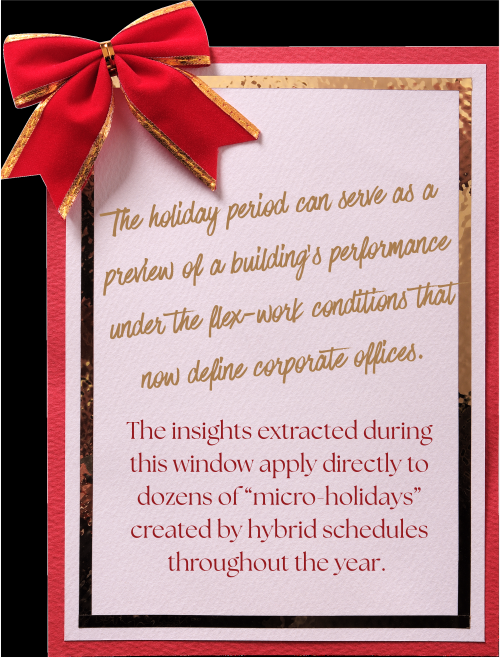
The holiday period can serve as a preview of a building’s performance under the flex-work conditions that now define corporate offices. The insights extracted during this window apply directly to dozens of “micro-holidays” created by hybrid schedules throughout the year.
Consider a typical 50,000-square-foot office building with annual energy costs of US$165,000. Strategic holiday diagnostics might save US$1,800-2,500 during those 10 days. But the real value lies in what those diagnostics reveal. For example, uncovering that morning warm-up was taking twice as long as designed due to underlying envelope issues costing thousands in annual waste.
Using holiday downtime strategically
Effective holiday FM requires moving beyond basic energy reduction to a systematic approach. Facility teams can implement a practical framework before, during and after decreased attendance to make a case for longer-term transformation.
Before the holidays: Set up for success
The quality of holiday insights depends on preparation. Use the 4-6 weeks before holidays to establish a data foundation.
-
Deploy strategic monitoring. Install sub-meters on major energy consumers — chillers, boilers and dedicated HVAC zones. Establish 2-4 weeks of baseline data during normal operations to establish a comparison point. During the holiday, when occupant loads decline, watch for any unusual consumption patterns.
-
Integrate occupancy data. Connect access control and/or the space booking system with building management to create occupancy-validated zones. If badge or booking data confirms an area has been unoccupied for two hours, program HVAC to automatically shift to setback mode rather than running on an assumption-based schedule.
-
Schedule high-value maintenance. The holiday period is ideal for work that would otherwise disrupt operations: thermal imaging surveys, air balance verification and equipment testing.
During the holidays: Gather intelligence
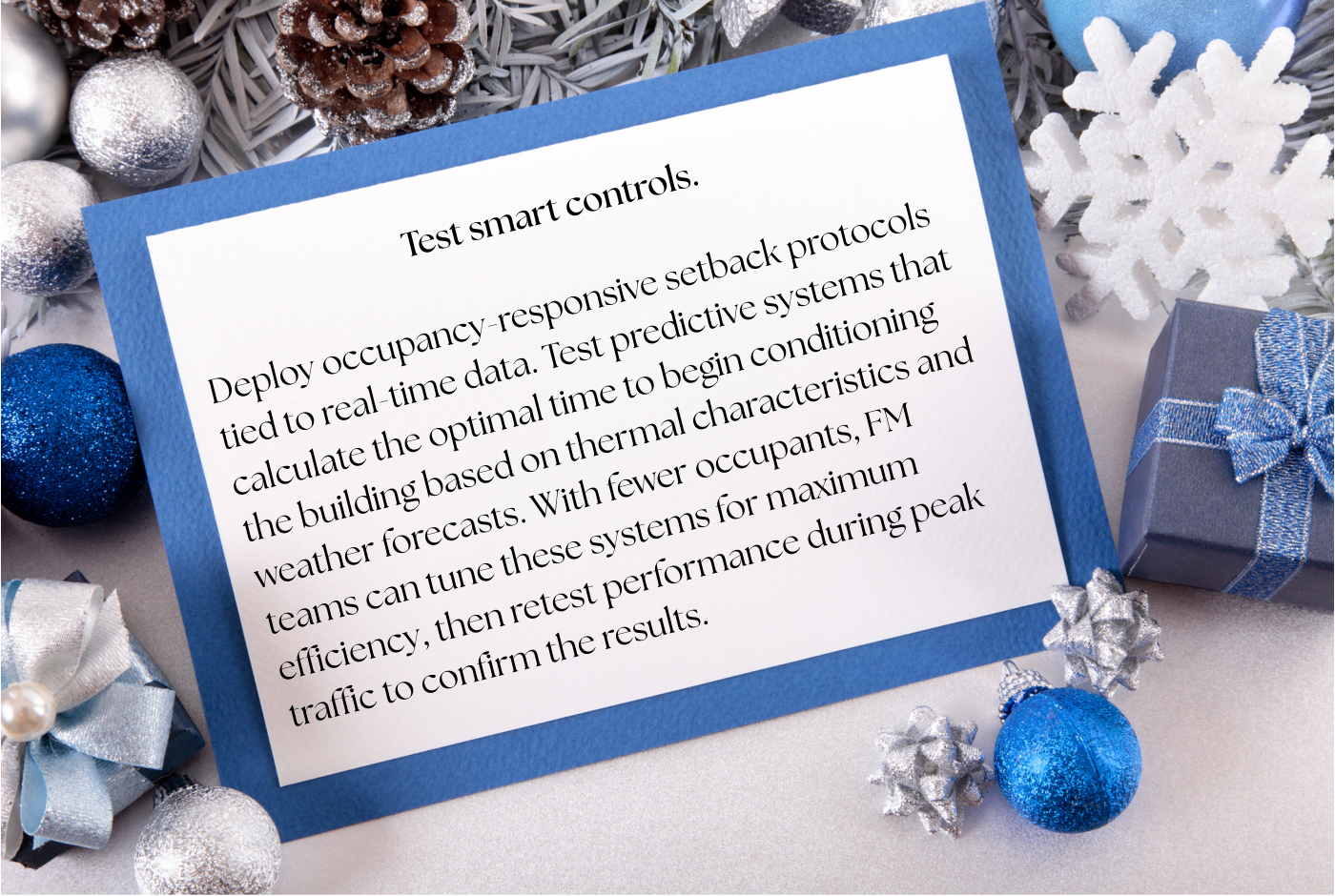
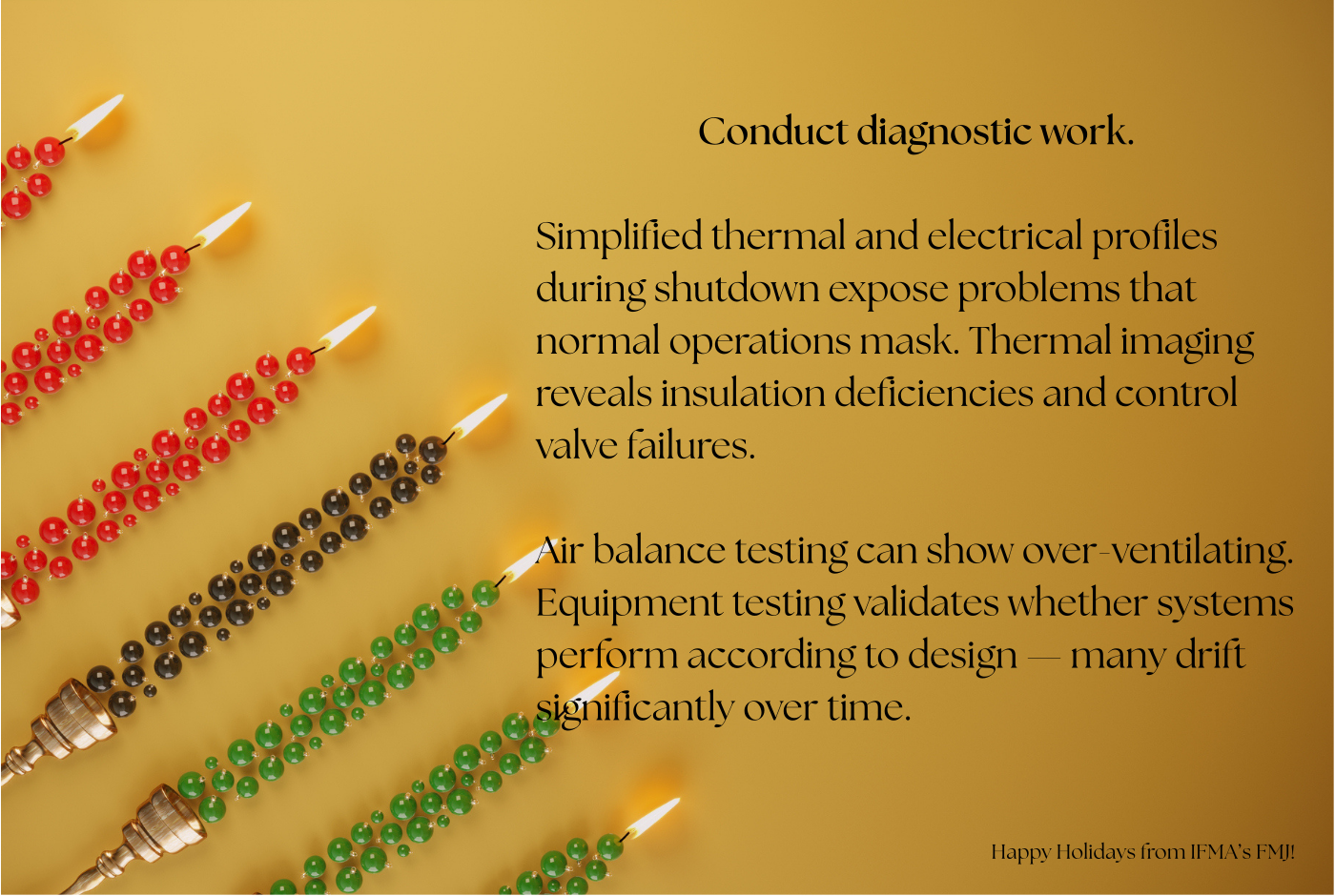
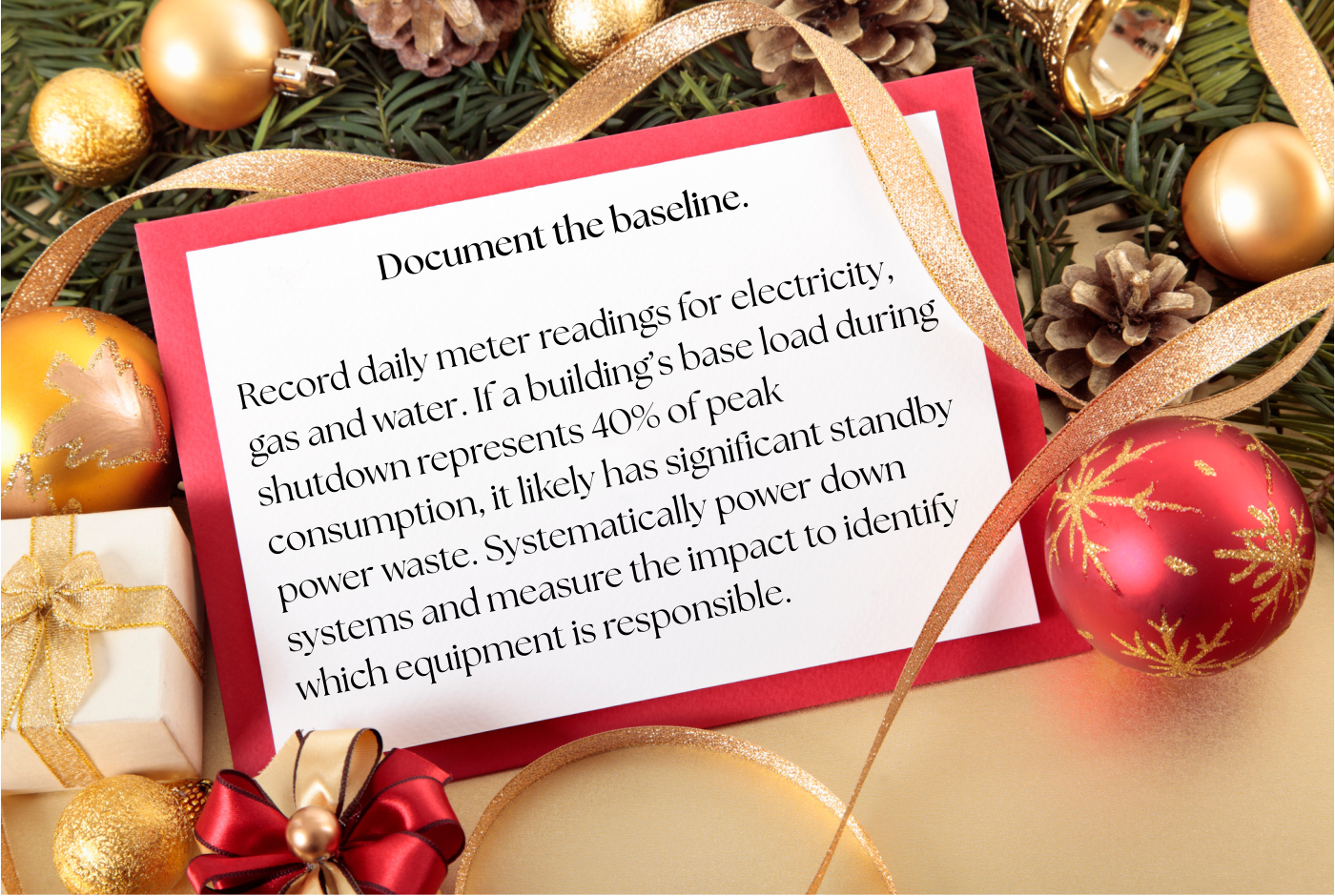
With monitoring in place, the holiday period can be an active diagnostic laboratory.
After the holidays: Convert insights into action
Holiday diagnostics only create value when insights translate into operational changes and strategic investments.
-
Quantify & communicate ROI in terms that matter to stakeholders. Different audiences need different messages. For the C-suite, frame findings in terms of enterprise risk, for example: “Our diagnostics identified a control failure that would have caused pipe freeze damage during January’s cold snap, preventing more than US$500,000 in emergency repairs.” For sustainability teams, translate to carbon metrics and environmental, society and governance goals. For operations, focus on cost reduction and resource efficiency from reducing break-fix tickets through more preventive work.
-
Implement continuous optimization. Use holiday insights to fundamentally reshape year-round operations. Make every low-density day a “mini holiday” with automatic optimization. Replace calendar-based maintenance with data-driven approaches. Create dynamic zone management that consolidates operations to fewer areas on low-occupancy days.
-
Build the business case. Document results in terms that enable portfolio-level analysis and justify future investments. Energy cost per square foot during minimal occupancy, base load as percentage of peak consumption, and preventive versus reactive maintenance costs become the foundation for capital allocation decisions.
Real-world results
Organizations using integrated FM platforms are achieving measurable results through data-driven optimization.
San Diego Gas & Electric faced significant challenges managing capital projects efficiently, with fragmented data and manual processes leading to budget overruns and delays. After implementing a system to integrate facility data with financial systems, SDG&E grew their annual capital budget for facility projects from US$5-7 million to more than US$40 million over five years. The platform’s ability to provide accurate, real-time reporting on energy consumption and facility conditions enabled better cost control and strategic decision-making.
Similarly, a government health care organization used data-driven space management to achieve over US$8.3 million in annual savings. By analyzing occupancy patterns and energy consumption across their facilities, they identified underutilized rooms that they were able to convert to flexible care spaces.
These results demonstrate how facility leaders can use data to prove strategies for operational efficiency.
The strategic imperative
FMs face significant challenges to justify budget, attract and retain qualified teams, and squeeze more efficiency out of their buildings. Energy costs remain volatile, regulatory pressure on carbon emissions intensifies and hybrid work has permanently disrupted traditional occupancy patterns. FM must evolve from reactive operations to predictive optimization, and holiday downtime offers a relatively low-risk opportunity to make that transformation.
The facility teams that will thrive share common characteristics: they treat low-occupancy periods as diagnostic opportunities, not just cost-cutting exercises. They build data infrastructure before they need it. They translate operational findings into business language that resonates with executive stakeholders. They view technology investments through the lens of strategic capability, not just ROI payback.
The question is not whether to optimize — it is how well an organization can leverage low-traffic periods to validate assumptions, expose hidden waste and build the business case for the operational transformation buildings need.
The future of FM is about creating intelligent, adaptive systems that continuously optimize performance. And that future begins with understanding what a building does when no one is watching.

Erin Sevitz has more than 15 years of experience across public, private and nonprofit businesses, including 10 years in thought leadership on workplace management and the built environment. As vice president of content at Eptura, she leads a team responsible for worktech insights. She previously led global communications as part of IFMA’s professional staff and served as editor in chief for FMJ magazine.
Read more on Facility Operations , Facility Technology & Data Management and Occupancy & Human Factors or related topics Benchmarking , Building Systems and Operations and Maintenance Planning
Explore All FMJ Topics