
 Membership
 Network
 Regional Sites & Affiliates


 Events
 Participate
 Resources

 Training
 Credentials
 Government


 Content Channels
 Tools
Tools


 Business Overview





Human-centered AI
Transforming FM without losing trust
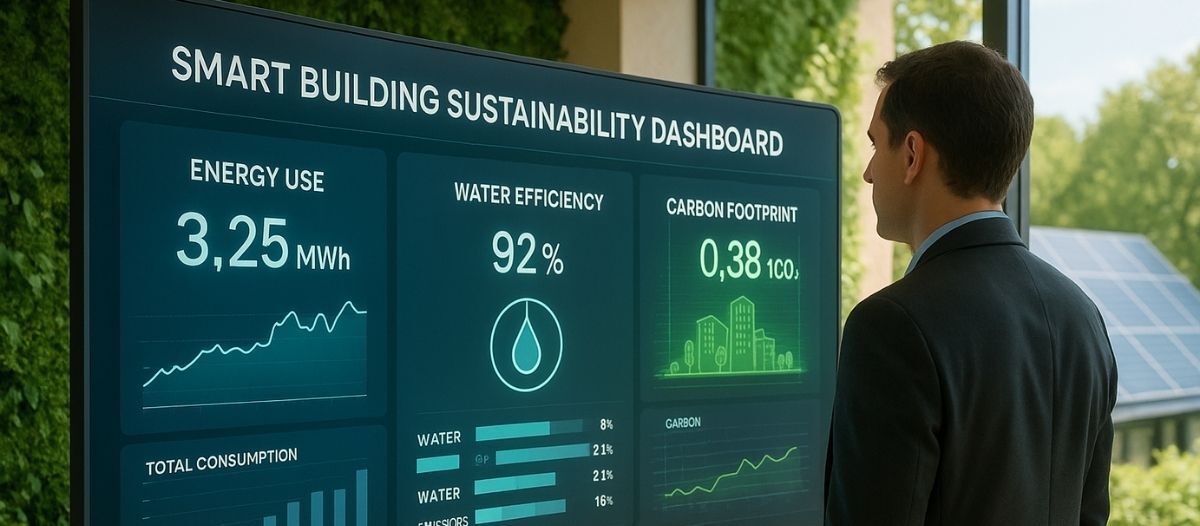
In the global race to modernize, facility management teams are being asked to lead with innovation — often at the intersection of human labor, automation and artificial intelligence. Yet the success of AI in FM is not a purely technological outcome. It hinges on trust, adoption, resilience and strategic value. While forward-looking organizations are deploying to integrate AI across facilities, they must find ways to keep people at the center of the journey. From data governance and service-level agreements to employee morale and sustainability, innovation unpacks the transformation of FM into a more agile, data-driven and human-first function.
 Enhancing trust in the age of AI
Technologically advanced organizations recognize that AI must be framed not as a threat but as a tool that enhances human potential. To build trust, they implement AI as a co-pilot: handling repetitive tasks so humans can focus on creativity and problem-solving. Predictive maintenance, for example, allows engineers to shift from constant firefighting to innovation-focused roles.
Transparency also plays a pivotal role. Organizations that develop clear AI adoption policies — paired with training and upskilling — signal commitment to inclusive progress. Use-case-driven communication campaigns demystify AI for employees, reinforcing its productivity benefits and dispelling the notion that automation equals replacement.
 Making FM attractive to future talent
In modern workplaces, AI is becoming a magnet for next-generation professionals. By automating low-value tasks and summarizing complex communications, AI not only boosts team productivity but also improves morale. This creates environments where FM professionals focus on high-impact projects — an essential factor in attracting and retaining skilled talent.
Real-time insights into occupant experience, wellness and sustainability signal a shift to strategic, experience-led FM. These capabilities convey to prospective employees that the organization is adaptable, tech-forward and future-ready.
 Misconceptions that hinder progress
Organizations reluctant to explore AI often fall prey to misconceptions. One of the most damaging is the belief that AI overrides human judgment. In reality, AI provides data-driven clarity, but the final call remains human. Another common fallacy is the fear of data compromise — modern AI architectures prioritize data privacy through encryption and isolated systems.
Delaying AI adoption not only forfeits these efficiencies, but risks falling behind competitors that are already scaling with automation and real-time insights. Waiting is no longer neutral; it is a strategic disadvantage.
 Redefining SLAs with AI
As FM evolves, so too must its performance frameworks. AI supports a shift from rigid, time-based service-level agreements (SLA) toward outcome-based performance metrics. With real-time dashboards and predictive alerts, AI serves as a live assurance engine helping vendors and internal teams track issues before they escalate.
This transparency builds accountability, reframing SLA discussions around long-term value creation rather than reactive benchmarks. As a result, partnerships become more strategic and less transactional.
 Scalable AI & FM integration
Scalability begins with data. Organizations must start by unifying their data architecture — clean, centralized information is the foundation upon which AI operates. AI-ready APIs and IoT integrations are crucial for unlocking insights into energy use, asset health and space utilization.
The most successful FM strategies take a modular approach: begin with targeted use cases, iterate and scale intelligently across assets and regions. Centralized, AI-enabled platforms not only drive operational consistency, but also accelerate data maturity.
.jpg?width=175&height=175&name=Scalable%20-%20InnovationOversight-Sawyer%20(2).jpg) Right-sizing technology investments
Right-sizing technology investments
FM teams must often justify AI investments to an executive audience wary of overbuying. Positioning AI as a force multiplier — enhancing existing infrastructure rather than replacing it — resonates well. Demonstrating ROI across departments (risk reduction, energy savings, labor optimization) helps frame AI as a cross-functional enabler.
Targeted pilot projects with clear KPIs can showcase quick wins, earning executive buy-in while minimizing risk. Like smartphones or the internet, AI’s broad applicability makes it more than a point solution — it is a foundational capability.
 Implementation roadmap for new adopters
For organizations implementing AI platforms for the first time, the process begins with clarity: what outcomes matter most? Efficiency? Sustainability? Risk mitigation? From there, a phased roadmap — discovery, pilot and scale — ensures structured deployment.
Change management is essential. Aligning employees through training and communication reduces friction and accelerates adoption. External expertise from partners familiar with integrated FM can guide AI strategy with proven ROI-driven methods.
 Resilience in the face of tech failure
Automation does not eliminate risk — it shifts it. Smart organizations embed fallback mechanisms and manual overrides into AI-driven workflows. Alternate communication channels and emergency protocols help maintain control during system failures.
Some organizations deploy AI to monitor other AI systems, creating self-healing environments that catch anomalies before they become crises. Culture also plays a role: regular drills, continuity plans and transparent incident response practices prepare teams to navigate disruption confidently.
 AI as a sustainability enabler
AI offers FM teams a tactical advantage in reaching sustainability targets. Real-time optimization of energy, water and waste systems reduces environmental impact while maintaining occupant comfort. Predictive maintenance extends asset life, minimizing premature replacements.
Accurate data capture also enables transparent, auditable environmental, societal and governance reporting, helping organizations meet compliance goals and investor expectations alike.
 AI & community engagement
Facilities are more than buildings — they are part of broader communities. AI can help organizations engage locally by identifying community priorities and aligning initiatives accordingly. Examples include optimizing energy consumption during local grid strain or partnering with nearby vendors.
AI also personalizes engagement. By tailoring communication and events to local demographics, it fosters inclusion and relevance. Bridging physical and digital communities through feedback platforms turns outreach into co-creation.
 Trust in a data-rich environment
Trust is the cornerstone of successful AI adoption. Organizations must implement enterprise-grade cybersecurity aligned with frameworks like ISO 27001, GDPR and NIST. Zero-trust architectures and role-based access controls further protect sensitive data.
Just as important is transparency. Clear communication about what data is collected, how it is used and how individuals can opt out builds credibility. Publishing data ethics reports and enabling third-party audits signal a genuine commitment to governance.
Facilities as strategic assets
AI is transforming FM from an operational function into a strategic driver of business value. Success, however, requires more than smart tools — it requires smart implementation, grounded in trust, transparency and outcomes. Organizations that take a human-first approach to AI in facilities will not only modernize operations, but also lead the next era of workplace innovation.

Steve Sawyer is a senior operations executive with a proven track record of leading integrated facilities management (IFM), capital planning, strategic sourcing and enterprise transformation initiatives across healthcare, commercial real estate, government and technology sectors. He has directed oversight of more than US$16 billion in spend and US$600 million in P&L, delivering $90 million in savings through AI-powered ERP platforms, predictive maintenance and workflow automation. Sawyer is an expert in building global teams, executing M&A integrations, and governing enterprise-wide supply chain, facilities life cycle and procurement strategies that reduce risk and improve total cost of ownership (TCO). He is a trusted advisor to boards and C-suites for scaling operations, optimizing capital deployment and leading enterprise digital and change management initiatives.
References
(2025). Honeywell Forge. https://www.honeywell.com/us/en/solutions/honeywell-forge
Johnson Controls. (2025). OpenBlue Platform and technology. https://www.johnsoncontrols.com/openblue/platform-and-technology
Lorenzi, N. (2025, February 27). Maintenance software features keep expanding: Computerized maintenance management companies embrace advanced technologies. Health Facilities Management. https://www.hfmmagazine.com/maintenance-software-features-keep-expanding
Southwick, R. (2023, June 20). After cyberattack and other financial woes, an Illinois hospital closes its doors. Chief Healthcare Executive. https://www.chiefhealthcareexecutive.com/view/after-cyberattack-and-other-financial-woes-an-illinois-hospital-closes-its-doors
World Economic Forum. (2024, February 1). Healthcare pays the highest price of any sector for cyberattacks — that's why cyber resilience is key. https://www.weforum.org/stories/2024/02/healthcare-pays-the-highest-price-of-any-sector-for-cyberattacks-that-why-cyber-resilience-is-key
Read more on Facility Technology & Data Management , Real Estate and Facility Operations or related topics Change Management , Operational Technology and Communication Management
Explore All FMJ TopicsRelated articles
-

Artificial Intelligence in FM
The stakeholder’s perspectiveBy Dr. Jake Smithwick & Dr. Kenneth Sullivan & Nneka Ubi05.01.2024 -

Don’t Drop the Ball
How a CMMS can make or break an FM organization’s successBy Michael Carmean09.17.2024 -

Beware of Growing Cyberthreats
Why it’s time for stronger facility cybersecurityBy Andrew Harris & Eric Headington10.30.2024