
 Membership
 Network
 Regional Sites & Affiliates


 Events
 Participate
 Resources

 Training
 Credentials
 Government


 Content Channels
 Tools
Tools


 Business Overview





If You Build It, Will They Come?
On-site EV charging
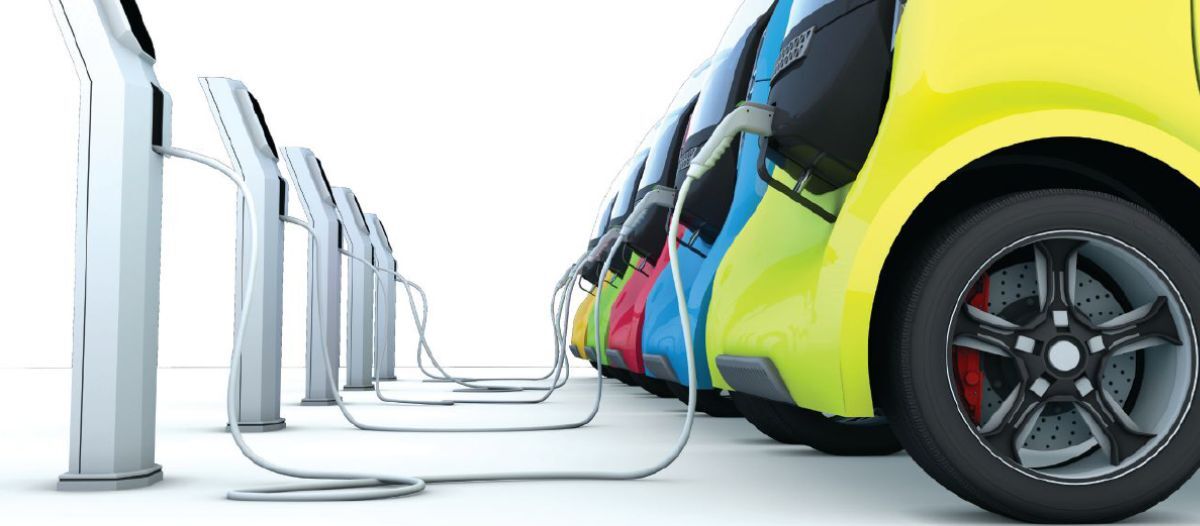
As electric vehicle (EV) ownership grows, charging infrastructure will need to keep pace. According to McKinsey & Company, on-site commercial charging will need to become a standard building feature in the next 10 years to meet consumer demand. That means facility managers looking to reap the benefits of the transportation revolution should prepare to participate now.
Businesses should look to electric vehicle (EV) charging as a benefit that opens possibilities and enhances tenant and customer experience. Organizations that have installed EV charging equipment on their properties report increased brand awareness, meeting sustainability goals, more visits by profitable clientele, attracting top talent and the chance to generate higher revenue.
Major retailers in the U.S., U.K. and Canada have led the way for EV charging, and are well known among EV drivers as destinations with plugs. Some gas station and convenience brands offer EV charging, too. It makes sense; fuel is their business.
But a company does not need a national footprint with millions of customers to enjoy the advantages. Medical practices, banks, art galleries, restaurants and other small business types can benefit from EV charging, too — especially if they operate fleets. Pharmaceutical delivery services, house cleaning companies, apartment complex maintenance or management crews, dry cleaning businesses and restaurant delivery services could benefit from on-site charging for employees or fleets. Reduced vehicle maintenance costs, lower emissions and dwindling fuel costs help fleet operators save money over the long term.
These perks have gradually trickled in for charging station hosts over the past several years as EV ownership has grown, but they are expected to soon flow freely. While challenges must be solved before mass EV adoption can take place, evidence from early adopters proves the benefits are plenty.
Early EV charging hosts share positive tesults
Powering brand values
When a California-based brewery installed its first charging station in 2009, hardly anyone used it, but it became known as one of the only places to charge up in the area. Now the company hosts several charging stations for public and staff use. Moreover, charging station apps have literally put the brewery on the map, showing drivers where stations are and where they can tour a great brewery while they wait.
Enticing an innovative workforce
Employees of organizations with EV charging appreciate the amenity and report using workplace plugs every day to charge up. Social networking platform LinkedIn corroborates that claim. Since it installed EV charging in 2012, LinkedIn states it has prevented 3,000 tons of carbon emissions by employees driving electric vehicles instead of combustion engine cars. That matters to the people who work there.
Some companies understand their younger, eco-minded workforce wants to work for an organization that shares its values. With EV charging, they can fulfill their employees’ desires and make their lifestyles possible. Even for job-seekers who do not yet drive an EV but hope to someday, EV charging acts as a great recruitment tool.
Attracting profitable customers & connecting cities
A hotel with EV charging in Patterson, California, USA, attracts profitable clientele, fills a gap in charging infrastructure between higher-population areas, and is establishing itself as a leader in sustainability. Moreover, because the hotel charges a fee to charge, it is generating new revenue.
Is EV Charging Right for My Facility?
Analysis show EV charging brings benefits to all kinds of businesses, specifically:
-
municipal governments wanting to cut tailpipe emissions,
-
universities catering to environmentally minded students,
-
medical centers eager to prove their leading-edge status,
-
parking authorities interested in generating revenue in lots and garages,
-
and apartment complexes where numerous residents charge overnight.
The U.S. Department of Energy found that people are six times more likely to drive an electric vehicle when they know they will have access to charging. That means facilities with EV charging spur adoption. Down the road, communities could see better air quality, reduced CO2 emissions and, hopefully, reductions in childhood asthma and lung disease.
It takes time and planning for businesses to implement the changes required to accommodate electric vehicles. Depending on the type of outlets a business installs, fully charging one vehicle could take 20 minutes (Level 3 DC fast charger), two to three hours (Level 2), or as much as eight to 10 hours (Level 1, standard wall outlet). Plug type depends on the models and number of vehicles that will need to charge at a particular facility.
Destinations where customers pop in for groceries may require fast chargers. Corporations offering charging for employees may do fine with Level 2. Meanwhile, businesses with fleets that will be parked overnight should plan longer-term, considering factors like overall energy usage at their facilities as well as when vehicles will need to charge.
Equipment vendors and utility providers offer comprehensive guidance for charging hosts, and it is best to seek their advice before installing.
Is the EV boom really coming?
The transformational shift toward electric mobility is already here. Consumers, governments and industry have made great strides over the past year in expanding EV ownership and infrastructure around the world. While the pandemic slowed vehicle sales overall, buyers showed increased EV interest.
In the U.S., 345,000 EVs were sold in 2020, according to CleanTechnica, which is about 100,000 more than were sold the year before. China, which has led the EV transition for years, saw nearly 1.3M EVs sold in 2020, according to InsideEVs.com. Europe showed nearly 1.4M EV sales, according to EVvolumes.com, representing a 137 percent spike in ownership above 2019. Analysts expect sales to jump further in 2021 — possibly by as much as 70 percent. That could largely depend on availability of public charging.
Nearly 30,000 public charging stations existed around the U.S. at the end of 2020, up from 21,000 in 2019. Statista reported that, across Europe, EV drivers had access to nearly 286,000 public charging stations in 2020, and that China now hosts more than 516,000 public charging stations.
Time will tell if public charging can keep pace with EV sales in the coming years. Factors driving those sales include:
-
government prioritization,
-
availability of new electric models,
-
strategic partnerships,
-
and consumer demand.
Government prioritization
The U.S. has placed electric vehicles at the forefront of plans to move toward a zero carbon future. By funneling investments into new domestic manufacturing, technology, battery production and charging infrastructure, the U.S. government is poised to solve the chicken-and-egg problem that has long plagued EVs. Through introducing lower emissions standards for U.S. automakers, the government intends to shift buyer demand away from combustion- powered cars and toward EV.
The European Union and China have proved that measure works. Both implemented more stringent CO2 emissions standards in recent years and, today, enjoy higher EV sales. So, nations like the U.S., Canada, Japan and Germany are extending tax credits and cash rebates for the purchase of EVs and for the installation of charging equipment. Some are also taxing the sale of combustion- powered cars.
According to Electrek, when the U.K. eliminated a tax on the sale of company cars last April, EV leases skyrocketed by 91 percent. Wallbox stated that, of Norway, where electric vehicle sales surpassed 50 percent market share in 2020, “The accumulation of... EV tax breaks, plus the hefty 25 percent tax on fossil-fuel cars, means that EV models in Norway are often more affordable than fossil-fuel cars, even without the EV subsidies that are available in other countries.” Wherever EV drivers buy, need for public charging will surely climb.
Industry mindset shift
In response to the shifting EV landscape, automakers promise to offer more electric models in the coming decade. Honda announced two-thirds of its vehicles will be electric by 2030. Toyota is aiming for sales of its hybrid-electric cars to hit 50 percent globally by then. Even auto giant and long-time fossil fuel proponent General Motors recently announced it will produce 30 electric models by 2025.
Meanwhile, package delivery companies have successfully put electric vehicles on the roads. Local bus routes in India, Scotland and around the U.S. have gone electric, too. Even the U.S. Postal Service could be converting its mail trucks to battery power. Thanks to electric fleet vehicle manufacturers that supply battery powered buses, vans and trucks, companies that operate fleets can now meet the challenges of the transportation shift.
The used vehicle market for EVs is also, at last, making ownership more affordable for average consumers. While analysts at EVAdoption.com said mass adoption is still speculative, cost will continue to be a major factor for drivers. Tax incentives that extend to used EVs could further spur adoption.
However, most EV models show rapid depreciation, according to CleanTechnica. While lower values may sting EV owners looking to trade in older models, they open a viable pathway to ownership for those who cannot afford luxury prices. As Edmunds explains, the cost of a used 2018 BMW i3 is around US$20,000, while buying the electric sedan new costs about US$45,000. That makes buying a particular used model comparable to — if not more affordable than — a new combustion-engine car.
Strategic partnerships
Electric utilities want to support widespread electric vehicle adoption. Obviously, they see it as a revenue-generating endeavor, but they also know EVs are the future. They want to be integral players in the EV industry ecosystem.
They understand that, to achieve mass adoption, they must support commercial facilities with help in trenching for new lines and replacing transmission systems to allow for charging stations. Utilities also know they must partner with charging equipment manufacturers, government regulators and community groups to expand infrastructure access — not just to affluent communities, but to low-income, rural and urban ones too.
To achieve that, some utilities are leveraging artificial intelligence to conduct research into EV adoption in their regions. Predictive data and location analytics shows them which residential customers are most likely to buy EV next, and which commercial businesses are most interested in offering charging. They can track the pace and direction of infrastructure expansion and understand who is leading the adoption curve. This helps them strategize to build effective partnerships with entities looking to take EV charging seriously.
Consumer thirst
Early EV adopters express satisfaction with their silent-running vehicles. Positive reviews signal to the masses that buying EV is safe, cost-effective and a good environmental choice. Now, mainstream buyers look forward to the slate of new electric models that automakers have promised. According to a December 2020 Consumer Reports survey, “71 percent of U.S. drivers say they would consider buying one at some point in the future, with nearly a third indicating interest in an EV for their next vehicle purchase.”
Because of COVID-19, many commuters have avoided public transit, but that has driven demand for private modes of transit, “The e-bike market in 2020,” according to Forbes, “[was] already up by 23 percent year on year, and on the current trajectory, there will be 10 million e-bikes sold per year as early as 2024.” More public charging infrastructure, whether for scooters, bikes or cars, will doubtless be required to meet this growing thirst.
Enhancing the tenant experience
For FMs wondering whether EV drivers will actually use charging equipment if it is made available, the answer is a resounding yes. Given what is known about the massive transportation shift already under way, organizations dipping into EV charging will become key players in spurring mass adoption and, thus, reap the benefits. EV charging attracts great customers and high-caliber employees. It gives tenant businesses an edge above the competition and demonstrates brand values. It could generate new revenue, and it signals to surrounding communities that innovation and environmental health truly matter.

Alison Alvarez is CEO and cofounder of BlastPoint, a customer intelligence software company based in Pittsburgh, Pennsylvania, USA. She is an expert in the fields of geospatial data analysis and computer science, and has built technology tools for the utility, automotive, retail, media and banking industries. Alvarez is an NSF Research Fellow, a Jack Kent Cooke Fellow, and a Swartz Entrepreneurial Fellow, and she served as an advisor to Y-Combinator’s Valor Water. An author and renowned public speaker, Alvarez holds a master of science degree from the Language Technologies Institute at Carnegie Mellon University’s School of Computer Science and a Master of Business Administration from CMU’s Tepper School of Business.
Read more on Real Estate , Facility Technology & Data Management and Facility Operations or related topics Operations and Maintenance Planning , Energy and Facility Technology
Explore All FMJ TopicsRelated articles
-

Plugged In
Solving the data disconnect in real estate and FMBy Amanda Muzzarelli & James Waddell07.01.2024 -

Food for Thought
Installing pop-up food programsBy Stafford McKay09.18.2024 -

Guarding Against Graffiti
Protocols that help prevent & remove graffiti on college campus buildingsBy John Lesak & Sarah Brummett11.26.2024