
 Membership
 Network
 Regional Sites & Affiliates


 Events
 Participate
 Resources

 Training
 Credentials
 Government


 Content Channels
 Tools
Tools


 Business Overview




Knowledge-driven FM
A sustainable approach with lessons from the Far North

Buildings use more energy than any other part of the world economy and produce about a third of all greenhouse gas emissions. These facts place facility managers at one of the most important control points for climate change, even though the profession has spent most of its history working quietly in the background.
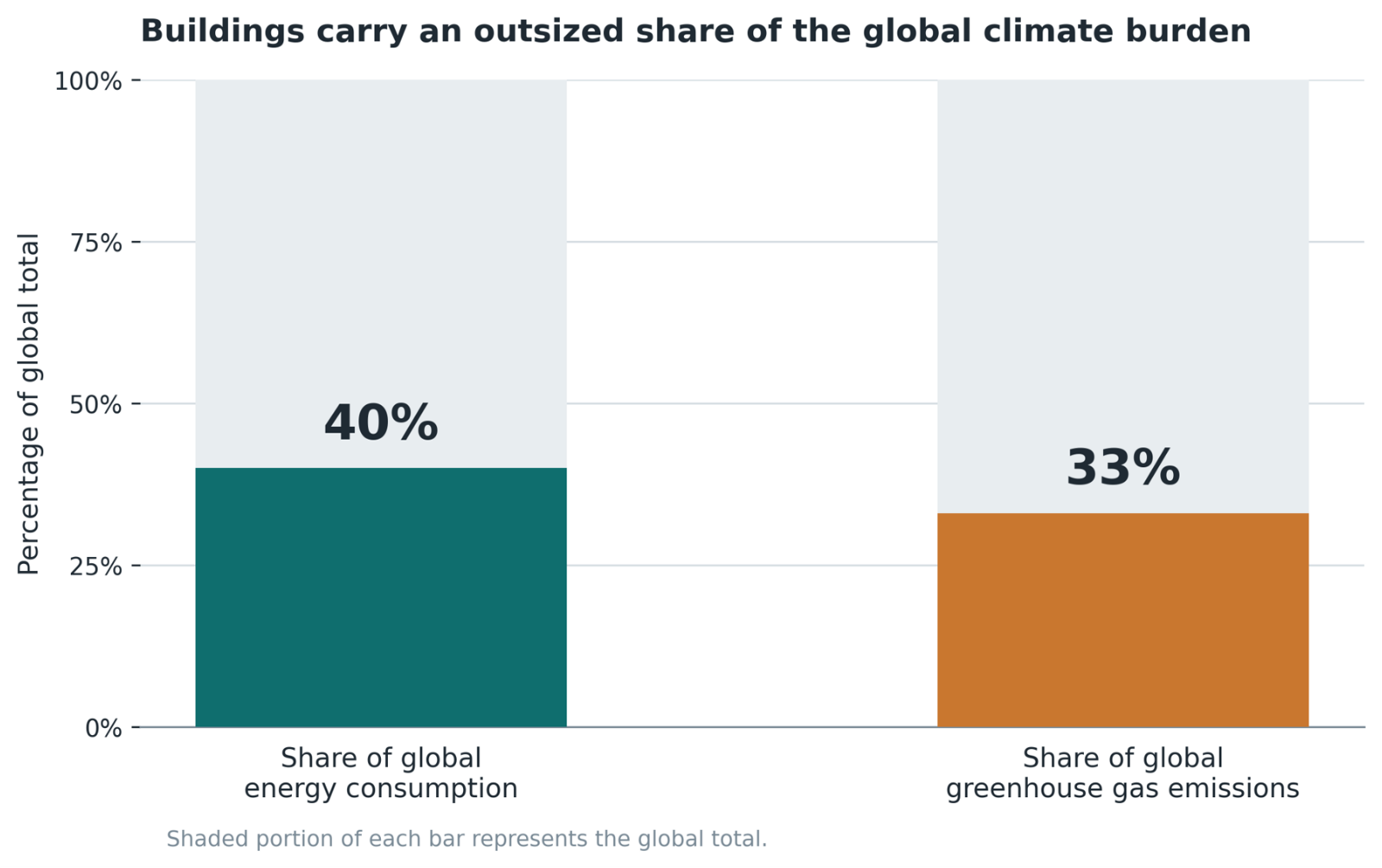 Figure 1. Buildings account for roughly 40 percent of global energy consumption and 33 percent of greenhouse gas emissions.
Facility management is the work of keeping buildings safe, comfortable, efficient and suited to whatever happens inside them. For a long time, the job was judged by how few complaints reached the front desk. That measure no longer holds. With rising energy costs, carbon reporting rules, aging infrastructure and a shrinking pool of skilled trades, the quality of FM decisions carries weight far beyond the boiler room.
Knowledge-driven FM is a response to that shift. It treats what an organization knows about its buildings as a real asset, the same way it does a roof, the mechanical plant and the maintenance budget. The idea sounds simple. Putting it into practice changes almost everything about how a facility team works.
What knowledge driven means
Most buildings already generate a great deal of information. Meters record consumption. Work orders record faults. Long-serving staff carry institutional knowledge of every quirk in the heating system. The problem is that this information is rarely gathered, compared or used to shape the next decision. It sits in filing cabinets, in software that nobody opens and in the heads of people who eventually move on.
Knowledge-driven FM closes that gap. It combines the facility’s recorded experience, digital tools, sustainable planning and continuous learning so decisions are made from evidence rather than habit. A building operated this way does not simply react when something breaks. It anticipates.
The approach grew out of a wider idea, sometimes described as Society 5.0, a vision of an economy in which digital systems and physical spaces work together, and knowledge becomes the main driver of value. Applied to buildings, that vision has a practical shape. It means knowing which piece of equipment is drifting out of tolerance before it fails and being able to explain to a board why one office uses twice the heating fuel of another.
Four building blocks
The first block is recorded experience. Procedures, maintenance history and the expertise of staff must exist somewhere other than memory. Writing down why a decision was made is often more valuable than recording the decision itself.
The second is digital tools. Connected sensors, smart meters and analysis software turn a building into a machine that reports on its own condition. Technology is no longer expensive or exotic, and the useful parts of it are the parts that answer a question somebody asked.
The third is sustainable asset planning. Choices made at design and procurement stage determine most of what a building will consume over its life. Thinking in terms of the whole life cycle, rather than the purchase price, is where the largest savings exist.
The fourth is continuous learning. Training, structured review and the sharing of lessons across sites turn isolated fixes into organizational improvement. Without this block, the other three decay quietly.
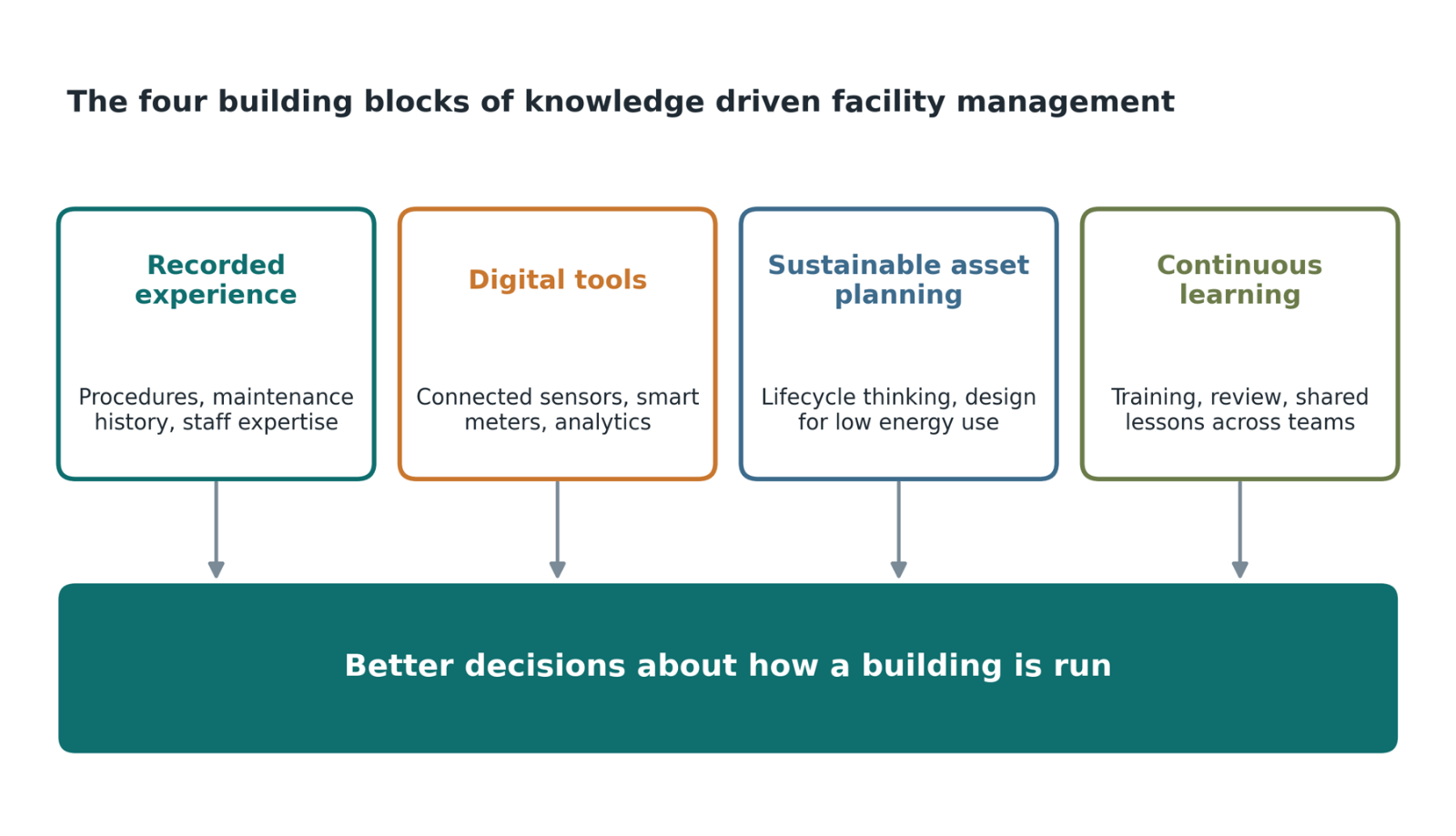 Figure 2. Four building blocks that together support evidence-based decisions about how a building is run.
What is pushing the change
Two forces are moving the profession in this direction at the same time.
The first is accountability. ESG has moved from a voluntary gesture to an expectation held by investors, lenders, insurers and tenants. Organizations are asked to show what their buildings consume, what they emit and what they are doing about it. Vague reassurance does not satisfy that request. Evidence does, and evidence requires the sort of record keeping that knowledge-driven practice is built on.
The second is capability. Smart building systems manage and adjust heating, ventilation and air conditioning, automatic lighting control, security monitoring and indoor air quality tracking all in real time. These systems produce a steady stream of data. Without a knowledge framework around them, that stream becomes noise. With one, it becomes the basis for decisions that save money and reduce emissions at the same time.
ISO 41001 points the same way. It asks organizations to define objectives, measure performance and improve what the measurements show. That is knowledge-driven practice in the language of an audit.
A demanding place to test the ideaIdeas about sustainable building operation are usually developed in temperate cities with dense infrastructure and deep labor markets. Canada’s Northwest Territories offers none of those advantages, which is exactly what makes it valuable as a test. Buildings across the territory face temperature swings that would be considered extreme almost anywhere else. Heating loads are high and sustained. Many communities are reachable only by air, or by winter roads whose reliable season is getting shorter. Specialist trades are scarce, and a technician flown in to diagnose a fault carries a cost that would be unremarkable further south. Permafrost adds further complication, because ground that was once dependably frozen now shifts in ways that affect foundations and buried services. Each of those pressures rewards the same response. When a site visit is expensive, knowing which visit is necessary matters enormously. When heating fuel is costly and difficult to deliver, understanding consumption patterns matters more than in a place where fuel is simply ordered. When the workforce is thin, recorded knowledge is what allows a small team to operate a large portfolio competently.
There is a second reason the territory is instructive. Northern teams have long relied on judgment built from experience rather than on abundant resources. Knowledge-driven practice holds that judgment in a durable form, so it survives staff turnover and can be applied across a whole portfolio. The government of the Northwest Territories has set out an agenda that identifies environmental stewardship, community-centered research and the integration of indigenous knowledge as territorial priorities. Alongside it, investment in polytechnic education, institutional capacity and evidence-based policy builds the foundations of a knowledge economy. FM fits naturally within that framework. Buildings are among the territory's largest public assets and among its largest consumers of energy, so improving how they are run advances the wider agenda directly. Knowledge that does not come from a sensorA purely technical reading of knowledge-driven FM misses something important in a northern setting. Indigenous communities in the Northwest Territories hold detailed environmental knowledge developed over generations of close observation. That knowledge covers seasonal patterns, ice and ground conditions, wind behavior, water quality and how these are changing. It is precise, tested against reality and often predates any instrument record for the same location. For a facility team, this knowledge has practical value. It informs when a building should be prepared for changing conditions and which maintenance approaches suit the local environment rather than a manual written elsewhere. Bringing local and indigenous knowledge into operational planning also strengthens the relationship between a facility and the community it serves. Treating community expertise as a genuine input rather than a consultation exercise is one of the clearer distinctions between a knowledge-driven approach and a conventional one.
|
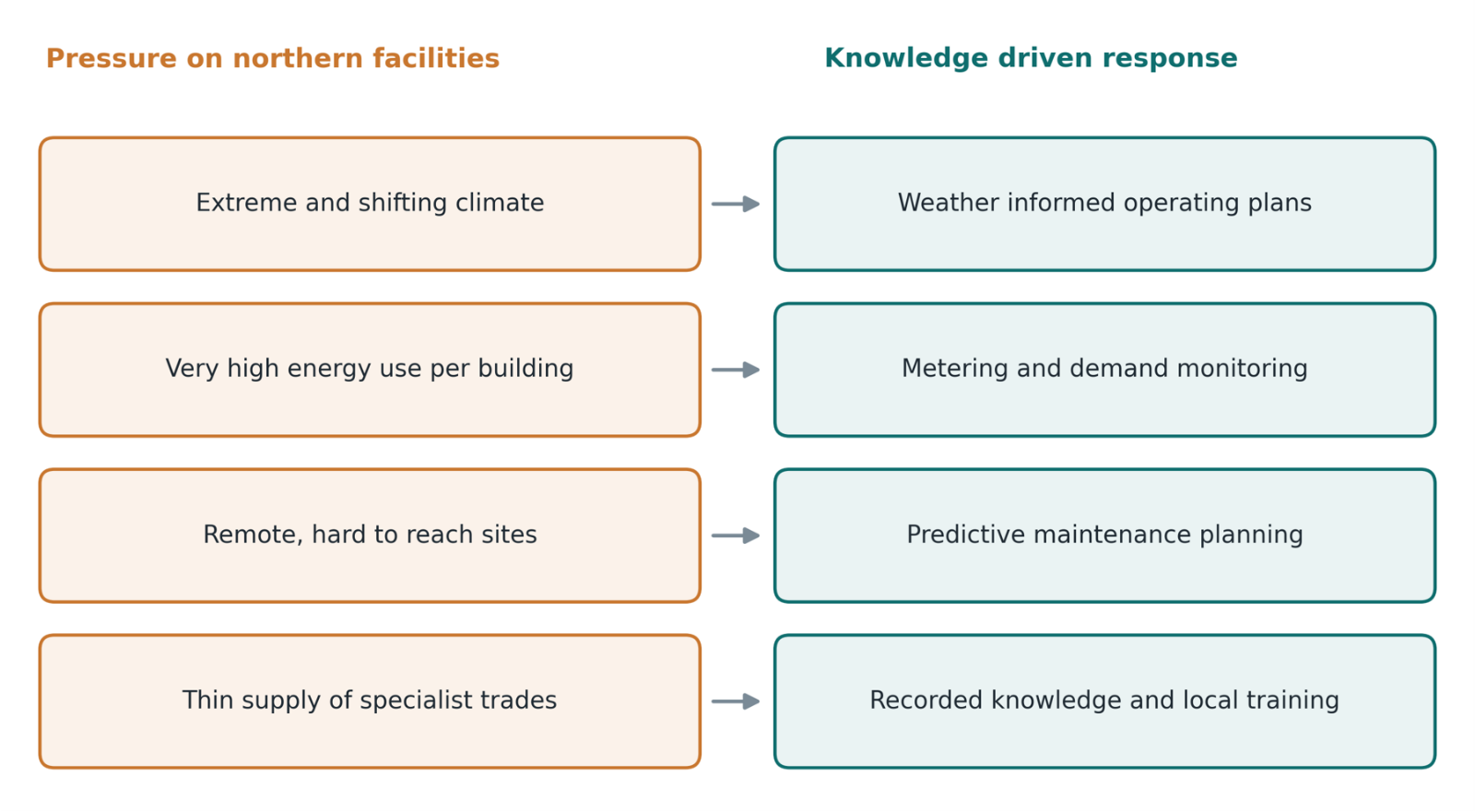 Figure 3. Every pressure that makes northern facility management difficult rewards the same knowledge-driven response.
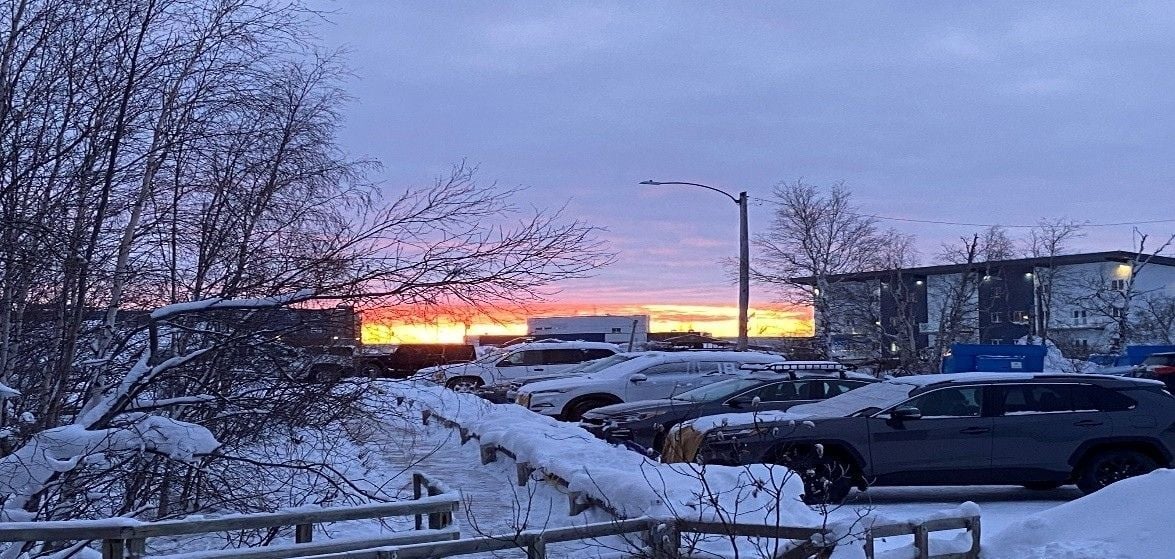 Figure 4. Aerial picture of the north in the winter months.
 Where the results show up
Energy is usually the first place where differences are identified. Upgrading HVAC equipment to high efficiency units, integrating renewable sources such as solar or geothermal where the site allows, and installing meters that report in real time all deliver measurable reductions. The meters matter more than when they first appear, because they turn energy from an annual invoice into a daily signal that a team can act on.
Water and waste follow. Knowledge-informed practice reduces consumption by identifying where it happens rather than applying reductions evenly across a site. A leak found through consumption data is cheaper than a leak found through damage.
Maintenance changes character. Instead of fixed schedules and emergency call outs, work shifts toward prediction. Equipment is serviced when its condition indicates a need, which extends its life and reduces both the number and severity of failures. In remote locations this shift has an outsized effect, because a fault caught early is corrected by local staff, while a fault caught later on requires someone on an aircraft.
Staffing pressure eases. A team that documents its reasoning can bring a new technician to a useful standard in weeks rather than years and can supervise remote sites without stationing an expert at each one. Where recruitment is difficult, that capacity is worth as much as any equipment upgrade.
Reporting also becomes easier. Organizations that already record and analyze building performance find that ESG disclosure and grant applications draw on information they hold rather than information they must scramble to assemble.
Where to begin
The approach does not require a large budget at the outset. Three steps are usually enough to start.
Capture what the organization already knows: the maintenance history, the recurring faults, the workarounds experienced staff apply without thinking. This costs nothing but attention, and it protects against the retirement of key people.
Next, meter and monitor. A single building with proper submetering will reveal patterns that reshape assumptions across a portfolio. Choose a building that matters and collect the data for six months.
Close the loop. Set a review point where the recorded information is examined, decisions are made based on it, and the results of those decisions are recorded in turn. This step is the one most often skipped, and it is the one that converts data collection into genuine improvement.
It all adds up
Knowledge-driven FM offers lower emissions, more resilient infrastructure, longer asset life and decisions that can be defended with evidence. It aligns with the reporting frameworks that organizations increasingly answer to, and it does so as a by-product of running buildings well rather than as a separate compliance exercise.
Its value is clearest in the harshest conditions. A territory with extreme weather, remote infrastructure, limited specialist labor and a deep tradition of environmental knowledge is precisely where operating on evidence rather than routine produces the greatest return. These lessons are not a regional curiosity. They demonstrate the disciplines needed everywhere as climate pressure, cost pressure and accountability rise.
Buildings will continue consuming a large share of the world's energy. How much they consume, and how well they serve the people inside them, depends on the quality of the decisions made every day. Better knowledge produces better decisions, and better decisions are the most reliable route to a sustainable built environment.

Abraham Olayioye is a multidisciplinary built-environment professional with extensive experience spanning construction project management, facility maintenance and reliability. He serves with the Government of the Northwest Territories, Canada, as a projects and facilities maintenance management coordinator, bringing together technical expertise, project leadership, asset stewardship and operational excellence. With decades of practical industry experience, he contributes to the built environment through sustainable infrastructure development, construction safety, facilities performance and knowledge advancement, while authoring professional works that support the growth of practitioners and the industry.
References
Further reading:
International Energy Agency. (2025). Buildings and energy.
Smuts, H., & Van der Merwe, A. (2022). Knowledge management in Society 5.0: A sustainability perspective. Sustainability, 14(11), 6878.
Charts and photos provided by the author.
Read more on Facility Operations , Sustainability and Facility Technology & Data Management or related topics Facility Technology , Sustainable Facility and Operations and Maintenance Planning
Explore All FMJ Topics