
 Membership
 Network
 Regional Sites & Affiliates


 Events
 Participate
 Resources

 Training
 Credentials
 Government


 Content Channels
 Tools
Tools


 Business Overview





Lithium-ion Fire Protection
What FMs need to know
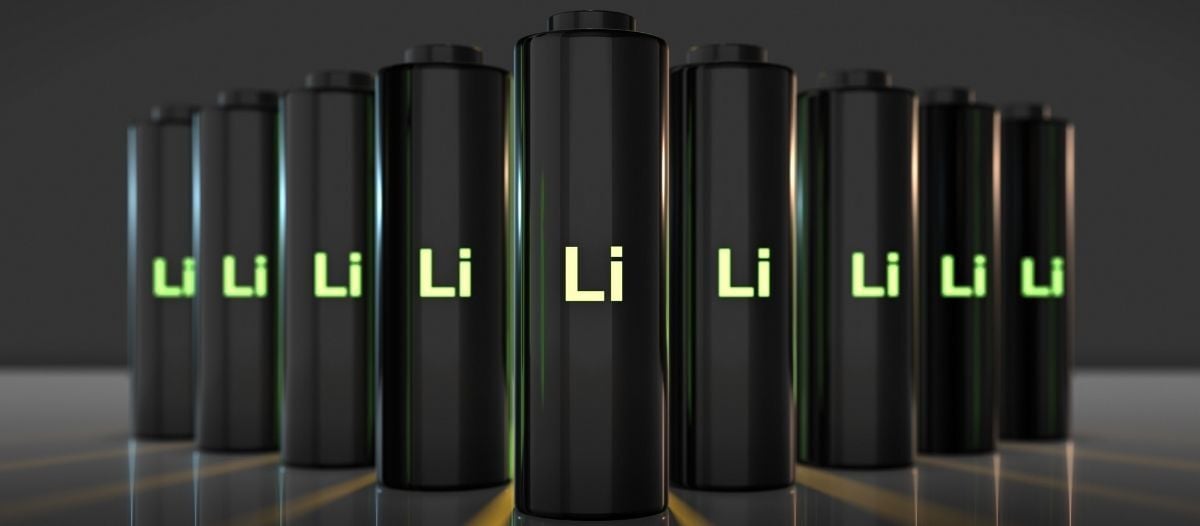
Lithium-ion (Li-ion) battery technology has become the industry standard for powering the spectrum of consumer electronics, tools, electric vehicles and backup power systems. With a high energy density, slow self-discharge and small memory effect, Li-ion batteries have been readily incorporated into warehouse storage, military, automotive, aerospace and power storage applications, among others. Additionally, grid-scale energy storage has reached a new dimension as megawatts of electrical power are being stored both to support the electrical grid and to provide on-demand power for residential, commercial and industrial facilities.
Li-ion battery hazards
Li-ion batteries have a much higher energy density than legacy battery technologies, such as nickel metal hydride, nickel cadmium and lead acid, providing both space and weight savings while significantly increasing the run time of the end device. However, these benefits come at a cost of an increased risk of fire potential. Li-ion is one of the only battery technologies that incorporate a flammable organic electrolyte. Research and industry experience has demonstrated that physical damage, electrical abuse (i.e., short circuits and over charging), and exposures to elevated temperature can cause a runaway reaction within a Li-ion battery or cell that can lead to an explosion or fire. This is referred to throughout the industry as thermal runaway. Manufacturer’s defects such as imperfections or contaminants in the manufacturing process can also lead to thermal runaway under certain conditions.
Li-ion batteries tend to fail in one of two ways: at a high state of charge (i.e., fully charged batteries) via flaming, overpressure and flaring, or at a low state of charge via non-flaming venting of the flammable aerosols and gases. At a low state of charge, the vented products are flammable and can be ignited when exposed to an ignition source like an open flame or spark. At a high state of charge, the venting is extremely forceful and involves a much larger volume of flammable gas or aerosol. The electrolyte will ignite upon cell rupture forming small, torch-like fires. In some instances, there can be a stronger, substantial overpressure created with the electrolyte release. In these failure scenarios, flaming debris can be violently expelled from the battery.
During a battery failure reaction with no ignition, the gases consist primarily of electrolyte constituents. This fragmented electrolyte typically contains about 30 percent hydrogen, 30 percent carbon monoxide, 30 percent carbon dioxide and 10 percent smaller chain hydrocarbons. Based on this composition, Li-ion electrolyte gas mixtures have a lower explosive limit (LEL) on the order of 6-10 percent by volume. As a result, the venting of cells and battery packs have the potential to produce explosive concentrations and significant fireballs and overpressures if the gases are confined before ignition, thus, identifying the need for explosion prevention measures.
When a Li-ion battery has sustained a flaming failure, the electrolyte is the main fuel producing primarily nitrogen, carbon dioxide and water as the byproducts. The energy from the fire can also liberate hydrogen fluoride gas, which will form an acid when in contact with water or humidity. Other gases that can pose a danger can be produced by this reaction and include chemical species that can create phosphoric acid. The toxicity of these gases must be considered when addressing the potential risk to personnel at facilities that contain Li-ion batteries.
Energy storage systems
A primary facility safety concern in the Li-ion battery market involves energy storage systems (ESS). There are facilities implementing ESS in both indoor and outdoor settings without fully assessing the fire and explosion risks or conducting analyses to determine the appropriate fire protection. Data centers are a primary example of this challenge: older data centers’ equipment upgrades increasingly include battery backup systems that contain Li-ion technology, while newer data centers are frequently being retrofitted into existing buildings in smaller spaces. The inclusion of Li-ion battery technology in these smaller spaces creates both fire, explosion and toxic hazards that are typically overlooked.
An example: an aging data center was upgrading equipment and wanted to remove older lead-acid battery backup machines and replace them with smaller Li-ion battery power storage units. Because the energy storage in the new battery was relatively small, the facility did not consider them to be a hazard. With analysis, it was determined that there was a risk associated with both fire and explosion hazards that needed to be addressed. This problem is not just in data centers, but across the board in many facilities that are using or storing Li-ion battery technology without fully understanding the hazards.
Warehouse storage of Li-ion cells
In addition to the concern of the installation and protection of ESS, Li-ion cells, modules and batteries are being transported, shipped and warehoused in larger and larger quantities throughout the world. Few companies that are engaged in these activities understand the hazard this creates and the best way to mitigate it through appropriate fire protection.
An example: a portion of a typical, aging office park/light industrial facility was planned to be repurposed to house electric products containing Li-ion battery packs. The sprinkler system was only designed for a light hazard occupancy and no fire alarm system was required or installed within the building. An analysis of the hazard associated with the large number of Li-ion battery packs determined that sprinkler system was inadequate to be able to control a potential fire starting in the Li-ion battery packs. Additionally, the facility was not staffed over a 24-hour period, thus, the lack of a monitored fire alarm system was identified as a substantial risk that could result in a catastrophic loss if a fire were to occur when the facility was not staffed.
Regulatory standing
The fire, explosion and toxic hazards within Li-ion energy storage systems and storage applications can be challenging to mitigate. Additionally, the heat release rates and rapid burning create Li-ion battery failure fire scenarios that are not readily apparent. Compounding this problem is the lack of guidance in the regulatory codes and standards that existing and new construction building projects are subject to. In particular, NFPA 13: Standard for the Installation of Sprinkler Systems contains no design specifications on how to protect spaces that contain Li-ion cells and batteries.
Regulatory agencies are aware of this challenge and are working to mitigate this issue. In 2019, the National Fire Protection Association released the first version of NFPA 855, Standard for the Installation of Stationary Energy Storage Systems, 2020 Edition, which provides useful guidelines to suppliers, system integrators and operators/owners. NFPA 855 is on the standard three-year revision cycle and has already begun work to continue to provide fire protection guidance to minimize the hazards of Li-ion ESS, with a new revision expected in early 2023. Even with this positive moment in the regulatory environment, it may be several years before prescriptive solutions are available for facility managers.
Gap analysis & fire protection best practices
Many companies are looking to get ahead of any forthcoming regulations and assess the safety and fire protection of their energy storage systems and Li-ion storage applications. Even with the gap of knowledge in the regulatory environment, research has been conducted into the best practices to protect Li-ion energy storage systems and Li-ion storage applications. In general, water-based fire sprinkler systems in combination with a monitored fire alarm system have been found to be the most effective.
To better determine the most effective fire protection strategies, each facility can start by developing a hazard analysis at the design stage to safely mitigate any known hazards. Additionally, an existing facility can request a walkdown and hazard analysis of their current processes. From there, fire, explosion and toxic gas hazards from a Li-ion battery failure can be characterized and recommendations can be developed to address these failure points. As a result of previous hazard analyses, seven consistent best practice recommendations have been developed and can be applied by FMs to mitigate the hazards associated with Li-ion energy storage systems and Li-ion storage applications.
-
Conduct a hazard analysis
-
Provide a monitored fire detection and notification system
-
Install a robust water-based sprinkler system
-
Separate Li-ion applications from other areas with fire-rated construction
-
Maintain clearances to combustibles from Li-ion applications
-
Provide separate HVAC systems for Li-ion application areas and ventilation to mitigate explosion hazards
-
Develop an emergency management plan for a facility to respond to a Li-ion emergency
The demand for Li-ion powered devices continues to accelerate. More companies than ever are building their own Li-ion cell manufacturing facilities, utilizing energy storage systems and expanding the storage of Li-ion batteries into less protected building facilities. The types of hazards and facilities associated with Li-ion applications can provide challenges to a range of battery and device manufacturers and storage facilities teams. Some examples of these include:
-
Cell and battery pack manufacturing facilities
-
Li-ion battery pack integration into power tools
-
Electric vehicle manufacturing facilities
-
Automatic storage and retrieval system (ASRS) facilities that plan to store a large amount of Li-ion cells
-
Large-scale charging station development for Li-ion powered public transportation buses
-
Warehouse storage of Li-ion cells, packs, modules and full batteries

Jerry Back is a senior fire protection Engineer with Jensen Hughes, with more than 33 years of experience. For 15 years, his focus has been on assessing lithium battery hazards and developing mitigation techniques and procedures. He is a certified fire investigator and has conducted numerous origin and cause investigations as well as assessments of failed fire suppression systems.

Dr. Jason A. Sutula is a fire protection engineer with Jensen Hughes, with more than 20 years of experience. He has specialized in fire protection and special hazard analyses involving the manufacturing, testing, storage and usage of industrial products and consumer electronics containing Li-ion batteries. Over the last eight years, Sutula has conducted research on the flammability characteristics of Li-ion batteries and conducted fire hazard analyses of Li-ion batteries in commercial and industrial facilities.
References
Top image via Getty Images.
Read more on Facility Technology & Data Management and Risk Management or related topics Facility Technology , Energy , Occupant Safety and Risk Management
Explore All FMJ TopicsRelated articles
-

Artificial Intelligence in FM
The stakeholder’s perspectiveBy Dr. Jake Smithwick & Dr. Kenneth Sullivan & Nneka Ubi05.01.2024 -

Don’t Drop the Ball
How a CMMS can make or break an FM organization’s successBy Michael Carmean09.17.2024 -

Beware of Growing Cyberthreats
Why it’s time for stronger facility cybersecurityBy Andrew Harris & Eric Headington10.30.2024