
 Membership
 Network
 Regional Sites & Affiliates


 Events
 Participate
 Resources

 Training
 Credentials
 Government


 Content Channels
 Tools
Tools


 Business Overview





Lower Emissions, Higher COPs
Reducing energy burdens with heat pumps
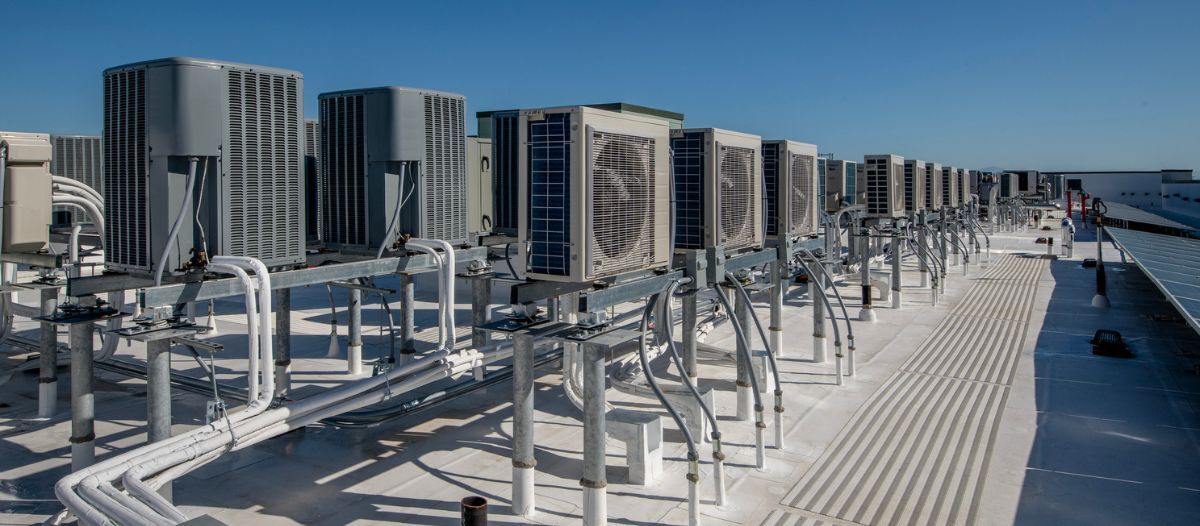
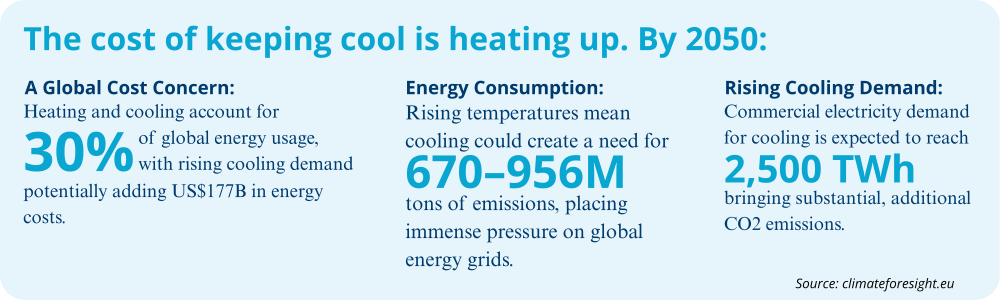
With commercial energy consumption accounting for approximately 30 percent of all global energy use, organizations are experiencing significant financial effects from rising retail electricity prices.
Facility managers and building owners stand to benefit from exploring alternative heating and cooling technologies that can make a difference in increasing energy efficiency and providing cost savings. Heat pumps can be adapted to most buildings and can reduce energy burdens and increase efficiency for organizations.
 Like any technology, several options exist when it comes to heat pump devices, and the most effective solution for a given organization or facility depends on a few different considerations. Proper planning and informed decision-making when considering heat pump adoption can lead to a worthwhile investment with considerable returns.
Heat pumps compared with traditional heating & cooling systems
Conventional heating systems generate heat by burning fossil fuels to power a boiler or furnace or use electric resistance; but heat pumps can do the job far more efficiently. These devices can provide both heating and cooling, offer greater control and cost less to operate than boilers and cooling towers.
Heat pumps use a refrigeration cycle to move heat from a source, like ambient air, ground or water, to “the sink” – a facility for water or space heating.
Typical window AC units keep the interior cold by pumping the heat to the outside air. The same concept is applied in many other ways for large buildings using HVAC equipment. Rooftop heat pump air conditioners can provide cooling or heating directly to the building’s air, and domestic hot water heat pumps can generate hot water without the need for a boiler or steam connection. For geothermal applications, heat pumps push heat into the ground in the summer and pull heat from the ground in the winter.
Why heat pump technology is ideal for commercial facilities
FMs have plenty to oversee to ensure operations run smoothly; the last thing they need to worry about is excess expenses. As they work through budgeting considerations and compliance with regulations aimed at reducing carbon emissions, investing in affordable, efficient solutions can be worthwhile.
In the U.S. alone, around half of commercial square footage is heated and cooled by rooftop units (RTUs), and heat pumps can provide long-term cost savings through their energy efficiency benefits in comparison. For example, emergency repairs or replacements for heat pumps can be cheaper when compared with conventional RTUs; and for commercial retrofits, the cost of heat pump adoption can be counterbalanced with consideration to the long-term savings, availability of rebates and incentives, and ability to lower utility bills.
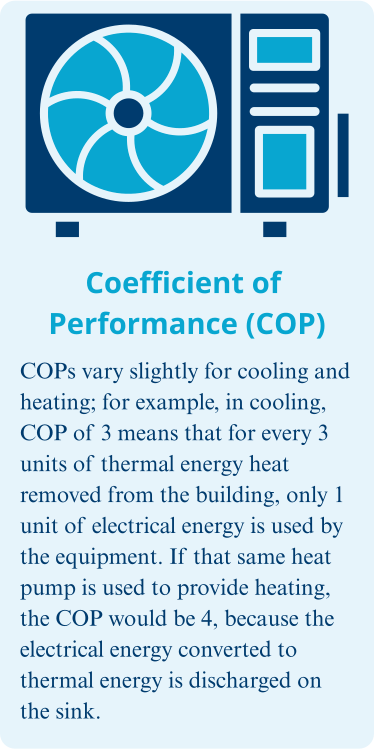
 Heat pumps provide more energy as heat than they take in as electricity. Every unit of energy used to power a heat pump translates into multiple units of heating or cooling, which can result in reduced energy bills and an improved carbon footprint. This is gauged with a measurement called coefficient of performance (COP). COPs vary slightly for cooling and heating; for example, in cooling, COP of three means that for every three units of thermal energy heat removed from the building, only one unit of electrical energy is used by the equipment. If that same heat pump is used to provide heating, the COP would be four, because the electrical energy converted to thermal energy is discharged on the sink.
These impacts are especially significant when comparing the carbon outputs and financial implications of conventional systems that rely on burning fossil fuels or converting electrical energy directly into heat.
Choosing the right heat pump
The long-term benefits of heat pump adoption are easy to see but knowing how to choose the best heat pump for a particular application is not always as straightforward. To provide an overview, almost all heat pumps are electric, with the exception of older models, which ran on steam. The two most prominent commercial heat pump types are air-to-water heat pumps (AWHPs) and geothermal heat pumps (GHPs).
AWHPs use the outdoor air as a source of heat, then deliver that heat to water, which is then circulated within the building. AWHPs can use more energy when outdoor temperatures are cold. It is important to ensure the design engineer understands the operation and features of a heat pump system. Manufacturers can cherry-pick performance data at favorable outdoor temperatures, so it is important to be specific. For example, the U.S. Department of Energy’s heat pump water heater standard is to test at 67 F, but most heat pump water heaters will spend time operating in colder conditions throughout the year. AWHPs are simple to install and cost-effective but can be noisy and less efficient at extreme temperatures. Organizations that do not have the resource access to install water-to-water or GHP can simply replace their current RTUs with air-source commercial heat pump rooftop units.
 GHPs use the ground as a heat source in the winter and heat sink in the summer. Ground-source systems can be more efficient than air-source, but require available land and drilling, which can increase initial costs. The land required makes geothermal difficult in some city applications, but it is not necessarily a dealbreaker. GHPs use underground temperatures that remain near 50 F year-round for efficient heating and cooling, with long-term savings and quiet operation. They have higher initial costs, balanced by consistent, long-term performance.
Heat pumps are a highly efficient and cost-effective HVAC solution for reducing carbon emissions and operational costs in commercial facilities. FMs looking to tighten their budgets and comply with emissions regulations should investigate their options, and evaluate their organization’s needs, goals and desired ROI. When working with an engineer to select a heat pump system for a building, be sure to ask about any incentives available from federal, state and local governments. Many jurisdictions have programs available to provide assistance to organizations installing heat pumps on their properties. Heat pump manufacturers can help FMs better understand the application and provide education on their features and specs to ensure an organization’s goals are achievable.
When used properly, heat pumps can be a resilient, worthwhile investment. It is important for FMs, owners and building engineers to understand what their needs are, and how heat pumps are best selected.

Drew Maggio serves as the Technical Director of HIGHMARK, a company supporting building decarbonization, electrification, cost savings by bringing innovative building-efficiency technologies to New York City. He joined the company in 2023 and has since played a pivotal role in augmenting the business through his expertise in documentation, process automation, and strategic engagement with industry groups such as NESEA, NY-Geo, NY Passive House and NYSERDA. Maggio earned a BE, Mechanical Engineering from Stevens Institute of Technology.
References
Top image by Getty Images.
Read more on Facility Operations or related topics Building Systems
Explore All FMJ Topics