 Membership
 Network
 Regional Sites & Affiliates


 Events
 Participate
 Resources

 Training
 Credentials
 Government


 Content Channels
 Tools
Tools


 Business Overview





Planning to Improve
Raising your facility's IAQ
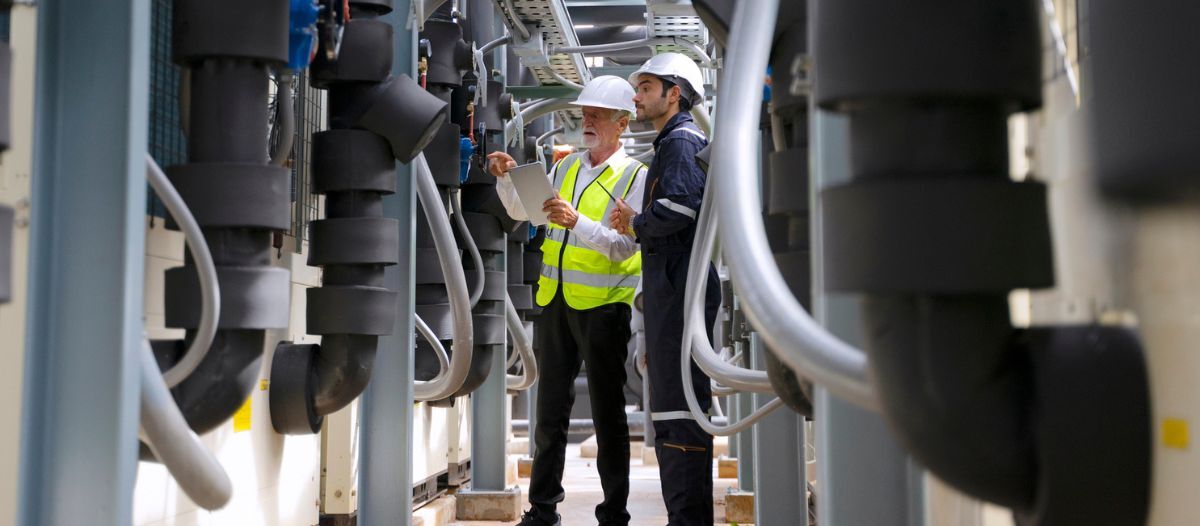
Improving indoor air quality has shifted from a consideration to an imperative. Research suggests COVID-19 droplets may remain in the air and could be a primary source of transmission, so the conversation has expanded to IAQ. This is yet another massive adjustment that facility management teams must factor in to ensure they are creating safe, healthy environments as more people return to their workplaces throughout the year.
IAQ raises a new set of issues related to the inherent complexities, costs and data gaps associated with air quality management. It’s clear that FM, engineering teams and project management teams must collaborate and use data as a common source of truth to establish a strategic approach tailored to their buildings and industry. For improving IAQ, four points frequently emerge.
1. IAQ is complex to measure & manage
HVAC is one of the most complex systems for FM because it goes deep into the system itself, but also factors in the age of the building, ability to bring in 100 percent outdoor air, air return rates, climate, humidity and other factors.
What had been a focus on climate control has escalated into a deep understanding of whether the air management system is resilient enough to help reduce airborne pollutants, including pathogens like COVID-19. Playing an ugly game of catchup, is a fair characterization for many organizations.
So where does a team start?
The best steps are for the FM director, engineering teams, project management teams and building owners to understand and document the specifications and issues of their HVAC system from air exchange rates to fi lters and maintenance before exploring options and technologies to improve IAQ. A collaboration between these teams is crucial because it creates a common source of truth to attack the problem quickly and in unison.
2. A factual baseline is the best starting point
IAQ lacks clear, comprehensive standards. The complexity of the issue leaves most teams with a gap in data to define the potential problems and then devise solutions.
This brings up important questions like:
-
We need to improve air quality to what level?
-
What’s most important for my building?
-
What are the dependencies and impact on the overall system if I start making improvements?
Having metrics on key IAQ indicators such as temperature, carbon dioxide concentrations, air-exchange rates and indoor humidity levels establish a factual baseline to evaluate the wellness of your facility and its unique conditions.
Building a baseline and using risk assessment tools deliver hard data to help executives assess and identify IAQ challenges to make informed decisions, prioritize documentation, identify best next steps and provide fact-based evidence for their stakeholders and executive teams. FMs can then identify, prioritize and solve IAQ issues across their facility:
Categorize facility risk exposure. The facility’s overall risk level is identified as low, medium, high or very high.
-
Identify highest priorities. The facility’s specific risk level defines the most important and effective strategies to take.
-
Develop targeted solutions based on risk level for maintenance, lighting and HVAC systems. A report of fact-based recommendations forms a comprehensive, short- and long-term strategy for reopening and operating more safely. Collaboration and communication are crucial. FM and engineering teams get invaluable information from each other. The dialogue from answering these questions is as valuable as the answers. There is often push and pull between engineering and business directors as they discuss the issues, needs and priorities. The benefit of the risk assessment is that teams get new information and critical detail on what is known and unknown about their building’s IAQ and systems.
3. Identify problems first, solutions next
“Is the solution retrofitting our HVAC System?” “HEPA filters?” “Do we need to add new technology?” “What about UV lighting?”
When COVID-19 was identified as a new threat, it was easy to assume that new technology was required. The IAQ marketplace became flooded with solutions. It is important to use risk assessment data diagnostically to identify the true problems and priorities before determining the mix of solutions and technology.
-
Ultra-violet (UV)-C light is one of the most recognized technologies. Applied in different ways, UV-C can inactivate harmful microorganisms, but requires specialized training and installation and strict attention to safety features, application procedures and controls. Improperly deployed, it can damage outer surfaces of skin and eyes.
-
Upper room UV-C has the longest track record. It uses special fixtures to irradiate air at seven feet or higher for safe indoor use. It has been successfully used to control the spread of airborne pathogens in hospitals, prisons and government buildings.
-
Fixed-air handling unit UV-C directs a light fixture on HVAC drain pans and cooling coils where pathogens may flourish. Having a higher dose through 360-degree application is needed if wanting to impact circulating air.
-
Installed UV lighting is the latest innovation. Far-UV, 222-nanometer light, is safer for the skin and eyes. There are also innovative lighting fixtures that combine traditional downlighting with germicidal UVC up-lighting. Both options require knowledge of room contents and occupancy patterns to effectively inactivate viruses. Like other UV-C options, operational safeguards must be deployed.
-
Bipolar ionization relies on electrically charged oxygen ions to inactivate pathogens. When injected into indoor forced air via the HVAC system, ions group fine particles into filterable clusters to break down harmful volatile organic compounds (VOCs) and inactivate microorganisms. They are effective on a broad range of airborne contaminants and unpleasant odors. Large industrial facilities and buildings in areas with poor outdoor air quality have been among the primary users, with applications increasing during this pandemic.
-
MERV 13 and HEPA filters are designed to remove more particulates than the MERV 6 or 8 filters that are designed and installed for typical commercial HVAC systems. Higher rated MERV and HEPA filters require greater air pressure. Some HVAC systems lack the capacity to accommodate higher pressure loads. A thorough design review is advised before making changes, along with system testing, balancing and understanding airflow patterns. This is an area where facilities and engineering decision makers must align. Again, use risk data to define the best solutions to improve IAQ.
4. Develop a strategy for IAQ priorities, timeline, plans & budget
In meeting with FM and operations executives along with seeing data in aggregate, there is no one-size-fits-all solution to improve IAQ. There are too many variables. Understanding this is important, because it helps frame a strategic approach customized for the organization's buildings, priorities, timelines and budgets.
There are operational complexities in improving air quality
For some facilities, solutions can be straightforward and fast to implement. For older facilities with dated systems, the solution may require a comprehensive, strategic plan, prioritized steps for retrofitting equipment and financial strategies for capital expenditures or securing capital to fund the project over time. For most facilities, the solution falls somewhere in between with a mix of steps that can be taken immediately along with longer range plans.
Know the facts & transparency for higher occupancy
At some point in 2021, building occupancy will start to progressively expand. As people return, they will have a heightened state of caution about the health of their building. Keeping people safe is a top priority along with balancing operational and financial factors.
IAQ is an issue FM teams must fully understand to ensure buildings are more resilient. Teams are using the early months of 2021 to get information to refine or formulate IAQ strategies and set resource and budget priorities to help ensure overall building health. COVID-19 is not the last of pandemics and now is the time to build the resiliency of their buildings.
Deborah Hetrick is senior vice president for ABM. She has worked in the facility services industry for more than 25 years, encouraging innovation, collaboration and empowerment of facility professionals’ voice.
References
Read more on Facility Operations , Risk Management and Occupancy & Human Factors or related topics Occupant Health , Occupant Safety and Risk Management
Explore All FMJ Topics