Membership
 Network
 Regional Sites & Affiliates


 Events
 Participate
 Resources

 Training
 Credentials
 Government


 Content Channels
 Tools
Tools


 Business Overview





Ready for the Race
Overcoming data center construction issues

Data centers are at the center of a new gold rush. They are now some of the most important buildings in the world. The rise in cloud computing and AI has created a surge in demand for data center capacity, which has led to a global construction boom. Every search, stream, transaction and AI query depends on these facilities running at all hours with no room for error. The power demand to run these global data centers is projected to grow about 16 percent each year by the end of 2028. That rapid increase has pushed construction spending on data centers toward levels that will soon surpass spending on office buildings.
These conditions are creating new challenges for facility managers who are asked to deliver more projects at faster speeds, while facing three major constraints: power availability, supply chain pressure and community impact.
 Construction teams are already struggling to keep pace. In some regions, industrial and data center projects have been paused due to supply-chain-related uncertainty. Other projects are experiencing longer preconstruction phases as teams need more time to model design and validate pricing. As the process becomes more complex, many contractors and project managers are still using spreadsheets or in-house tools, which slows coordination and creates unnecessary risk.
FMs are responsible for leading projects in an environment that is becoming more demanding, complex and heavily scrutinized. The best way to prepare is to understand the systems inside a data center, the reasons traditional management methods are no longer enough and the value of a portfolio-based approach.
Understanding today’s data center
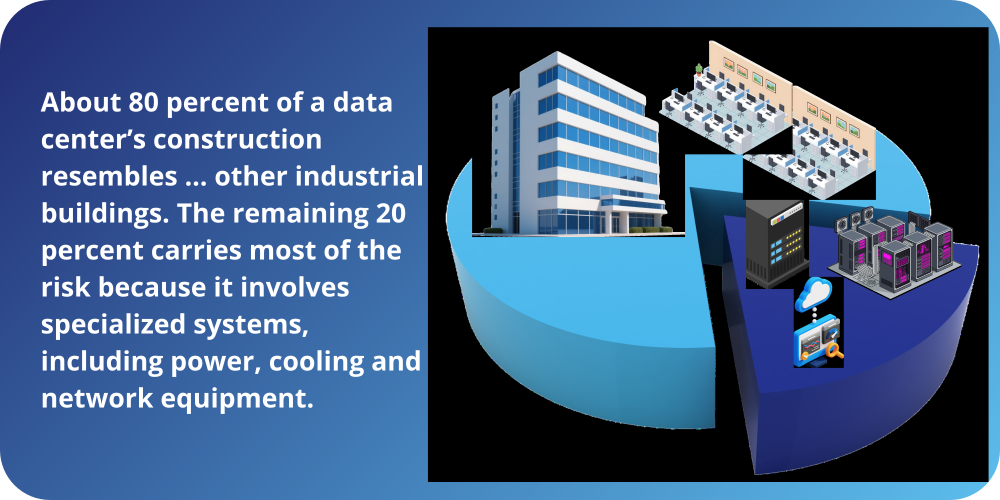
A data center is a controlled environment designed to support uninterrupted digital operations. About 80 percent of a data center’s construction resembles hospitals, airports or other industrial buildings. The remaining 20 percent carries most of the risk because it involves specialized systems, including power, cooling and network equipment. FMs need a clear understanding of these systems to guide teams and plan for reliability.
The foundation of every data center is the power infrastructure. Facilities draw large amounts of electricity through substations, then distribute it through switchgear, transformers and power panels. Backup generators are used to maintain continuity during potential outages to prevent even brief interruptions. Each component must work together with precision because any failure affects the users who depend on the site.
Cooling systems manage the heat produced by servers. Many data centers use chillers, evaporative cooling units and air handling systems, and some utilize liquid cooling systems where heat loads are higher. These systems must maintain stable temperatures and support effective airflow. This cooling accounts for a large portion of total energy use, which makes design important for performance and cost control.
The safety and security systems needed to protect equipment and people commonly include cameras, sensors, alarms, controlled entry points and fire-suppression equipment. Many organizations use gas-based fire suppression to avoid water damage to the electronics. These systems must meet regulatory requirements and be installed according to strict standards.
Data centers rely on equipment that can take many months to produce and deliver, such as electrical transformers, backup power systems and large cooling units. These long-lead items must be tracked carefully to keep construction on schedule.
All these factors mean data center construction demands an exceptional level of meticulous coordination and management.
Why traditional management methods aren’t enough
Many construction teams still rely on manual tools like spreadsheets and email reporting methods. While this might work when building a limited number of data centers, it will not suffice for large capital programs that include several major construction projects happening simultaneously across different regions. These programs require teams to balance schedules, budgets and resources while facing labor, equipment and power constraints.
The legacy tools used on a project-by-project basis simply cannot keep up. Data silos and manual tracking make it difficult to see how one delay affects other sites. Teams lose time searching for updates, verifying data and resolving conflicting reports.
Manual tools also limit visibility. Leaders cannot see the full picture of what is happening at a granular level across all sites. As a result, they cannot easily compare progress, identify shared risks or shift resources when one location needs support. This fragmented view increases the chances of duplicated work, missed deadlines and cost overruns.
The combined effect of scattered information, manual tracking, limited visibility and more opportunity for data errors is slower coordination, higher risk and less control. When these issues are multiplied across many projects, timelines begin to slip, resources are stretched in the wrong places and teams spend valuable time correcting mistakes instead of making progress. This creates real consequences for cost, safety and overall program performance. If crews want projects completed safely, efficiently and on schedule, they need connected information, shared standards and a consistent way to monitor progress across every site.
 Why a portfolio-based approach delivers better results
A portfolio approach treats all active projects as part of one connected program. This method is gaining momentum because it provides visibility across multiple sites, supports consistent processes, optimizes resource allocation and creates more predictable outcomes.
From an FM perspective, adopting capital portfolio management gathers cost performance, schedule status and risks in one view. This improves oversight and reduces the need to piece together updates from different sources. More organizations are adopting this unified approach after seeing how effective it has been for their peers. Shared information, standardized procedures and coordinated planning create a more reliable delivery process with fewer setbacks.
Portfolio management allows teams to standardize the repeatable 80 percent of construction work. This includes tasks such as civil engineering, structural work, utilities and enclosure, which can all follow proven methods. Standardization helps teams get tasks right the first time on every site, providing a clearer picture of project costs and timelines.
With the straightforward phases streamlined, project leaders can focus on the specialized 20 percent that drives performance.
Portfolio visibility also supports accurate forecasting, resource planning and transparent reporting. Project teams can establish more realistic timetables that adjust for purchases with long lead times, identify potential budget overruns and adjust to unexpected events. When a delay occurs at one site, managers can shift labor or materials to another to keep things moving.
Digital transformation, AI & modern risk management
Many of these benefits depend on digital transformation. A connected data environment that links cost, schedule and performance information helps FMs identify issues early and act before delays spread across the program.
Digital tools improve coordination by creating a shared source of truth that reduces errors and prevents version-control problems. PMWEB’s 2025 Consumer Construction Impact Survey found that 55 percent of U.S. consumers have more confidence in projects that use construction project management tools. These systems help FMs track progress, communicate project updates and maintain accurate records while giving teams reliable information to spot potential risks sooner.
AI aids this work by analyzing large data sets, forecasting scheduling issues and identifying patterns that point to future risks. For AI to be effective, data quality and structure must be strong because its output depends entirely on the information provided. Flawed inputs lead to flawed predictions, which makes data governance extremely important.
Power, communities & external pressure
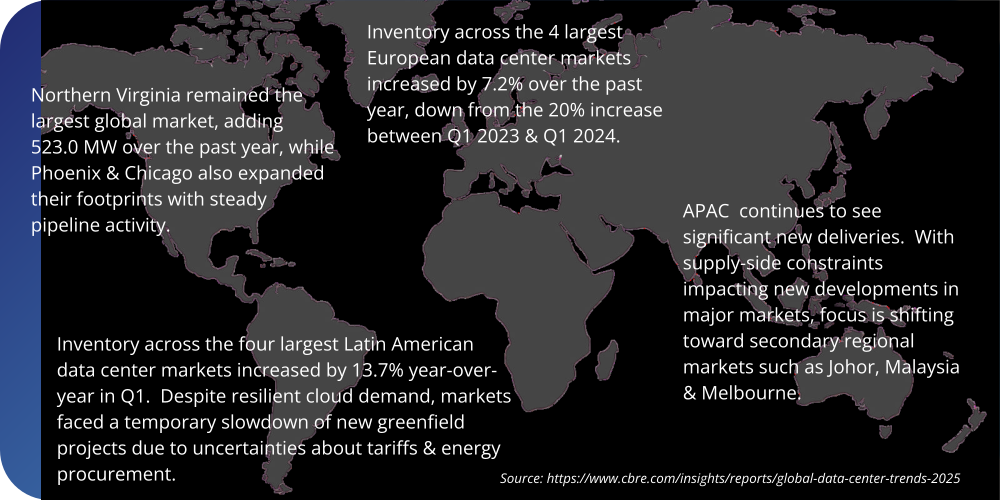
Stronger internal processes help teams manage complexity, but they do not remove the outside pressures that shape every data center project. Power access, community impact and other local conditions play a major role in how quickly projects can progress. BCG expects the share of global power used by hyperscale operators to rise from about 35 percent to 45 percent by 2028. The rising demand affects where new facilities can be built. CBRE’s Global Data Center Trends report notes that power constraints are pushing development toward new cities, such as Santiago and Mumbai. This expansion into new regions creates additional complexity, which makes portfolio visibility even more important.
As development spreads, more communities are experiencing construction-related disruptions. The PMWEB survey found that 48 percent of respondents experience construction disruptions daily or multiple times per week. The survey also found that 52 percent feel poorly informed about nearby construction, while only 13 percent believe projects finish on time. This can create friction with community members and local officials.
To address this, FMs can help build trust by sharing clear project timelines, regular milestone updates and simple explanations around potential disruptions. Consistent communication improves transparency and strengthens relationships with local communities. Digital portfolio management supports this by giving teams reliable, up-to-date information they can share with confidence.
Turning pressure into progress
The global digital economy depends on the physical infrastructure that FMs build and maintain, and the demand for new facilities will continue rising. The next phase of expansion will reach more countries, involve more partners and require even more careful planning than before. Every data center completed on time and operating reliably supports communication, commerce and innovations around the world.
The future of data center development will require teams that can adjust quickly, learn from changing conditions and stay aligned across many locations. FMs who build flexible processes and strengthen their capacity to manage shifting priorities will be ready for this pace. Their ability to plan for uncertainty, prepare teams for change and support clear communication will be essential as programs expand into new regions with different demands.

Read more on Project Management , Real Estate and Finance & Business or related topics Project Management and Problem Solving
Explore All FMJ Topics