 Membership
 Network
 Regional Sites & Affiliates


 Events
 Participate
 Resources

 Training
 Credentials
 Government


 Content Channels
 Tools
Tools


 Business Overview



Rent vs. Buy
Optimizing equipment investments
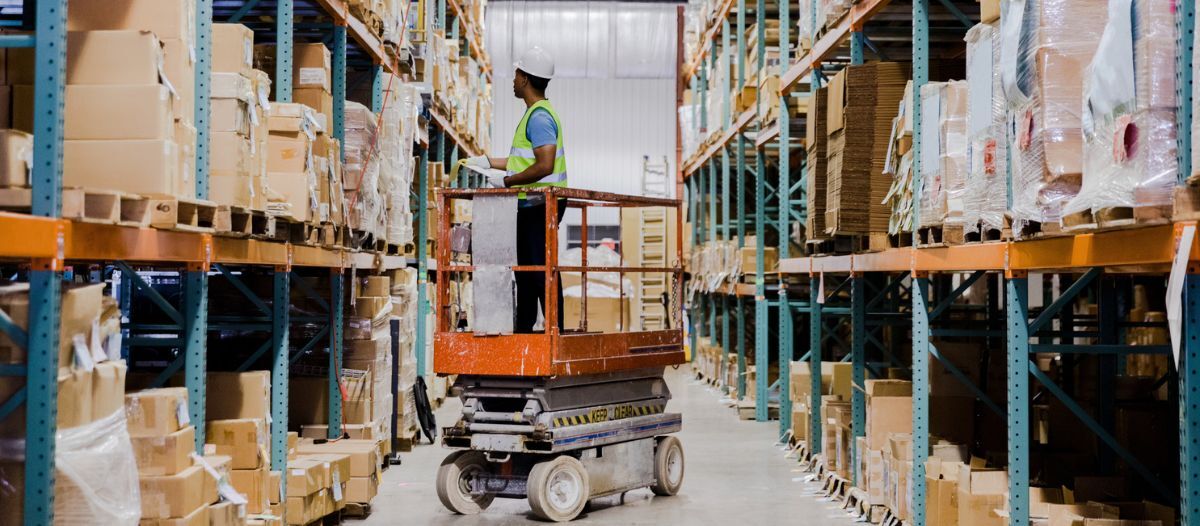
Businesses across industries make big decisions when deciding to rent and purchase equipment. Equipment plays a role in operational efficiency, so renting or purchasing can have lasting financial and strategic consequences. There are several important factors to evaluate before making this decision, such as usage patterns, financial capacity, maintenance obligations, storage limitations, risk exposure and long-term business goals. Understanding the benefits to each will help organizations make informed choices that optimize both cost management and productivity.
Assessing equipment usage frequency & ROI
The return on investment starts with understanding how often the machinery will be used. Tracking project volume, labor hours and overall costs helps clarify if the equipment can replace or support manual work. Researching available models is just as important when determining if one machine can cover several tasks or if a more specialized option is required to meet a higher standard. Having access to local parts and service reduces downtime and extends the equipment’s lifespan.
Industry benchmarks also help frame the decision. Engineering News-Record stated that when a machine is utilized under roughly 40 percent of available time, renting tends to be the more economical approach. This rule of thumb helps give organizations a practical way to evaluate equipment that fits into regular operations or if it will sit idle for long stretches.
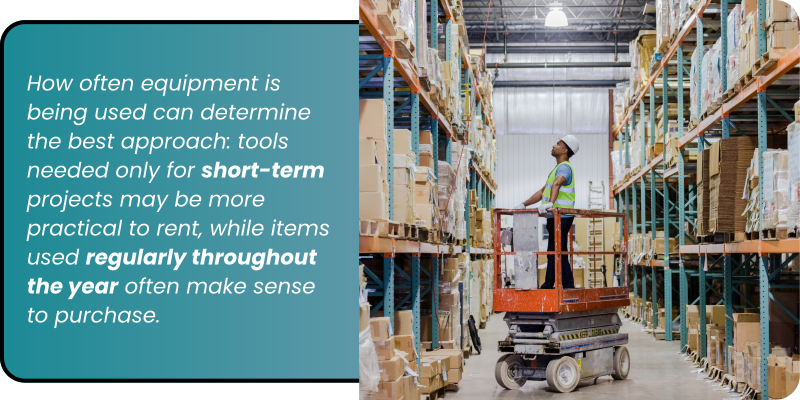
Organizations with occasional or short-term needs find that renting is the better choice because it offers the right tools without a big upfront investment while providing specialized equipment for tasks that do not need long-term investments. It also gives teams the chance to test equipment before committing to a purchase. For example, the most frequently rented construction equipment includes excavators, bulldozers, skid steer loaders, aerial lifts, compactors and cranes. This is because of high purchase costs, and these are often required only for specific projects.
On the other hand, businesses with consistent, year-round needs get more value from owning their equipment. Machinery used frequently or that can manage a range of tasks becomes a long-term asset, reducing reliance on rental availability and lowering recurring rental costs. In these cases, purchasing supports smoother operations and delivers greater long-term value by enabling a single machine to take on work that might otherwise require several separate tools.
Financial considerations
Financial strategy plays a key role in renting or buying equipment. Renting can help save capital and maintain liquidity, giving businesses flexibility to allocate resources to other operational needs or investments. It also shifts maintenance, repairs and insurance responsibilities to the rental provider, reducing the risk of unexpected expenses.
Construction equipment can be the largest purchases that can be made, with prices ranging from US$5,000 to more than $200,000. Buying the wrong equipment could be costly. Purchasing equipment requires a larger upfront commitment, but the long-term financial advantages can be significant for machinery that is being used frequently. The total cost of ownership often declines on a per-use basis over time and ownership opens the door to tax benefits that strengthen overall return.
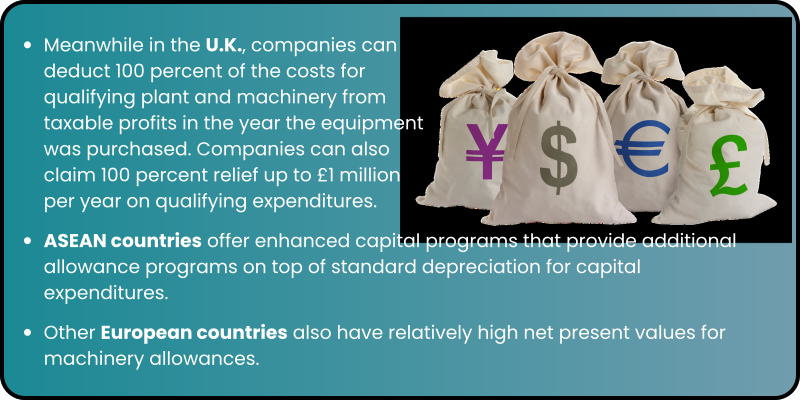
In the U.S., under the IRS Modified Accelerated Cost Recovery System, business equipment falls into one of the five- or seven-year property classes. This means the asset can be depreciated over that period. For example, a US$10,000 machine in the seven-year class qualifies for a first-year depreciation deduction of about 14.29 percent. Current tax rules also allow an additional 40 percent bonus depreciation in the year the equipment is placed in service. These deductions improve cash flow, offset the upfront investment and contribute to a stronger long-term financial case for ownership.
Maintenance & life cycle costs
The decision to rent or buy construction equipment often comes down to the responsibilities for maintenance and servicing. Renting transfers the responsibility for upkeep to the equipment provider, ensuring that companies have access to well-maintained, up-to-date machinery without having to dedicate internal resources to servicing or repairs. This is particularly advantageous for organizations that lack the personnel, expertise or infrastructure to manage routine maintenance tasks, because they can rely on the rental company to manage all aspects of upkeep.
On the other hand, purchasing equipment gives businesses full control over the maintenance and overall life cycle of their machinery. With in-house capabilities or trusted service partners, companies can extend the life of their equipment by implementing preventive care strategies and customizing service plans to suit their specific needs. Regular maintenance will help prevent costly breakdowns and make sure that the equipment operates at peak performance. Additionally, extended warranties and service contracts — usually available for up to five years — protect against unexpected repairs, enabling businesses to mitigate the risks associated with equipment failure. These agreements can enhance operational uptime, helping to maximize productivity over the long term and safeguard the company's investment.
For companies that have the capacity to manage maintenance internally, purchasing equipment can provide greater long-term value, while renting is an ideal solution for those who want to avoid a lot of the complexities of equipment upkeep.
Storage & space requirements
Available storage and space needs are dependent on whether a business is looking to rent or buy. Renting is often more practical for organizations that lack sufficient storage, as it eliminates the costs and logistical challenges of long-term equipment storage. This approach allows businesses to access machinery only when needed, keeping more space available for core operations.
Purchasing equipment makes sense when secure storage is available and the machinery will be used regularly over time. In these cases, the long-term value and versatility of the equipment can justify the space it occupies when it supports multiple operational functions or strategic goals. Remember, it is not just the piece of equipment that needs to be stored; the space must have room for any attachments, cleaning supplies and batteries that are required to operate the machinery. It is also worth looking into whether extra storage space will have to be added to hold and protect those investments.
Risk management & depreciation
Depreciation and day-to-day operational risks often play a major role when making the choice between renting and purchasing equipment. Renting shifts the responsibility for the equipment’s value, condition and decline to the rental provider, which can limit an organization’s exposure to depreciation and the long-term financial impact of owning aging machinery. It also ensures regular access to newer models that typically come with updated safety features and improved performance standards, reducing the likelihood of breakdowns or workplace incidents.
This option further helps to control financial risks tied to underutilization. When equipment is only needed during certain seasons, occasional projects, or for highly specialized tasks, renting can prevent capital from being tied up in assets that are likely to spend most of the year idle. Instead, organizations can scale their equipment use either up or down as demand continues to shift. Doing so maintains flexible and cost-efficient operations.
Ownership offers the opportunity for long-term returns when equipment is used consistently and maintained effectively. Businesses that manage maintenance in-house or through trusted service providers can protect both the asset and workforce. This ensures safe operation while maximizing productivity. By accounting for depreciation and planning for equipment longevity, ownership can deliver sustained value and offset the initial investment over time.
Planning for depreciation and understanding how the equipment’s value changes over time can also strengthen the case for ownership. When organizations factor in expected wear and overall lifespan of the machinery, the initial purchase becomes part of a long-term financial strategy rather than a single expense. Consistent use and a clear maintenance plan allow ownership to provide sustained value, lower per-use costs, and create predictable operational continuity that supports business growth.
Long-term strategic goals
Equipment decisions should reflect a business’s long-term strategy and growth plans. Renting provides flexibility for temporary projects or short-term needs, and it is useful when machinery may become outdated due to technological changes. This approach allows organizations to respond to shifting operational demands without committing to assets that might not support future objectives. Purchasing makes sense when supporting long-term growth and strategic priorities. For equipment that will be used more than 60 percent of the year, ownership tends to be more cost-effective, providing consistent value over time. Investing in versatile, multi-functional machinery can help to deliver reliable performance, serving as a foundation for productivity and competitive advantage.
Big picture: Aligning equipment investments with business goals
Renting or buying equipment goes beyond cost and involves different factors such as usage patterns, financial impact, maintenance capabilities, storage needs, risk management and long-term strategic goals.
 Financial factors go beyond the initial price, including long-term depreciation and potential tax advantages. Maintenance capabilities and storage availability affect whether equipment can be managed internally or is managed by a rental provider. Managing risks such as breakdowns or changes in project demands can also shape the decision. Aligning purchases with long-term growth ensures that investments support future objectives rather than just immediate needs. By examining both current operational demands and anticipated business goals, organizations can create equipment strategies that enhance efficiency, reduce financial exposure and support sustainable performance over time.
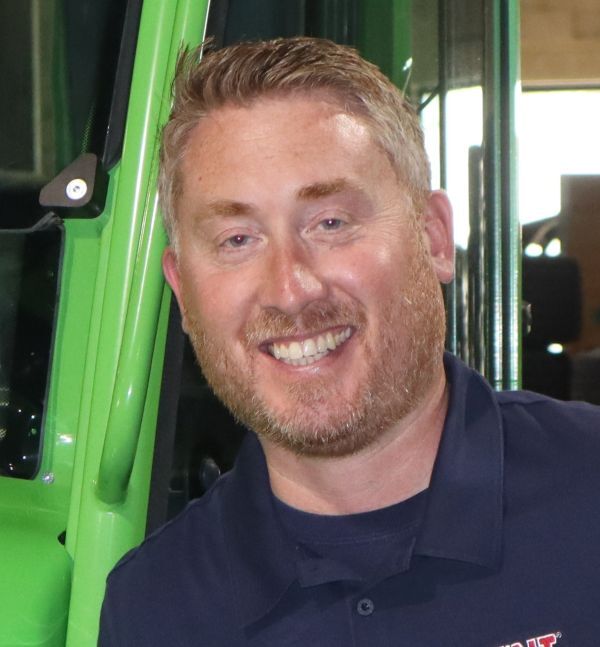
Beau Slavens has been a part of Avant Tecno USA for nine years, having initially joined the company as regional sales manager. In July 2021, he was appointed president. With a career in the machinery industry spanning over two decades, Slavens has extensive experience in sales, operations management and budgeting.
Read more on Facility Operations , Finance & Business and Quality or related topics Operational and Capital Budgeting and Supplier or Vendor Management
Explore All FMJ Topics