
 Membership
 Network
 Regional Sites & Affiliates


 Events
 Participate
 Resources

 Training
 Credentials
 Government


 Content Channels
 Tools
Tools


 Business Overview





Resilient Design is Good Design
Adaptable strategies throughout the workplace
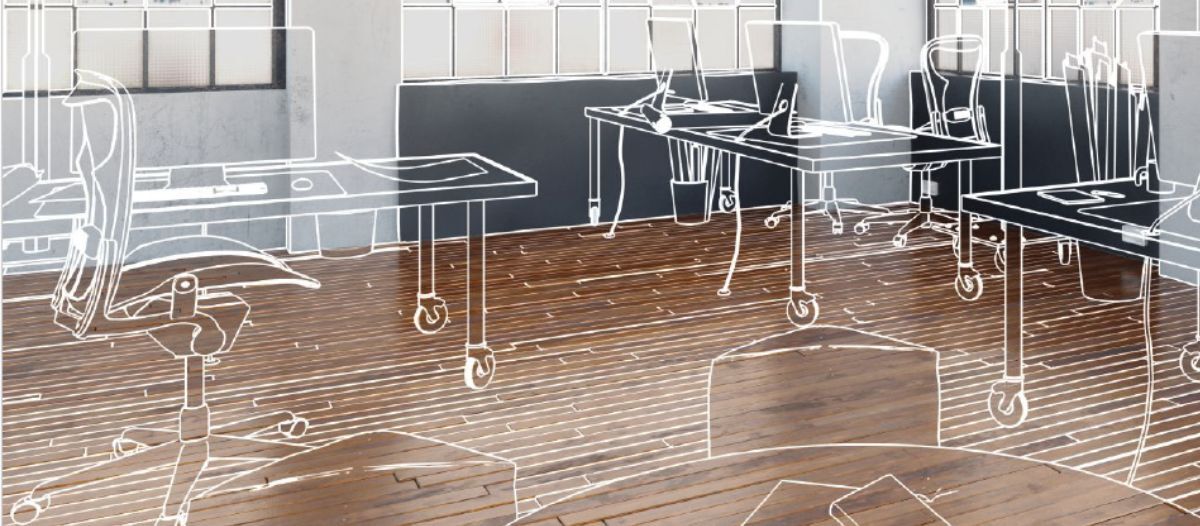
Facility managers are tasked with the challenge of anticipating the unexpected, providing office spaces that function not only in a reactionary mode, such as during a pandemic, but also proactively and intentionally for the various unpredictable needs of the future.
The COVID-19 pandemic has been a disruptor for how the business world views office space, provoking designers to reenvision their approach towards workplace planning. While the U.S. Centers for Disease Control recommended six-foot social distance protocol may temporarily apply, this guideline is not a vetted approach to effective long-term planning.
For most office-based industries, access and frequency of working in the physical office space dropped drastically during the pandemic, further demonstrating how the distance precaution is not the new basis for workplace design. Even while the number of remote workers has temporarily increased from 17 percent in 2019 to 44 percent in 2020, the workplace as a physical support is here to stay as a vital tool to provide an inclusive setting that meets a wide variety of people’s needs for connection, feeling a sense of belonging, fostering culture, supporting collaboration and spurring innovation.
Heavily used shared building spaces, such as lobbies, restrooms and amenities, need to be flexible on a day-to-day basis. These high touch zones require the adaptability to accommodate forthcoming changes over the months and years ahead, whatever they may be.
The importance of place for social connection
Social connection plays a large role in employee happiness levels. According to the Harvard Business Review, “close work friendships boost employee satisfaction by 50 percent” and the University of Oxford study sites that, “people are more productive when happy.” When employees are happy, productivity, and as a result the bottom line, is increased, so everyone wins. Workers have repeatedly stated they miss organic, fluid face-to-face social interactions that occur from passing by one another or stopping by a coworker’s desk in between scheduled meetings. It will be important to provide work environments where people want to be together and can do so in a safe and secure manner. To attract workers back into the office, the workplace will need to be repositioned as a desirable destination for employees. Before that can happen, it must appeal to the employee’s desire for safety and well-being.
Reassurance that work will be physically & emotionally safe
Over the past decade, the discussion of office design has pivoted to heavily emphasize employee well-being. On the building side this may entail companies and building owners following industry best practices as well as the regard for the employees’ mental health as they return to the office. Even pre-pandemic, research revealed a heightened importance on creating a physically and emotionally safe environment for office employees. In 2015, Google studied its employees to determine what makes a good team. Researchers found that psychological safety was the most important quality that determined a team’s success. Thus, there will be a heightened emphasis on office design that has resilience and fortitude for the future.
Resilient Design is Simply Good Design
Resilient design is flexible and adaptable, inclusive and durable. Good design withstands time and meets a company’s evolving and larger picture needs well into the future. No matter what the buzzword of the moment is, essentially resilient design embraces a people-centered mindset, welcoming an organization’s many individual differences. Resilient design incorporates tools that offer people ease of mobility and choice. This concept can be layered with three basic, interrelated facets of a work environment — people, place and technology — to help business leaders integrate their policies, infrastructure and tools to create spaces that inspire employees to perform their best work.
Adaptable program & infrastructure
When approaching design for shared high-use areas, it is important to start with the infrastructure of a space. With a focus on accepted use protocols while maintaining cleanliness throughout, FMs can plan appropriate strategies that align policies, program and company culture. As the point of entry, vestibules and reception areas should play an active role as filters for the office. Smart building technologies such as facial scanners within the entry vestibule can be integrated into the interior architectural detailing. In the lobby, a digital check-in procedure could be used to minimize contact points. Part of a building’s technology strategy could include digital display monitors for wayfinding and communication. This flexible signage allows employees and visitors real-time visibility to an organization’s procedures and policies. Adaptable programming integrates various scales of room sizes that serve multiple purposes. Large rooms can be divided with screens or mobile partitions to allow training, conference, and fitness classrooms, or subdivided for war room-style project spaces. Smaller rooms can flex for various functions ranging from wellness or mother’s rooms, sensory rooms, prayer rooms, two-three-person huddle enclaves or individual focus rooms. Thoughtfully dispersing these spaces throughout a floor plate increases usability for unanticipated needs. One example of this flexibility is a small command/security room near a building entry that can be used as a screening room to assess various risk factors prior to visitors entering the office. This same space can serve an alternate purpose as a meeting space for new recruits.
Additional examples of adaptable design within the building are floor plans that include thoughtfully located walls that provide enclosures to serve various purposes; private offices that can flex as shared meeting rooms or hoteling spaces; and communicating stairs that promote walking versus elevator use. In mid- and highrise construction, a long-term solution may be using concierge style elevator call technology, such as a mobile app or facial recognition to allow for a touch-less elevator experience.
A well-integrated infrastructure also includes a properly designed HVAC system with ventilation and air filtration that supports healthy air quality. Relevant components that allow ease of adaptability include an exposed or easily accessed distribution network of ducts, underfloor air distribution systems and flexible ductwork. Spaces with access to daylight allow natural transmission of airflow and lighting, providing a passive solution that aids in increasing general workplace environmental efficiency. These types of solutions outfit a workplace with resilience through longevity and durability.
The importance of mobility
A key factor to consider in the broader scheme of office space planning is the programmatic degree of flexibility needed for each area. At an optimized level of efficiency, an adaptable space allows end user reconfigurability — this means furniture and communication technology tools can be easily moved, without special tools or layers of administrative permission. Not having to hire professional installation specialists during office hours spares employees invaluable downtime, while saving the company the cost of labor to perform the moves. On a smaller scale, mobile communication tools such as digital display monitors and whiteboards position offices to be nimble and anticipate changing needs throughout a space. These mobile tools can also be beneficial from a financial standpoint, since a single mobile monitor moving from one space to another could, in theory, replace the need for several fixed or wall-mounted monitors.
Choice of work setting is key for flexible design
Having a distinct zone dedicated to flexibility in the workplace introduces another variable that business and team leaders can explore: the adoption of a free address strategy. This sounds contrary to the current hyper-focus on cleanliness and mitigating infectious disease spread. But, when appropriate cleaning protocols are implemented, these shared work areas offer a cleaner workspace than typical one-to-one assigned workstations, as shown in the WeWork Cleaning suggestions. If companies apply a shift in mindset, free address work zones can prevent workers from hoarding “stuff” because of the nature of frequent shifts in location. To aid in storing personal belongings beyond daily needs, lockable storage units, such as wardrobe style lockers or mobile pedestals, can easily be designed into office plans. This offers people a sense of connection to a “home base” office while still allowing them to move around and choose their work setting and location throughout the day. At the same time, the remote workforce permeating many sectors today should be considered. Company leaders can leverage technology in the built environment to keep their distributed workers feeling connected, whether virtually or in person, to support remote collaboration and enhance employee engagement.
Inclusive workplace design & policy
At its core, a resilient and inclusive workplace brings the human experience central to the focus of design. As businesses and workloads ebb and flow, an inclusive space will remain functional and supportive for all workers, regardless of the fluctuating mix of employees. Endorsing universal design principles entails designing space, details and policies that include people with diverse abilities. Restrooms are one place equity can be addressed. In 1987, a California state senator introduced legislation to guarantee the state’s women more toilets; since then, other governments have joined the cause of “potty parity.” A solution to bathroom equity concerns is introducing all gender restrooms, something that has already surfaced in some North American markets and commonly accepted in many European and Asian countries for decades. A multi-user, all-gender restroom layout provides flexibility by offering the ability to partition off between stalls depending on current occupancy and mix of gender. This version not only accommodates the variance in distribution of some headcounts, like manufacturing settings where historically men’s restroom quantity needs outnumber women’s, but also enhances attitudes of equity for transgender and non-binary individuals.
Facilities and companies need to design for diversity and equity not just in ethnicity and age, but to consider many facets of inclusivity within the larger picture of workplace design: neurodiverse personalities, hearing or visually impaired individuals, virtual or remote workers, and employees with disabilities, to name a few. By conscientiously focusing on inclusivity in design and not just ‘checking a box’ or isolating specific areas, designers can truly incorporate universal design considerations that avoid alienating users, responding to individual differences and a variety of abilities throughout a facility.
Anticipate the unexpected
How do FMs focus on resilient design for a successful, meaningful workplace experience? Business leaders must work with a cross-sectional team of personnel from human resources, information technology and operations to ensure their attention is people-centered. Bringing workers back in person to connect and thrive requires a conscious effort to curate an environment of choice through a variety of flexible work settings that can evolve over time. Many of the types of jobs and roles needed in the future have not been forecasted and do not even exist today, so anticipating and planning for the unexpected may become the theme of the future. Time will truly tell when designing for what is next, but the ability and willingness to proactively incorporate flexibility into workspaces can be the key to good (and resilient) design for an adaptable future.

Jen Singson AIA, IIDA, NCARB is a design architect specializing in workplace interiors and believes in the transformative power of place; with an understanding of the impact space has on employee well-being and the influence a workspace has on the user’s mind and body. She places importance on researching and identifying foundational concepts before starting design to make a lasting and resilient solution that harmoniously integrates interiors, furniture, and finishes. Singson is actively involved with IIDA Wisconsin’s DEI committee and has her Bachelor of Architecture from the University of Illinois at Chicago. This article was also supported by Jill Schutts, a Project Specialist: Architecture and Interior Design in EUA’s workplace studio.
References
1. Department, Published by Statista Research, and Jan 22. “Remote Work Frequency before/after COVID-19 2020.” Statista, January 22, 2021. statista.com/statistics/1122987/change-in-remote-work-trends-aftercovid-in-usa/
2. Camille Preston, PhD. “Council Post: Promoting Employee Happiness Benefits Everyone.” Forbes. Forbes Magazine, Dec 13, 2017. forbes. com/sites/forbescoachescouncil/2017/12/13/promoting-employeehappiness-benefits-everyone/?sh=44436976581a.
3. University of Oxford. “Happy Workers Are 13% More Productive.” Phys.org. Oct 25, 2019. phys.org/news/2019-10-happy-workersproductive.html.
4. Stieg, Cory. “’Psychological Safety’ at Work Improves Productivity - Here Are 4 Ways to Get It, According to a Harvard Expert.” CNBC. CNBC, Oct 5, 2020. cnbc.com/2020/10/05/why-psychological-safety-isimportant-at-work-and-how-to-create-it.html
5. Hogarty, Steve. “The Best Way to Clean Your Office Desk during the Coronavirus.” Ideas, Oct 9, 2020. wework.com/ideas/worklife/the-bestway-to-clean-your-office-desk-during-coronavirus.
6. universaldesign.ie/What-is-Universal-Design/The-7-Principles/
7. Pinsker, Joe. “The Long Lines for Women’s Bathrooms Could Be Eliminated. Why Haven’t They Been?” The Atlantic. Atlantic Media Company, Jan 23, 2019. theatlantic.com/family/archive/2019/01/ women-men-bathroom-lines-wait/580993/
Read more on Real Estate , Workplace and Occupancy & Human Factors or related topics Accessibility , Master Planning , Occupant Safety and Planning and Design
Explore All FMJ TopicsRelated articles
-

Plugged In
Solving the data disconnect in real estate and FMBy Amanda Muzzarelli & James Waddell07.01.2024 -
Food for Thought
Installing pop-up food programsBy Stafford McKay09.18.2024 -

Guarding Against Graffiti
Protocols that help prevent & remove graffiti on college campus buildingsBy John Lesak & Sarah Brummett11.26.2024
