
 Membership
 Network
 Regional Sites & Affiliates


 Events
 Participate
 Resources

 Training
 Credentials
 Government


 Content Channels
 Tools
Tools


 Business Overview





RTO Strategies
Reimagining the modern workplace with sensors & analytics

The landscape of workplace management has fundamentally shifted as organizations navigate return-to-office (RTO) strategies in an increasingly cost-conscious environment. What was once a straightforward matter of providing desk space and basic amenities has evolved into a complex challenge requiring attention to employee experience, operational efficiency and cost optimization.
Recent research from WTW indicates that approximately 61 percent of U.S. companies have implemented formal policies requiring employees to maintain a minimum number of in-office days per week. This trend increased in 2025. The growing list of organizations that are tightening restrictions on remote work arrangements marks a decisive shift away from the flexible work policies that emerged during the pandemic.
This trend represents more than just a policy shift. It reflects a fundamental reimagining of how physical workspaces function within constrained budgets. The success of these initiatives depends on facility managers' abilities to create environments that not only meet basic operational requirements but actively enhance the employee experience — all while demonstrating clear cost savings and operational efficiency.
The evolution of workplace expectations in a cost-conscious era
The pandemic fundamentally altered employee expectations regarding workplace environments. The pendulum has now swung toward hybrid and full on-site schedules. As the workplace evolves, facility managers face the dual challenge of accommodating employees who may be reluctant to return to shared workspaces while demonstrating measurable cost savings.
The most impactful factors for employee confidence are not necessarily the most expensive ones. Employees respond most immediately to visible cleanliness protocols, transparent maintenance schedules and evidence that their workspace is being actively maintained. Modern workers appreciate transparency in workspace maintenance, and the majority are concerned with cleanliness, comfort and reliability.
But the implications extend beyond simple comfort preferences. SHRM research suggests that poorly executed RTO strategies can result in increased employee turnover, reduced productivity and significant underutilization of expensive office real estate. Conversely, organizations that successfully address employee concerns through cost-effective, visible improvements can enhance workplace culture, improve collaboration and boost overall employee morale while demonstrating clear ROI.
A more innovative approach
This unique environment — where organizations need to hedge costs while enticing people back to the office — calls for a more innovative, comprehensive and data-driven strategy.
This approach should encompass:
Strategic framework for cost-effective implementation
Successful RTO initiatives in today's economic climate require an approach that addresses three fundamental areas: location optimization, logistics coordination and trust building. Each of these components relies on data-driven decision-making and transparency, with a focus on delivering maximum impact per dollar invested.
Location optimization involves analyzing space utilization patterns to ensure that office layouts support both collaborative work and individual productivity while minimizing operational costs. Traditional space planning uses static assumptions about occupancy, but modern sensors can deliver real-time usage data. When combined with AI-driven analytics, this approach delivers immediate cost savings by identifying underutilized areas for repurposing or subleasing; optimizing HVAC and lighting schedules based on actual occupancy data rather than theoretical maximum capacity; and right-sizing meeting room inventories according to usage patterns. Dynamic space allocation strategies can reduce real estate costs by 15-30 percent while improving employee satisfaction.
Logistics coordination encompasses the operational aspects of maintaining a clean, comfortable and efficiently managed work environment. This includes scheduling cleaning activities based on actual usage data, monitoring equipment performance and ensuring that building systems operate optimally. The challenge lies in balancing efficiency with visibility, as employees need to see that their workplace is properly maintained without disruptions.
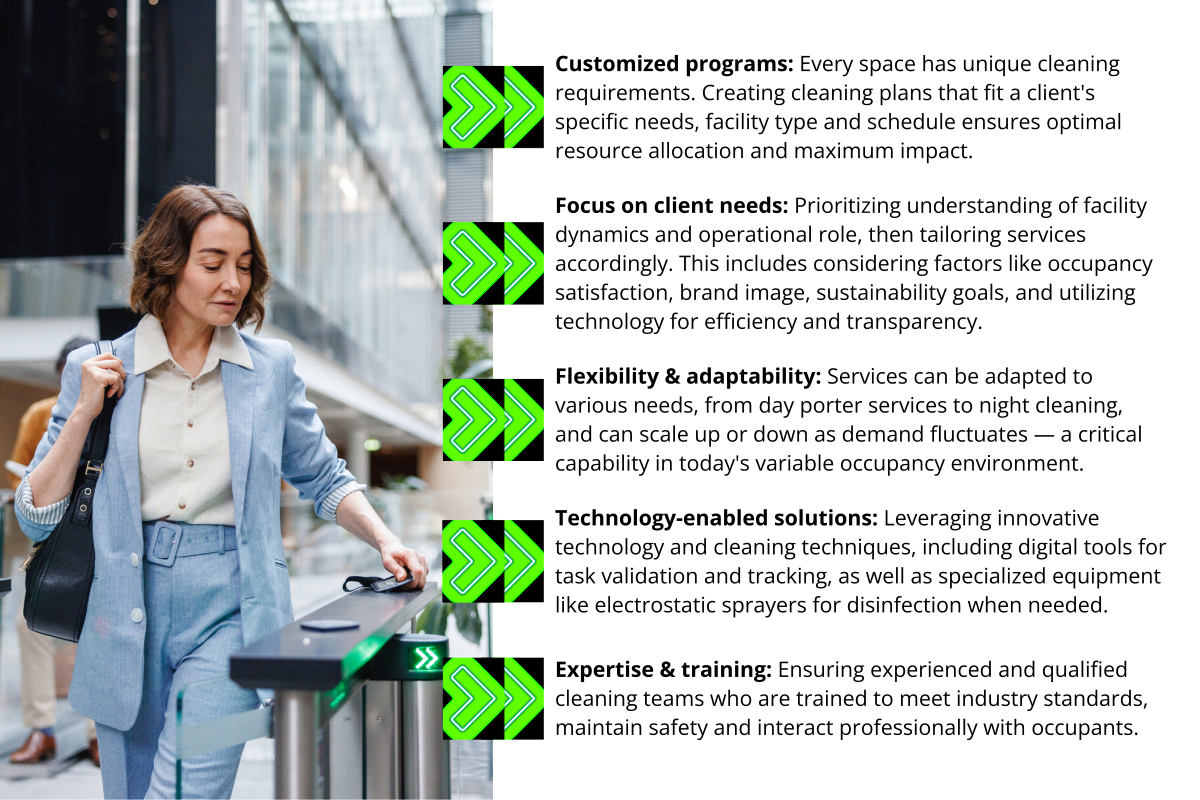
This is where tailored cleaning programs demonstrate their value most clearly. Rather than applying one-size-fits-all approaches, successful coordination leverages the flexibility and adaptability of customized cleaning services. A coordinated approach might include:
-
-
Targeted daytime services that provide visible maintenance during business hours
-
Focusing on high-traffic areas and ensuring well-stocked restrooms and communal areas remain tidy
-
Data-driven overnight cleaning that manages deep sanitization of workstations and high-touch surfaces based on actual usage patterns rather than blanket schedules
-
Technology-enabled task validation and tracking that provides real-time confirmation of completed services
-
Morning status updates communicated through building displays or email notifications that highlight completed maintenance tasks
-
The ability to scale services up or down based on occupancy fluctuations ensures cost efficiency while maintaining service quality standards.
Trust building represents perhaps the most important component of successful RTO strategies, and fortunately, it is also one of the most cost-effective to implement. Employees want confidence that their workplace is managed transparently and efficiently. This does not require expensive technology investments — it requires strategic communication and visible evidence of maintenance activities. Effective trust-building measures may include:
-
-
Digital displays in lobbies and communal areas showing real-time cleaning schedules, maintenance completion status and building system performance
-
Weekly facility updates highlighting completed maintenance tasks, cost-saving initiatives and any building improvements
-
QR codes near elevators and workstations that link to live dashboards showing recent cleaning times and maintenance activities
-

The role of sensor technology: Focusing on ROI
Sensor technology is one of the more promising technologies impacting the facility management industry. This approach uses Internet of Things (IoT) sensors to monitor real-time usage, environmental conditions and resource needs. Smart building management systems (BMS) equipped with IoT sensors and AI-driven analytics offer unprecedented visibility into building operations and space utilization. The real-time data can identify when and where spaces need attention, help track occupancy and ensure occupants are following health protocols. Rather than relying on scheduled cleaning and reactive maintenance, this technology enables a smarter, usage-based model to reduce unnecessary passes through empty spaces.
But the key is implementing systems that deliver immediate, measurable returns on investment. Occupancy sensors provide detailed insights into how different areas of a facility are used throughout the day and week. This information delivers immediate value by optimizing cleaning schedules, adjusting temperature controls and identifying opportunities for space reconfiguration. This targeted approach can reduce cleaning costs by 20-40 percent while improving service quality.
Equipment performance monitoring sensors track HVAC systems, lighting and other building infrastructure to identify maintenance needs before they become costly emergency repairs. This proactive approach reduces equipment downtime, extends system life and minimizes disruptions to building operations. The cost savings from prevented equipment failures often pay for sensor investments within the first year.
The integration of occupancy and equipment performance data creates opportunities for sophisticated building management strategies that prioritize cost efficiency. Occupancy data can be used to automatically adjust heating, cooling and lighting schedules based on actual space usage rather than theoretical maximum occupancy, resulting in significant energy cost savings. Similarly, cleaning schedules can be optimized based on usage patterns, ensuring resources are deployed where they are needed most.
Implementation case study: Practical, cost-effective solutions
A practical example of sensor technology implementation demonstrates how targeted investments can deliver both employee satisfaction and cost savings. A company occupying its own office space sought to encourage greater employee participation in RTO initiatives while reducing overall FM costs. The organization faced typical challenges: employees were reluctant to return to shared spaces due to concerns about cleanliness, while management needed to demonstrate cost control.
The solution involved implementing a focused sensor-based monitoring system that provided real-time visibility into building operations without significant infrastructure investment. Digital displays were installed outside conference rooms, near desk clusters and at restroom entrances, showing the most recent cleaning times for each area. This simple modification provided immediate transparency into maintenance activities that had previously been invisible to employees.
The system incorporated occupancy sensors that tracked usage patterns throughout the facility. This data was used to optimize day-porter schedules, ensuring that high-traffic areas received attention before they became visibly dirty or uncomfortable, while reducing cleaning frequency in underutilized areas.
The results demonstrated the effectiveness of combining targeted technology with transparent communication. Employees who visited the office infrequently immediately noticed the enhanced visibility and expressed greater confidence in the cleanliness and safety of shared spaces. Regular office users observed that spaces remained cleaner throughout the day, as maintenance activities were timed to address issues before they became apparent to occupants.
Most importantly, the initiative delivered measurable cost savings while rebuilding trust between management and employees. Cleaning costs were reduced by 25 percent through data-driven scheduling, while employee satisfaction scores increased significantly. The organization demonstrated its commitment to maintaining high standards for the work environment while achieving operational efficiency.
Beyond employee satisfaction: Demonstrable cost benefits
Predictive maintenance capabilities represent another significant financial advantage. By monitoring equipment performance continuously, facility managers can identify potential issues before they result in system failures or occupant comfort problems. This proactive approach reduces emergency repair costs by up to 40 percent and minimizes disruptions to building operations.
Energy optimization through occupancy-based controls offers ongoing operational savings. By adjusting HVAC, lighting and other systems based on actual space usage, organizations can reduce energy costs by 15-25 percent while maintaining occupant comfort.
However, successful implementation requires careful consideration of privacy concerns and data management practices. Occupancy sensors collect substantial amounts of data about building usage patterns, and organizations need to ensure that this information is used appropriately and that employee privacy expectations are respected.
The integration of sensor technology also necessitates investment in staff training and system management capabilities. Facility management teams that develop new skills related to data analysis and system optimization are better equipped to create efficient, responsive and cost-effective workplace environments. The technology is most effective when combined with knowledgeable staff who can interpret data and make informed decisions about building operations.
Future considerations: Scalable solutions
As sensor technology continues to evolve, facility managers can expect more opportunities for optimization and automation at decreasing costs. Machine learning algorithms are increasingly capable of identifying patterns in building usage and automatically adjusting systems to optimize performance and occupant comfort. The integration of sensor data with other building systems, such as security, lighting and communications, offers potential for comprehensive smart building management.
Cost-efficient, technology-driven returns
Integrating targeted sensor technology into facility management presents a practical opportunity for organizations implementing RTO strategies in today's cost-conscious environment. By providing real-time visibility into building operations and enabling proactive management approaches, these technologies help address employee concerns while delivering measurable cost savings.
Success depends on more than simply implementing new technology. What is needed is a strategic approach that combines data-driven decision-making with transparent communication and genuine attention to both employee needs and operational efficiency. FMs who embrace these approaches can create work environments that not only meet operational requirements and budget constraints but actively enhance the employee experience and support organizational goals for sustainable, cost-effective RTO strategies.
The key is focusing on solutions that deliver immediate, visible impact to employees while providing measurable cost savings to the organization. In today's economic climate, this balanced approach — prioritizing targeted cleanliness and transparency — offers the best path to RTO success.

Read more on Facility Operations , Facility Technology & Data Management and Occupancy & Human Factors or related topics Facility Technology , Space Management and Occupant Services
Explore All FMJ Topics