 Membership
 Network
 Regional Sites & Affiliates


 Events
 Participate
 Resources

 Training
 Credentials
 Government


 Content Channels
 Tools
Tools


 Business Overview





Systems Integration
Building more resilient facilities
Facility managers and owners have numerous responsibilities with their most significant roles being keeping occupants and employees safe, as well as protecting the physical infrastructure of their business. Unfortunately, catastrophes are always a lingering risk, and they are more likely to affect facilities if they aren’t prepared.
The impact of severe weather events – from tornados to wild fires – as well as human-caused events, such as active shooter situations, have heightened the importance of proactively planning for both anticipated and unexpected threats. While it’s impossible to prevent such scenarios, facility managers and owners should focus on mitigating vulnerabilities and reducing the impact of damage. This strategy, known as resiliency, has become an increasing priority for facilities.
In times of emergency, it’s important that facilities maintain a resilient front while they tend to the damage done. Luckily, resiliency is something that can be practiced year-round. Facilities can plan for the unpredicted by investing in smart, connected security and life safety improvements that enable them to act more quickly during an event and bounce back faster and more efficiently after.
Defining unique needs
Safety planning is not a one-size-fits-all approach for every facility. Keeping a comprehensive safety and security strategy top of mind when designing, constructing and enhancing a building for use is critical. While there are strategies that all facilities can implement, some tactics depend on the unique building vulnerabilities and requirements.
A helpful first step for owners and managers is to consider how the facility is used and common points of stress, as well as the geographic location of the building. For example, a facility in a tornado-prone location faces different risks than a building located by a waterfront. Similarly, a healthcare facility faces different security issues than a school campus, and it’s important that each invest in robust systems to help safeguard equipment that is vital to operations in the event of an emergency. For healthcare facilities, it’s ensuring that medical equipment can withstand a catastrophe, while school campuses must have a lockdown procedure in place to help students and faculty stay safe in the event of an emergency.
Once owners and managers understand the individual needs of their building, it becomes easier to determine which systems and technologies should be prioritized for updates, integration or replacement. Enlisting a single-source provider for connected solutions can help in the selection process of choosing the right services or products as they’re able to evaluate all systems from a holistic point of view. This approach can also make aligning additional technology upgrades a simpler process in the future.
Advantages of integration
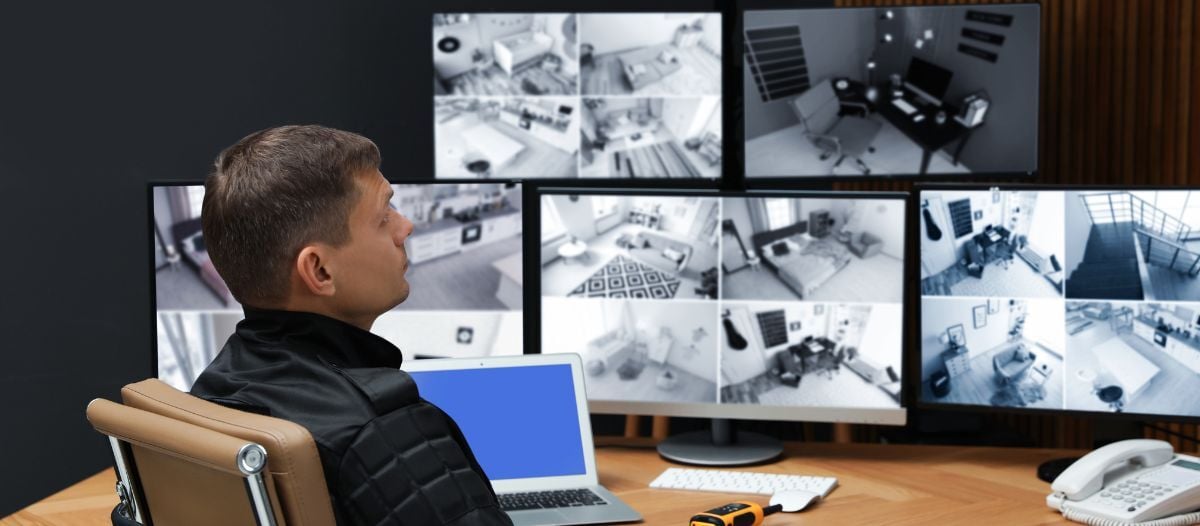
Facility managers might be surprised to find out about the different integration possibilities of not only new systems, but also their existing systems. For example, traditional access control systems can be connected with video surveillance and intruder detection technologies to help maximize the safety of occupants within a building and prevent unauthorized people from entering.
Occupancy sensors and mass notification systems may also be integrated with these technologies to help improve the resiliency of the infrastructure. This comprehensive security strategy allows different systems to communicate with one another automatically, rather than acting as disparate systems. When connected, mass notification systems can use this data to quickly share information with occupants during an emergency, like an intruder situation, based on their location. This level of integration can ultimately help facility managers analyze typical daily happenings that help streamline safety planning. However, they shouldn’t stop their safety strategy at security technologies. Fire and life safety systems are complementary of security technologies, so there are even greater resiliency advantages for organizations who choose to connect these systems.
In the event of a fire, an integrated approach to guiding occupants to safety and alerting emergency responders can add value to a facility. The fire alarms can be connected to mass notification systems that can contact first responders while also sending customized messages over an intercom system to communicate the most secure route for building occupants. Meanwhile, the access control solution can help initiate a lockdown or restrict access to an area of the facility that is being threatened. From sending alerts to initiating lockdown areas, security, fire and life safety systems can seamlessly work together to help minimize potential harm more quickly and efficiently, and ultimately help bolster a facility’s overall resiliency.
Building systems resiliency
While enhancing safety and security efforts is critical to improving a facility’s resiliency strategy, facility managers also need to consider the role other building systems play in their overall plan. In fact, security, fire and life-safety applications can act as the foundation for more systems integration as they can connect to other building applications, like HVAC and lighting.
If a building’s HVAC system is connected to its security and fire systems, for example, HVAC systems could shut down in the area of the facility that is being impacted by a fire. They could also be directed to push air in specific directions depending on where the smoke is coming from. This adds yet another layer of protection for occupants and the facility’s infrastructure.
Additionally, lighting applications can become more intelligent and assist in resiliency efforts when connected with security systems — especially when it comes to protecting the perimeter of a facility. Perimeter lighting structures can be used as a base for adding on security basics, like cameras and mass notification systems. However, more advanced solutions, such as gunshot detection technology, can also be connected. In the event of an active shooter situation, lighting solutions could be programmed to shine directly on the area where the shot is detected. Simultaneously, the mass notification technology can send out a tailored warning to anyone around the perimeter and separate directions to occupants inside the building.
Integrated, multifaceted building solutions that can communicate real-time information when it matters can help facility managers react more quickly and flexibly to protect people and assets. It’s important for facility managers to have solutions in place that are working for them, not against them, in order to maintain a resilient front.
Maintaining resiliency strategies
Once advanced technologies are implemented, and systems are integrated to best fit the needs of a facility, building managers are tasked with maintaining their resiliency strategy. This is another area where a single-source provider can be a beneficial partner. They can take over the time-consuming responsibility of managing upkeep and checking to see if systems are working at capacity by scheduling automatic maintenance checks that can send alerts when complete or if an issue is detected. This streamlined approach to overseeing systems integration can help cut costs, improve efficiencies and boost resiliency efforts – ultimately helping set a building up for success in the future.
Planning well in advance for the unknown can help facilities remain resilient every day, and not only when they are in recovery mode. Taking a proactive approach to identifying where systems integration can improve operations and increase response times to potential threats is key. In the constant effort to provide a safe and comfortable environment for occupants, a connected facility is simply a more resilient facility.

Joe Oliveri is vice president and general manager, Security, Johnson Controls, Building Solutions North America.
Read more on Facility Operations and Risk Management or related topics Operational Technology , Facility Technology , Building Systems and Occupant Security
Explore All FMJ Topics