
 Membership
 Network
 Regional Sites & Affiliates


 Events
 Participate
 Resources

 Training
 Credentials
 Government


 Content Channels
 Tools
Tools


 Business Overview





The Escalating Cost of Reactive Maintenance
A framework for modern facilities

Across health care systems, municipal infrastructure and commercial building portfolios, equipment failure rarely begins as a dramatic breakdown. It begins quietly.
A pump bearing vibrates slightly outside normal range. A supply line develops a slow leak behind a wall. Temperature in an electrical room drifts a few degrees above optimal levels. Pressure in a mechanical system fluctuates during peak demand.
These early indicators often go unnoticed until failure becomes visible, audible or disruptive.
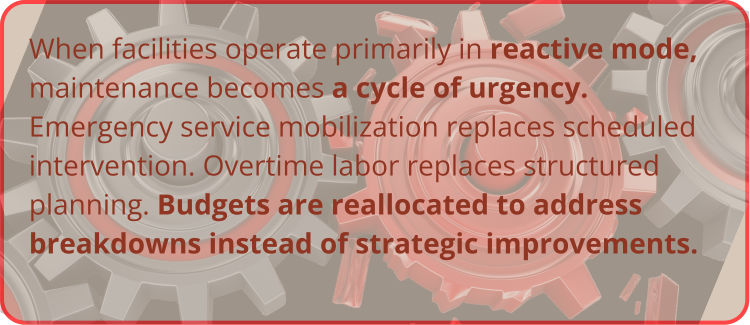 The cost of reactive repair extends far beyond the immediate fix. Secondary structural damage, mold remediation, equipment cascade failure, energy inefficiency and insurance claims can significantly increase financial exposure. In health care facilities, instability may compromise environmental control. In government buildings, downtime may interrupt public services. In commercial properties, repeated mechanical issues may negatively influence tenant satisfaction and retention.
Predictive equipment monitoring interrupts this cycle by shifting the focus from response to early detection.
The limitations of time-based preventive maintenance
Traditional maintenance strategies typically combine reactive repair with time-based preventive maintenance. Preventive maintenance locks in scheduled inspections and service intervals according to manufacturer recommendations or historical practice.
While preventive maintenance reduces the frequency of catastrophic failure, it assumes equipment degrades on predictable timelines. In reality, asset performance is influenced by environmental conditions, usage intensity, vibration stress, load variability and climate exposure.
An HVAC system in a high-humidity hospital wing does not degrade at the same rate as one in a climate-controlled office suite. A municipal pump station serving fluctuating seasonal demand experiences different stress patterns than equipment in a stable commercial facility.
Manual inspection provides periodic oversight. It does not provide continuous condition awareness.
As facility portfolios expand and staffing resources remain constrained, maintaining comprehensive manual rounds becomes increasingly difficult. Subtle condition changes can develop between inspection intervals.
Condition-based monitoring addresses this gap by delivering real-time performance visibility.
Defining predictive equipment monitoring
Predictive equipment monitoring uses wireless smart sensors and digital analytics to continuously observe mechanical and environmental conditions.
Rather than relying solely on calendar-driven inspections, predictive maintenance evaluates how equipment is performing at any given moment.
Modern smart sensor networks monitor variables including:
-
water presence and leak detection
-
temperature fluctuation and thermal drift
-
humidity variation
-
vibration signatures in rotating equipment
-
pressure irregularities in fluid systems
-
electrical load imbalance
-
equipment runtime patterns
Sensors transmit data through secure, encrypted wireless communication protocols to centralized cloud-based dashboards. When readings exceed established thresholds, automated alerts are delivered in real time.
This framework converts physical asset behavior into measurable operational intelligence.
Organizations are no longer dependent solely on visible symptoms or occupant complaints. They gain continuous insight into asset health across distributed environments.
Smart sensor architecture & wireless infrastructure
 Battery-powered smart sensors with multiyear life expectancy can be quickly installed without conduit installation or structural modification. This reduces deployment barriers and supports scalable implementation across diverse building types.
Secure wireless smart sensor networks transmit data through resilient communication architecture to centralized dashboards, enabling multisite infrastructure monitoring across geographically dispersed portfolios.
Wireless communication methods may include radio frequency networks, low-power wide-area connectivity, cellular communication or hybrid designs. The specific protocol is less important than system reliability, redundancy, encryption standards and scalability.
In reinforced concrete structures, underground mechanical rooms or multibuilding campuses, communication planning must account for signal penetration and interference.
A well-designed smart sensor ecosystem enables continuous monitoring without requiring expansion of traditional building automation systems.
Leak detection & automatic water isolation
 Water intrusion remains one of the most common and costly sources of building damage across health care facilities, public schools, municipal buildings and commercial properties.
Traditional detection relies heavily on visual inspection or occupant reporting. By the time moisture becomes visible, structural damage may already be significant.
Predictive monitoring integrates leak detection sensors that identify water presence at the earliest stage. In some configurations, automated shutoff valves can isolate affected supply lines to limit continued flow.
Automatic isolation does not replace human intervention; it shortens the time between detection and mitigation.
In government and municipal buildings — where staffing may be limited during evenings or weekends — rapid shutoff capability can significantly reduce remediation costs and insurance exposure.
Financial impact & cost avoidance
 Unplanned downtime represents one of the largest hidden expenses in facility management.
Reactive repair often introduces:
-
emergency contractor mobilization
-
overtime labor
-
secondary structural damage
-
service interruption
-
regulatory exposure
Condition-based monitoring reduces the frequency and severity of these events by identifying instability early.
Observe measurable improvements, including:
-
Reduced emergency maintenance calls
-
Extended equipment lifespan
-
Lower collateral damage costs
-
Improved budget predictability
-
Increased mean time between failure
Cost avoidance frequently exceeds the direct savings associated with repair reduction alone.
Asset life cycle & capital planning
 Traditional capital planning relies heavily on age-based replacement schedules. However, real-world asset degradation varies widely.
Equipment demonstrating stable vibration, pressure and temperature patterns may exceed nominal lifespan. Conversely, assets showing recurring instability may warrant earlier intervention.
Data-driven capital planning improves allocation accuracy and reduces premature replacement of functional equipment.
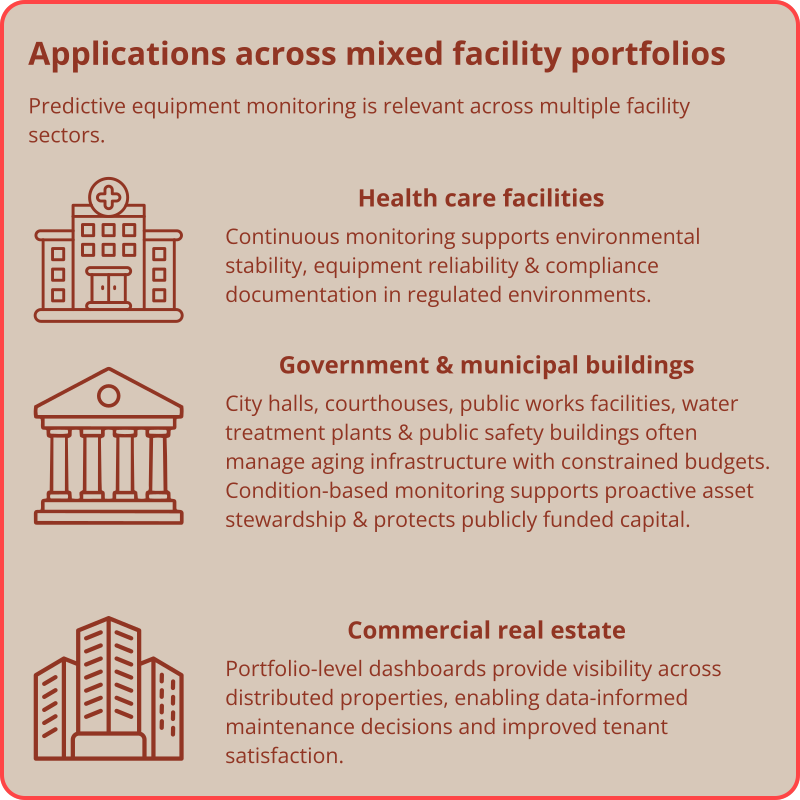
Across sectors, the common denominator is risk reduction through visibility.
 Risk management & insurance considerations
Insurance providers increasingly evaluate facility risk mitigation strategies.
Documented predictive monitoring demonstrates proactive loss prevention. Time-stamped data logs provide defensible documentation during claims review.
Early leak detection reduces water damage exposure. Vibration monitoring reduces catastrophic mechanical failure risk. Continuous environmental monitoring strengthens compliance posture.
Predictive equipment monitoring therefore contributes not only to maintenance efficiency but to enterprise risk management.
Sustainability & energy performance
Equipment operating outside optimal parameters consumes excess energy.
Vibration imbalance, pressure irregularities and temperature instability increase load demand and reduce system efficiency.
By identifying performance drift early, organizations and their FM teams can correct inefficiencies before energy waste compounds.
Condition-based monitoring aligns maintenance strategy with sustainability objectives, energy benchmarking initiatives and long-term environmental performance goals.
Workforce efficiency & cultural impact
FM teams frequently operate under staffing constraints. Expanding manual inspection rounds is often impractical.
Predictive monitoring reduces reliance on repetitive physical checks. Technicians focus on assets demonstrating abnormal behavior rather than inspecting every component on a fixed schedule.
This targeted approach improves productivity, enhances safety and reduces crisis-driven work cycles.
Automation augments skilled professionals rather than replacing them.
Digital transformation & portfolio visibility
FM increasingly integrates digital analytics into operational strategy.
Predictive equipment monitoring converts physical asset behavior into continuous data streams, enabling:
-
cross-site performance comparison
-
trend analysis
-
strategic maintenance forecasting
-
centralized portfolio oversight
Organizations that integrate predictive monitoring into broader digital frameworks position themselves for scalable growth and operational resilience.
Automated water supply monitoring & controlled shutoff: Operational mechanics & strategic value
Water-related damage remains one of the most frequent and financially disruptive loss events across health care campuses, government buildings and commercial facilities. Unlike many mechanical failures, water intrusions can escalate rapidly. A ruptured supply line, failed valve or unnoticed condensation leak can saturate drywall, compromise flooring systems, damage electrical infrastructure and trigger mold remediation within hours.
Predictive monitoring systems increasingly integrate not only leak detection sensors but also controlled water supply shutoff mechanisms designed to limit exposure when abnormal flow or moisture is detected.
How automated shutoff systems function
A modern automated water monitoring and shutoff system typically includes:
-
leak detection sensors positioned in high-risk areas (mechanical rooms, under sinks, near water heaters, above ceilings, near pumps)
-
flow meters that monitor abnormal usage patterns
-
Pressure sensors detecting system instability
When a sensor detects water presence outside acceptable thresholds, or flow irregularities exceed defined parameters, the system immediately performs two parallel actions:
-
It transmits a real-time alert to designated FM personnel.
-
It sends a signal to the shutoff valve to isolate the affected line.
This process can occur within seconds.
Importantly, shutoff parameters are configurable. Organizations can define whether valves close automatically upon detection, require manual confirmation or activate only under specific flow conditions.
This automation reduces the time window between detection and mitigation — the most critical factor in limiting damage severity.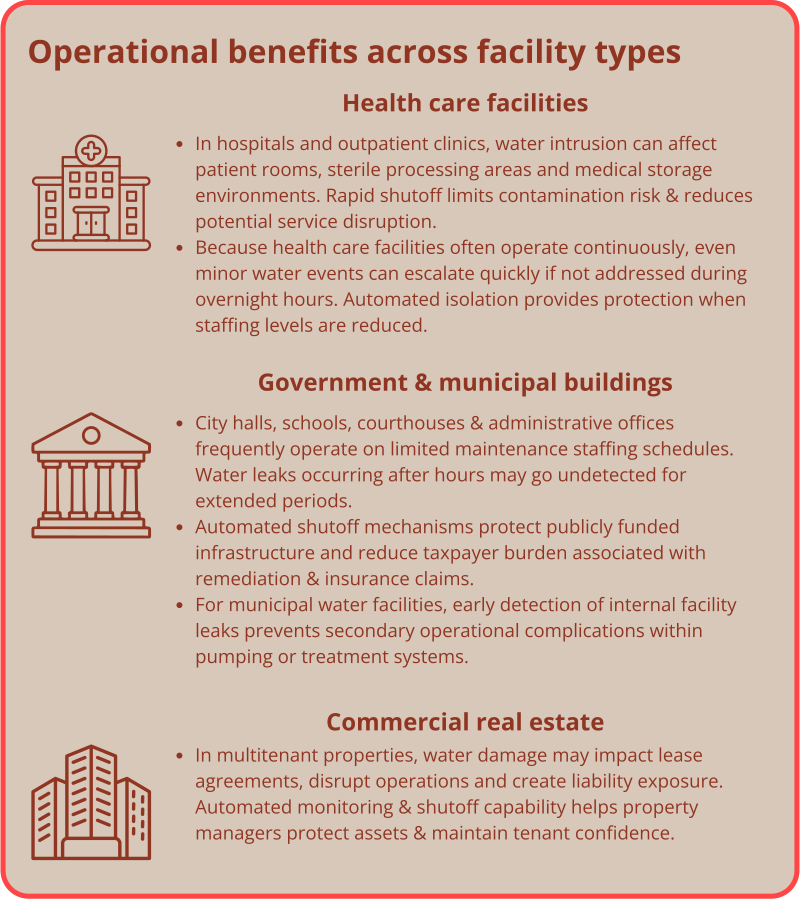
Financial & insurance advantages
Insurance carriers closely monitor water-related claims because they represent a significant portion of property loss events.
Facilities that demonstrate documented leak detection and automated shutoff capabilities may strengthen their risk profile.
Benefits include:
- reduced claim severity
- lower secondary damage exposure
- faster incident containment
- improved documentation of response timing
- potential improvement in insurability posture
Even when insurance coverage remains unchanged, reducing the scale of loss events directly lowers deductible exposure and business interruption costs.
Broader operational benefits of predictive monitoring
Beyond water shutoff capabilities, predictive equipment monitoring provides a wide range of systemic advantages.
-
Reduced downtime
-
Improved energy stability
-
Extended equipment life
-
Data-driven decision-making
-
Budget predictability
Early detection prevents minor deviations from escalating into catastrophic failure, minimizing service interruption.
Mechanical systems operating within optimal parameters consume less energy. Monitoring temperature, pressure and vibration allows facilities to correct inefficiencies early.
Addressing imbalance and instability before damage compounds reduces wear and tear on mechanical components.
Continuous condition monitoring produces measurable performance trends. Facilities can identify recurring patterns, seasonal fluctuations and chronic stress points across portfolios.
Shifting from reactive emergency response to scheduled intervention stabilizes maintenance expenditures.
Strengthening enterprise resilience
In mixed facility portfolios — spanning health care, municipal and commercial environments — leadership increasingly evaluates infrastructure decisions through the lens of resilience.
Resilience involves more than restoring operations after failure. It requires reducing the probability and severity of disruptive events.
Predictive monitoring and automated water isolation systems support resilience by:
-
limiting cascading damage
-
reducing response time
-
protecting mission-critical environments
-
preserving capital resources
-
supporting compliance documentation
These systems convert uncertainty into measurable, manageable data.
Integrating shutoff systems into broader smart infrastructure strategy
Automated water supply monitoring should not be viewed as a standalone solution. It functions most effectively when integrated into a broader smart sensor ecosystem that includes:
-
environmental monitoring
-
vibration analysis
-
pressure monitoring
-
electrical load tracking
-
centralized dashboard visibility
This layered monitoring strategy provides comprehensive asset awareness across diverse building types.
For organizations managing mixed portfolios, integration allows standardized response protocols, centralized reporting and portfolio-level oversight.
From reaction to resilience
Mechanical systems will occasionally fail. However, the frequency and severity of reactive events can be substantially reduced.
Predictive equipment monitoring provides continuous visibility into asset behavior.
By intervening before minor deviations escalate into costly failures, facilities across health care, municipal and commercial sectors reduce downtime, protect infrastructure and strengthen operational continuity.
In modern FM, resilience begins with visibility. Organizations that adopt predictive monitoring frameworks move beyond reaction and toward long-term stability.

Angela Cabrera is the Founder and CEO of Alegna Technologies, Inc., a U.S.-based company specializing in IoT-AI enabled predictive maintenance solutions for healthcare, government, education, and critical infrastructure. She leads initiatives that combine smart sensors with hundreds of smart solutions, IoT platforms, and 80+ different types of smart sensors AI-driven for advanced data strategies to reduce critical equipment downtime, extend equipment life, improve compliance and daily operational efficiency. Cabrera collaborates with research institutions such as Georgia Tech and Georgia Southern University to accelerate innovation in FM. She has been recognized by Engineers Outlook, IAOTP and Marquis Who’s Who for her leadership in advancing smart infrastructure.
References
Top image by Getty Images.
Read more on Facility Operations and Project Management or related topics Operations and Maintenance Planning , Maintenance Processes and Project Management
Explore All FMJ Topics