 Membership
 Network
 Regional Sites & Affiliates


 Events
 Participate
 Resources
 Training
 Credentials
 Government


 Content Channels
 Tools
Tools


 Business Overview



The Facility Manager’s Creed
Learn, KISS, CYA & Applaud

A creed is a set of beliefs or aims that guide someone's actions. Every day, FMs rely on a unique facility creed to rise above the many challenges they face. These challenges include coordinating teams and seamlessly maintaining countless operational components such as HVAC, air quality, pools and spas, kitchens, plumbing, loss prevention, landscaping, lighting, public spaces, fire safety, mechanical equipment, and health inspections, just to name a few.
Before February of this year, these Jacks and Jills of all trades would have agreed “dirt is 90 percent of the problem, cleanliness is key.” However, within the ever evolving and unpredictable new reality defined by COVID-19, cleanliness, with the emphasis on disinfection, is the new 90 percent. Tasked with implementing heightened cleaning and disinfecting protocols in addition to the hundreds of other moving parts of a facility, how can these heroes successfully fulfill a mission of safely re-opening the world’s workspaces, schools and event arenas? Where should an FM even begin?
Learn: Gain knowledge
FMs are combating a lack of information on two fronts, COVID-19 and disinfectants. Fortunately, new information on COVID-19 is discovered daily. Unfortunately, information about disinfectants that is readily available to buyers is being misrepresented by the people selling it.
Choosing the right – or wrong – products can make or break even the best plan for overhauling protocols. A special onus has been placed on FMs to learn as much as possible about the products used to keep facilities safe for workers and visitors. Now is the time to hold vendors and sales reps accountable for their claims, through the review of additional information and proven successes. It is not just livelihoods on the line, it is lives. In the athletic setting, athletes lose careers over staph infections, lose games over flu and lose practice over COVID. In the health care setting, every minute and every infection can quickly become a matter of life or death.
KISS: Keep it simple & straightforward
Disinfection does not need to be overly complicated. It just needs to be done correctly the first time, and FMs need products that work effectively without compromising safety.
Insurance does not prevent accidents
UV robots, fogging machines, surface coatings and other back-up methods of disinfection may sound high-tech and sexy, but they are not meant for use as primary disinfection. They are intended to serve as a back-up, and like insurance, if there is a rock-solid primary plan, back-up insurance is good to have, but not essential.
Break-up with unreliable chemical supply chains
Breaks in the chemical supply chain have been particularly problematic, at a time when access to supplies could not be more important. Grocery store shelves have been rendered empty, businesses are being price gouged and nurses have been forced to practice amateur chemistry to get by until common products become available.
All these issues have brought to the forefront the fact that chemical supply chains are not necessary. In fact, they are a hindrance. Devices regulated by the U.S. Environmental Protection Agency (EPA) capable of producing powerful cleaning and disinfecting solutions on site are available. The adoption trend has been slow, because they are regulated in the same category as UV robots, as “devices.". Because they are devices, they will not be found on any EPA list. To ensure use of a product risk assessors can stand behind, it will be imperative to ask the companies being considered for their EPA Establishment Number, the complete Good Laboratory Practices (GLP) report for the level of disinfection they are claiming (more on the different levels below) and additional testing of a small non-enveloped virus to ensure COVID is knocked out cold.
Disinfectants should kill germs not people
Disinfectants should be effective against a wide array of pathogens and the Centers for Disease Control and Prevention recommends the use of products that have the shortest contact time possible. Unfortunately, many cleaning and disinfecting products force a dangerous compromise to health and safety, even those claiming to be “green.” Many products cause allergies, asthma, alter the red blood cells in mammals and attack internal organs, even in their at-use concentrations. Many doctors call the cleaning and disinfecting products used in our homes, schools, offices and other public places, “modern-day asbestos.” Whatever disinfectant is chosen, the goal to protect the people in a facility remains the same. A general rule of thumb, so long as the product's GLP report proves effectiveness, the fewer chemical ingredients, the better. As an example, some disinfectants are 99.98 percent water, hypoallergenic and offer quick disinfection without compromising health.
CYA: Cover your assets
There is a dangerous trend in the market. Chemical companies are trying to appease and retain frustrated customers. As a result, many chemical companies are having their reps fraudulently advise customers that their products kill on contact. However, every disinfectant has a contact time, which is the time a disinfectant need to sit wet on a surface to kill the germs it claims to kill. It is the goal of every manufacturer to have the product with the shortest contact time possible. It should be noted that if the product is used improperly, liability and repercussions from the misuse fall on the users, not the manufacturers or their representatives. It is imperative that FMs ask the sales reps they are working with for a copy of the disinfectants GLP report. This study should be prepared by an EPA-accredited laboratory and classifies the product’s level of disinfection.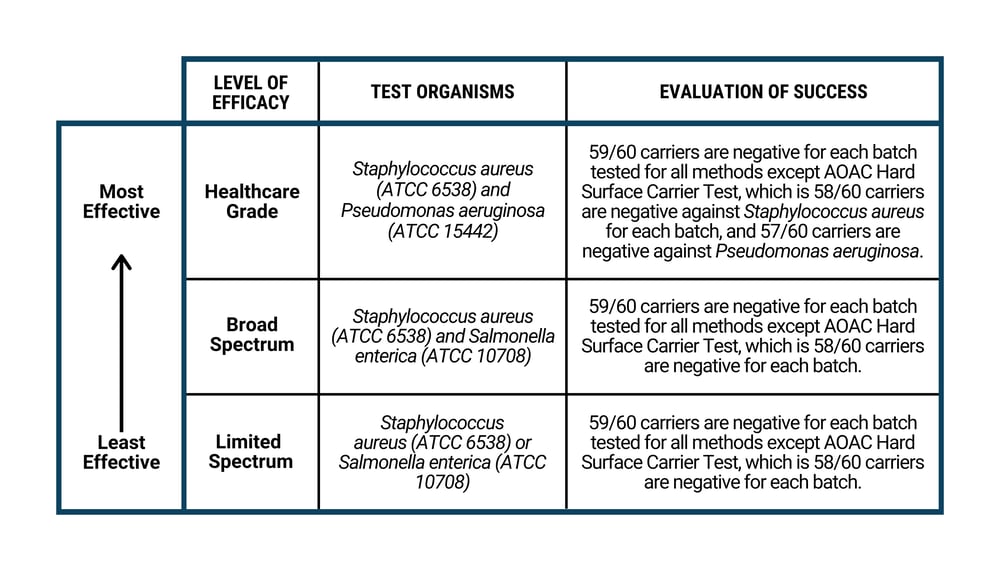 To protect colleagues, workers and visitors, the goal is to choose the highest level of disinfection, i.e., health care grade – products tested against tough gram-negative and tough gram-positive bacteria. The effectiveness and contact time (again, the amount of time the product must remain wet on a surface to be effective) will be listed in the GLP report. Knowing and adhering to this number is critical. As shown in the chart below, the EPA allows for a product to be health care grade with a mere 95 percent kill rate during the contact time, which is generally 10 minutes.
Spray & wipe is not a method for proper disinfection
If there is one takeaway from this piece, let it be this: every disinfectant has a contact time and even the most highly effective disinfectant will not give the results needed if it is used improperly. Most disinfecting products have a 10-minute contact time; and to make things especially vexing, disinfectants typically dry well before the 10 minutes are up, so they need to be reapplied several times to truly achieve the necessary contact time.
A closer look at the product spec sheets of the disinfectants used in Notre Dame Athletics, the Four Seasons Hotel and Fitness Center Los Colinas, and Texas Health Resources Dallas revealed the following:
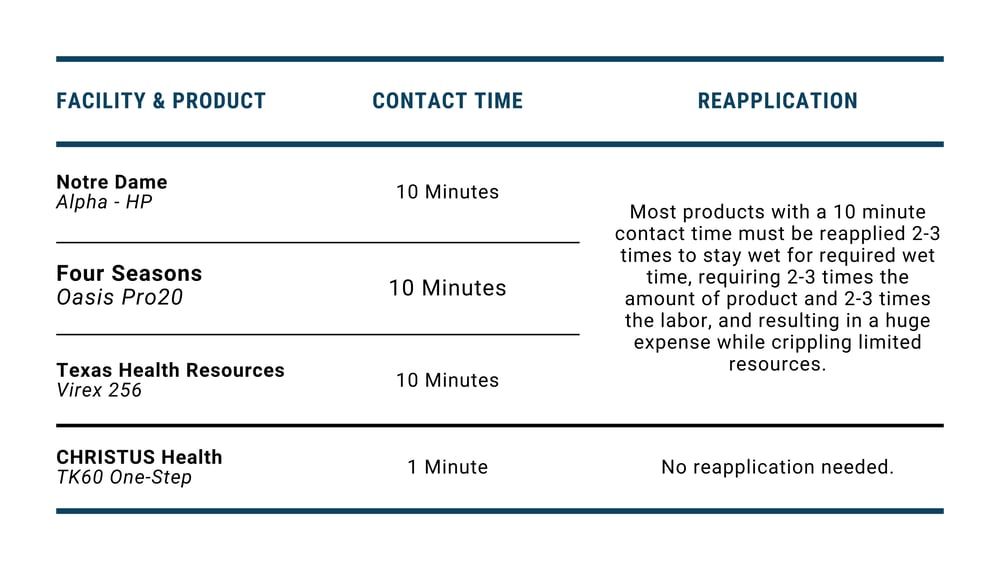 Ten minutes is an impractical amount of time to keep a surface wet and would hamper operational efficiency tremendously, yet not using products properly leaves susceptibility to being infected by the germs left behind and to superbugs forming.
10-minute contact time? You have better things to do
Even the CDC recognizes a 10-minute contact time as infeasible; especially in buildings welcoming countless tenants and visitors every day. Unfortunately, with current concerns over COVID at the forefront, a growing number of product users are adhering to the contact time listed on the EPA’s N-List.
While the N-List can help facilitate finding a disinfectant effective against COVID, it is not ideal for determining how long to wait before wiping. The problem with using the N-List to decide on a kill time is that the list only shows the contact time for COVID. To the benefit of all humanity, COVID is an enveloped virus, and as shown in the chart below is the easiest type of virus to kill.
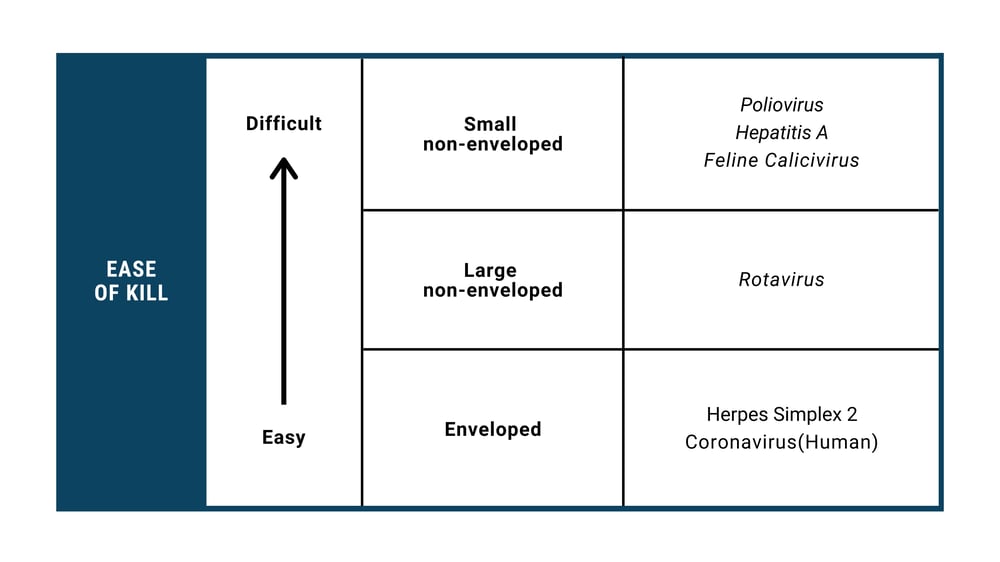 If focusing disinfection practices on only one, easily killed pathogen, COVID infections will be the least concern. FM teams have fought dangerous and harder-to-kill pathogens, such as MRSA and C-Diff, for ages and the longest contact time on a product should always be adhered to.
A case study of Franklin Park – Sonterra, a senior housing community in San Antonio, Texas, USA, with more than 250 people and 90 staff members, demonstrated a significant drop in the number of flu cases and other respiratory ailments by using a disinfectant with a one-minute contact time versus their previous product with a 10-minute contact time. They even recorded only four cases of flu in four years and a 65 percent decrease in staff call-offs and sick days.
Applaud the FM team
FMs have a daunting job. Now more than ever, it is tremendously important to remember everyone is in this together. From the FM to the part-time custodial worker, each player has a critical role in making facilities safe for everyone and it is important to celebrate the victories. Previously, keeping track of workplace injuries like slips and falls was a popular metric for evaluating and praising success. Now, reduced infection rates, whether COVID, cold or flu, is another valuable metric. Updating cleaning protocols has created a way to improve metrics and provides an opportunity to celebrate success and motivate teams to achieve new heights. A simple shift in perspective turns this from a time of great challenge to a time of growth, with greener, cleaner, safer and more effective options.
COVID-19 has changed the FM landscape, but it has not changed its creed to learn, KISS, CYA and applaud
Before the world reacted to the current pandemic, FM had projects on target and goals in mind. Through education on the safest, best, fastest acting products, FMs can return to normal.
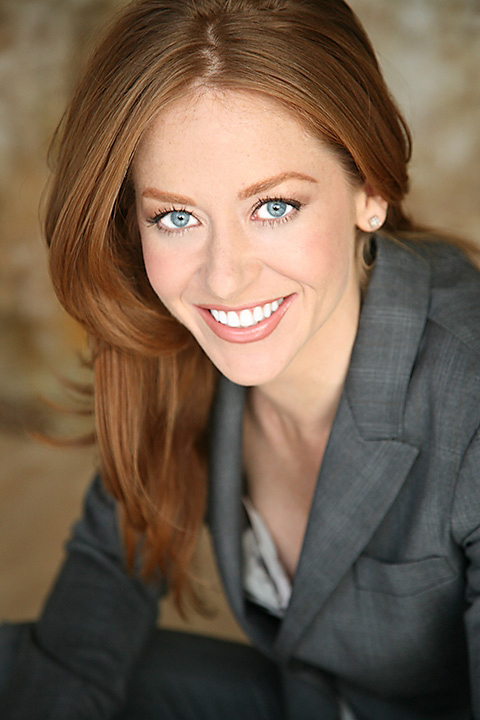
Rayne Guest is the founder and CEO of R-Water, a company that manufactures an EPA-regulated device that attaches directly to a facility’s water supply to produce a hypoallergenic disinfectant. While living in Los Angeles, she was inspired to launch her career in the green industry developing customized recycling programs for hotels and other commercial properties. Guest graduated from UCLA’s Executive Program in 2006.
References
Top image via Getty Images. Graphics via R-Water.
Read more on Project Management and Quality or related topics Project Management , Quality Improvement and Quality Management
Explore All FMJ Topics