
 Membership
 Network
 Regional Sites & Affiliates


 Events
 Participate
 Resources

 Training
 Credentials
 Government


 Content Channels
 Tools
Tools


 Business Overview





The FM as Energy Integrator
Connecting energy supply, efficiency, sustainability & capital decisions
Energy management is often divided among several functions. Procurement teams purchase electricity and fuel. Engineers develop capital projects. Sustainability professionals establish emissions targets. Finance teams evaluate investments. Energy managers track consumption and identify reduction opportunities.
The organization still may make poor energy decisions, even while each function may perform its assigned role effectively.
The missing element is often operational integration: understanding how a change in one part of a facility affects equipment sizing, load profiles, reliability, maintenance, utility purchasing and future capital requirements.
 In some organizations, the FM leads the program. In others, the FM works alongside an energy manager or supports a sustainability professional. Regardless of structure, the FM should participate in every material decision affecting the supply or consumption of fuel, water and power.
FMs understand not only how much energy a building consumes, but when loads occur, which systems interact and what operating constraints may not appear in an engineering or financial model.
Energy management is an operating discipline
A comprehensive program addresses more than utility efficiency. It coordinates:
-
fuel, water and power supply
-
building and process consumption
-
utility tariffs and commodity contracts
-
equipment condition and maintenance
-
controls and operating schedules
-
capital renewal and project sequencing
-
carbon emissions and sustainability targets
-
resilience and business continuity
-
measurement, verification and accountability
These issues are connected.
A lighting retrofit may reduce electrical consumption and peak demand. Building automation improvements may reduce simultaneous heating and cooling. Variable-frequency drives (VFDs) may lower motor loads. Electrification may reduce direct fuel use while increasing electrical demand. On-site generation may change utility purchases, maintenance obligations and outage strategy.
When these decisions are evaluated separately, one project can undermine another.
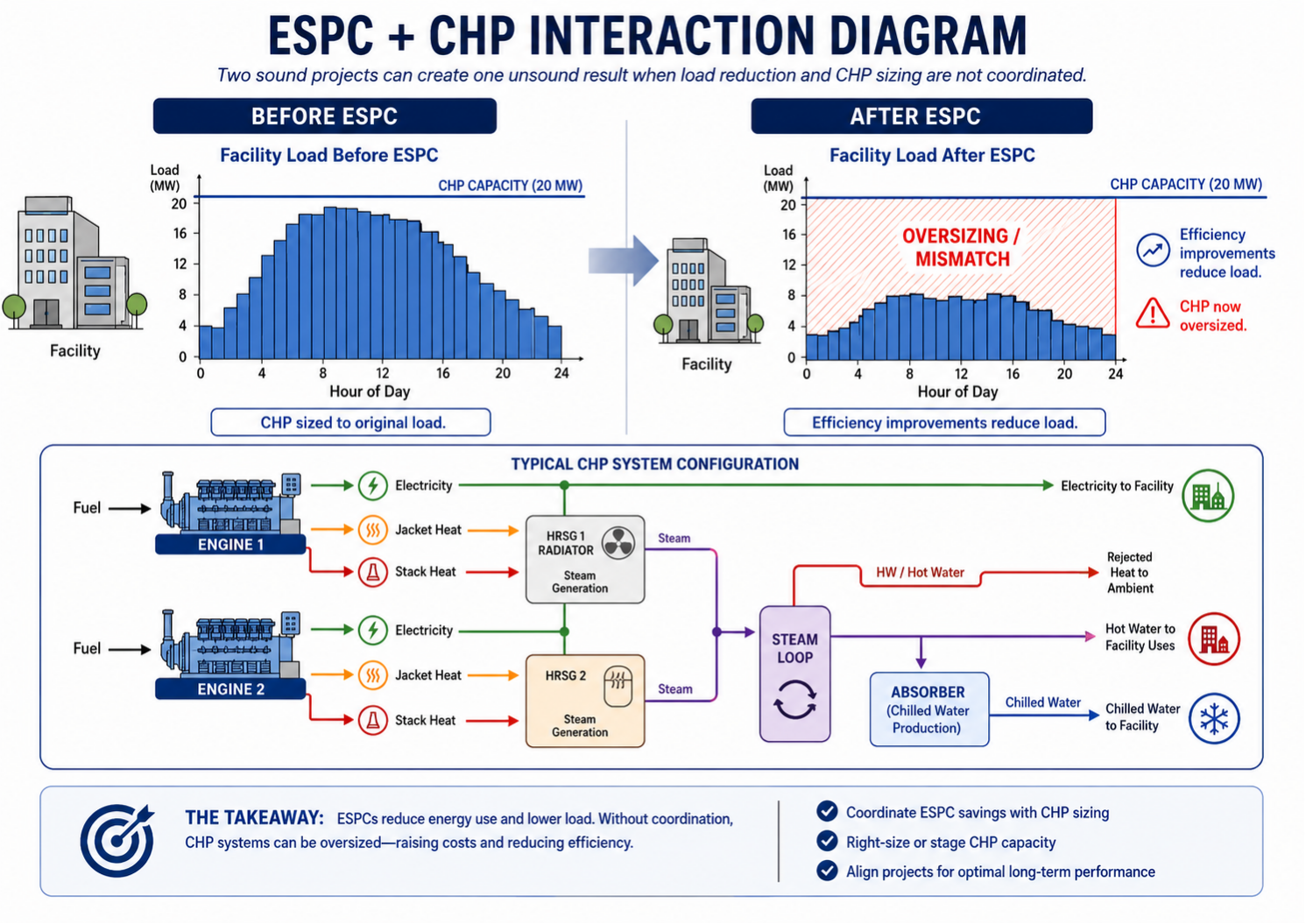
When 2 sound projects create 1 unsound resultA large institutional facility initiated two major energy projects during approximately the same period. The first was an energy savings performance contract (ESPC). Its scope included lighting retrofits, a new building automation system (BAS), VFDs, enthalpy-wheel replacement and the replacement of several hundred fan-coil units. Each measure was intended to improve efficiency and reduce electrical demand. The projected economics were attractive, and the project moved forward on that basis. At the same time, the organization was developing a combined heat and power (CHP) plant comprising two natural-gas-fired engines, two heat recovery steam generators (HRSGs) to produce low-pressure steam from engine exhaust, a dump radiator and an absorption chiller. The plant’s design was based on the facility’s historic electrical and thermal loads, the same loads the ESPC was simultaneously reducing. Both projects were independently justifiable: the ESPC reduced electricity consumption, and the CHP plant generated electricity while recovering useful thermal energy. On paper, both penciled out. The FM was not engaged in the development of either project other than providing access and support to the designers and developers. As demand declined, the CHP plant became oversized for the facility’s adjusted load: the engines could not operate near design conditions, and the plant experienced reduced efficiency and limited heat recovery. The dump radiator rejected more heat than the financial model assumed. The absorption chiller, originally expected to run on CHP steam, instead required boiler steam when CHP production fell below the pro forma, reducing the value of the recovered heat meant to offset boiler fuel. The issue was not simply technical sizing. It affected capital deployment, operating cost, maintenance, emissions, utility interaction and the validity of the projected business case. An FM with responsibility for the operating plant and visibility into both projects could have flagged the conflicting load assumptions before construction commitments, not necessarily to cancel either project, but to pause, update the load profile, model the projects together and consider alternatives such as:
The lesson is broader than CHP. An energy manager may understand supply markets, energy data and conservation opportunities; a sustainability professional, carbon accounting and target pathways; an engineer, the design of a specific system; a financial professional, the investment model. But the FM understands how the systems must operate together. That operational perspective should be present before project assumptions become design criteria. |
Defining FM's role
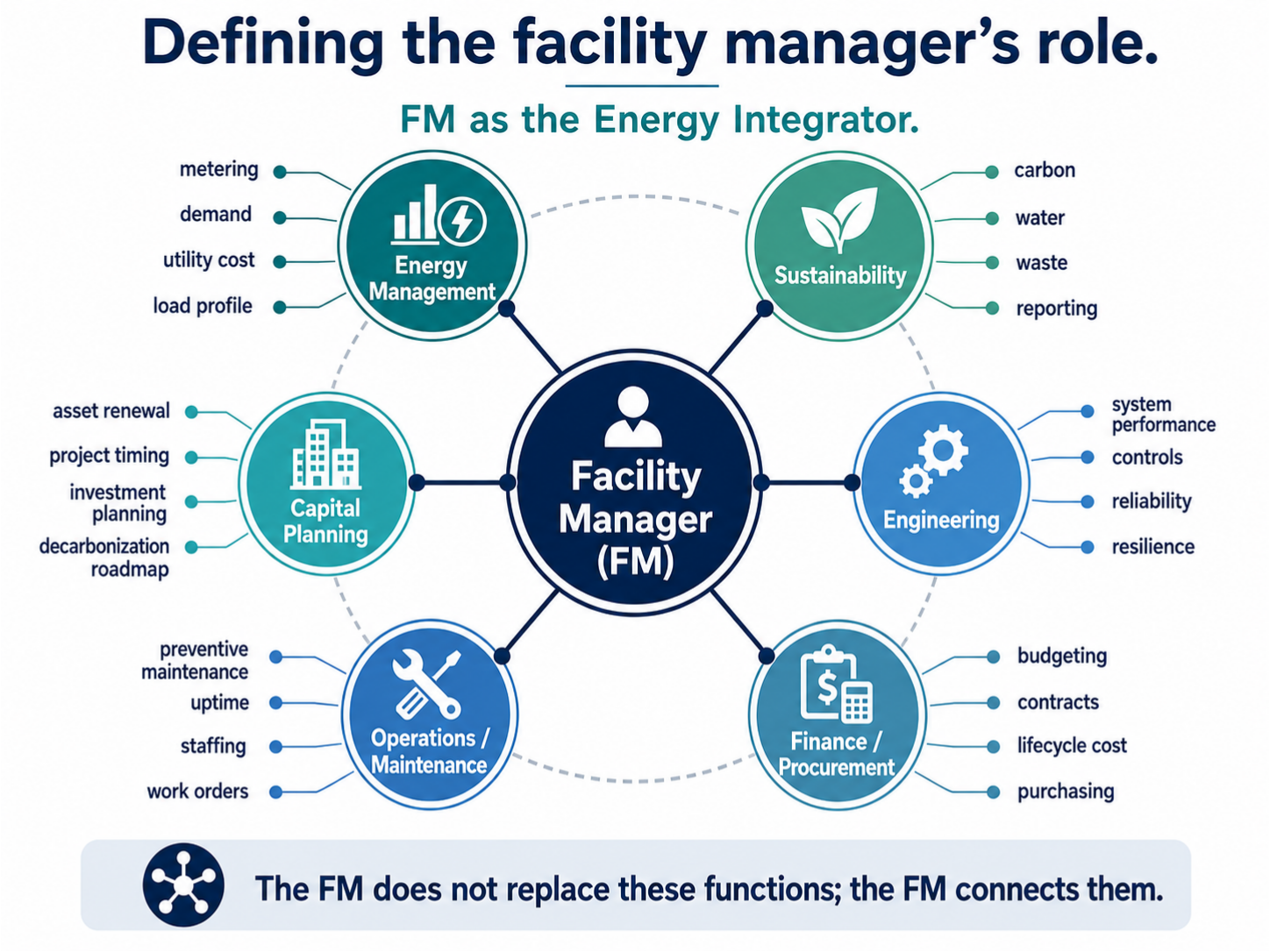
The FM’s responsibilities depend on the organization’s structure, but three common models apply.
1. The FM as energy-program leader
The FM leading energy management when no dedicated energy manager exists, not by performing every engineering calculation, commodity transaction or carbon analysis, but by owning the management process. They should establish the baseline, identify material risks, coordinate technical support, maintain the opportunity register, align projects with capital plans and verify that operating improvements persist.
Specialists may be engaged in engineering, commodity procurement, commissioning, emissions accounting or financial analysis, but the FM remains responsible for connecting their work to actual facility conditions.
2. The FM working with an energy manager
A dedicated energy manager may lead utility analysis, benchmarking, procurement strategy, project evaluation and reporting. The FM provides the operating context needed to interpret the data.
A demand spike may reflect a failed control sequence, production change, weather event or emergency operating condition. Interval data can identify when the spike occurred, but the FM team often explains why.
The FM should also identify planned changes that could alter future consumption (e.g., equipment replacement, renovations, occupancy changes, facility closures or expansion).
Without that information, procurement volumes, infrastructure plans and project economics could be skewed.
3. The FM supporting sustainability leadership
Sustainability professionals may establish organizational boundaries, emissions targets and reporting methods. The FM translates those commitments into operating and capital requirements.
Replacing combustion equipment with electric alternatives may support a carbon-reduction strategy. The FM must determine whether the electrical service has sufficient capacity, whether backup power is affected, and whether maintenance staff can support the technology.
Sustainability establishes the direction. The FM determines operational feasibility.
Creating one management view of energy & water
The first step is establishing a common view of facility performance.
That view should include at least 24 to 36 months of fuel, water and power cost, and usage data, connected to operating hours, occupancy, weather, production and major facility changes.
Monthly bills provide a foundation, but they do not show when loads occur. Interval data may reveal overnight baseloads, short-duration demand peaks, simultaneous equipment starts or consumption continuing after operations have ended.
The objective is not to collect the greatest volume of data but to create decision-quality information, which requires answers to several questions:
-
Are meter and account boundaries understood?
-
Are readings actual or estimated?
-
Which variables explain changes in consumption?
-
Which facilities, systems or operating periods drive cost and risk?
-
Who investigates abnormal performance?
-
How will corrective action be documented?
-
How will results be verified?
A dashboard can display information, but it does not create accountability. A facility may generate thousands of alarms and trends without improving performance if no one is assigned to interpret and act on them.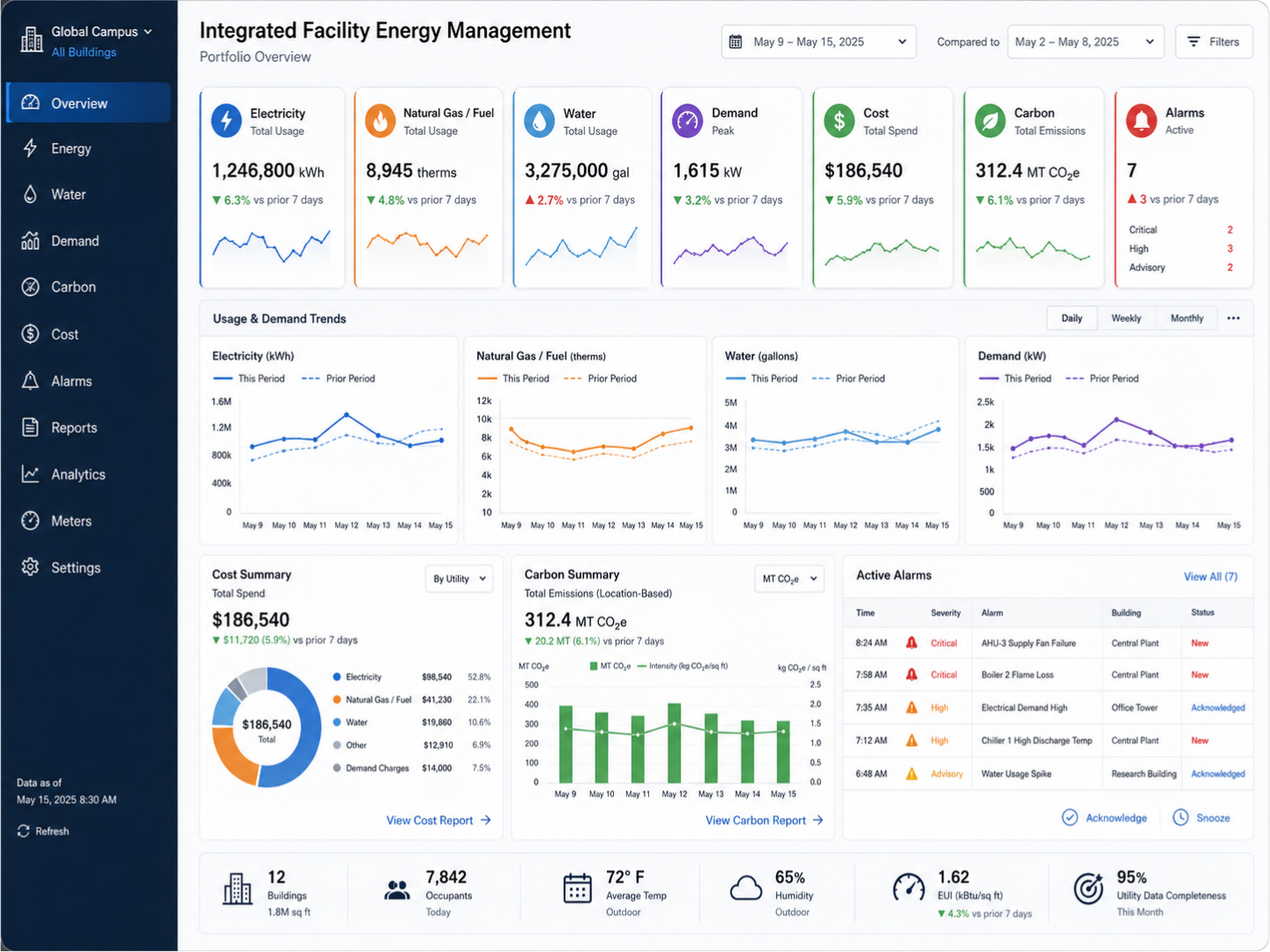
Prioritizing decisions rather than technologies
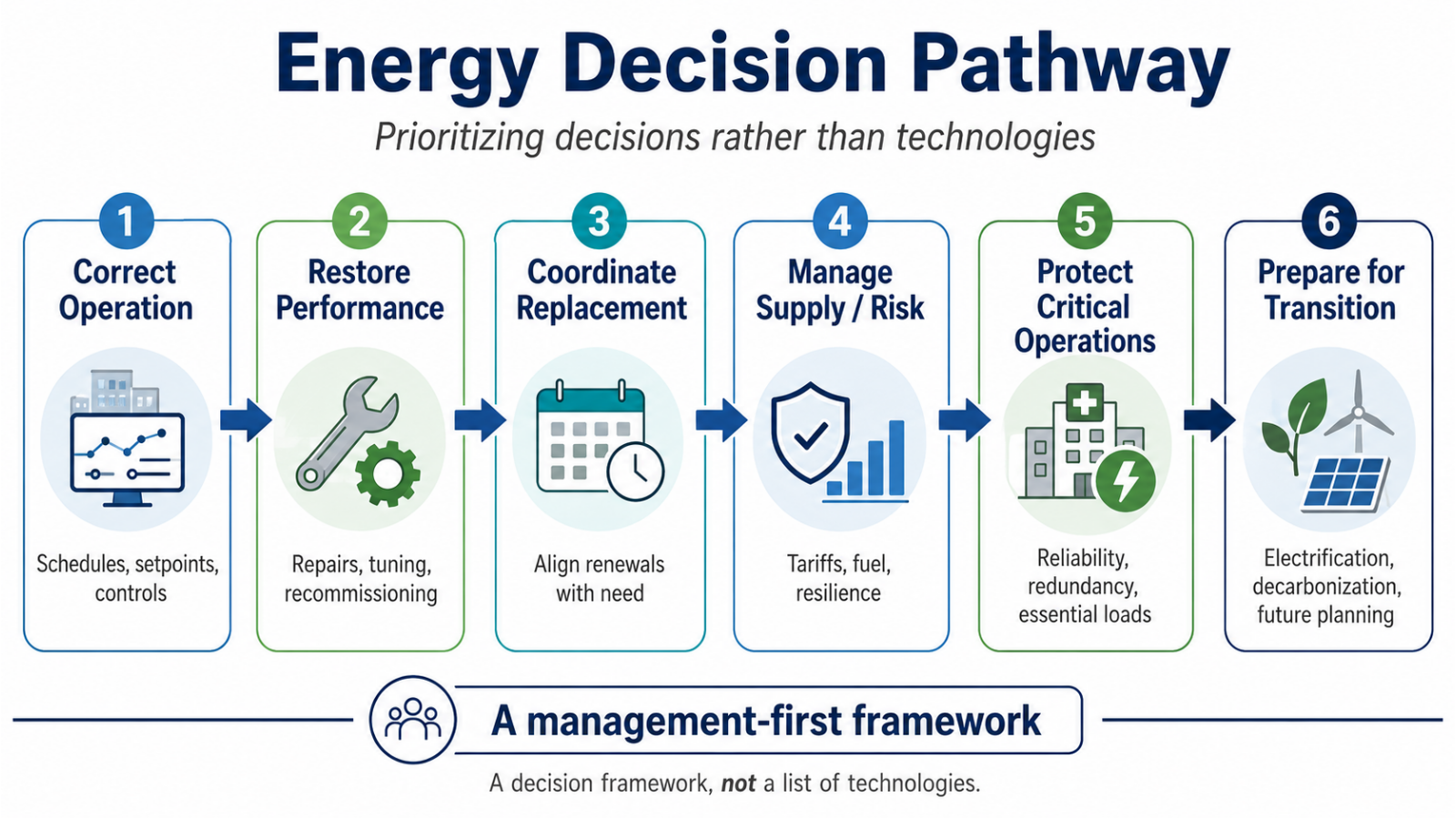
Energy plans frequently become lists of equipment: lighting, motors, controls, boilers, chillers, heat pumps, etc. A more useful approach organizes opportunities by the decision the organization must make.
Correct the operation
Schedules, setpoints, overrides, ventilation rates and equipment sequencing should match actual requirements. These measures may require limited capital, but they depend on BAS access, operator knowledge and continued supervision.
Restore failed performance
Continuous commissioning can address systems and equipment that have failed or are failing, like sensors, actuators, fans, pumps, etc. This would ensure that maintenance and energy performance are managed together.
Coordinate with asset replacement
Efficiency measures should align with equipment condition and planned capital renewal; replacing failed equipment like-for-like can lock in inefficient performance for another generation.
Manage supply & utility exposure
Tariffs, demand charges, commodity contracts and renewable-energy arrangements should reflect the facility’s load shape and expected changes. In competitive markets, procurement should be treated as risk management, not an attempt to beat the market.
Protect critical operations
Energy decisions should account for outage tolerance, backup systems, power quality, fuel reliability and critical loads. A measure that reduces consumption but compromises essential operations is an ineffective energy-management decision.
Prepare for transition
Electrification, renewable energy, storage and deeper carbon reductions should follow a clear understanding of existing loads, infrastructure capacity, equipment replacement cycles and organizational priorities.
 Using AI without surrendering judgment
AI can strengthen energy management when it helps FM teams identify material conditions sooner.
Potential applications include detecting unusual baseloads, water leaks, demand spikes, simultaneous heating and cooling, sensor drift and deviations from expected equipment performance. AI can also compare current operation with weather, occupancy, production and historical patterns, allowing limited staff to focus on the most significant anomalies.
At the portfolio level, it may assist with utility-bill review, carbon-data validation, load forecasting and preliminary opportunity screening. But results depend on data quality.
A failed sensor, incomplete equipment hierarchy or poorly defined meter boundary can produce an incorrect recommendation. Automated control changes can create operational risk if proper parameters are not established.
AI should support facility judgment, not replace it: the technology may identify an abnormal condition, but the FM must determine whether the recommended response is technically sound, safe and consistent with operating requirements.
Connecting energy & sustainability
Energy management and sustainability are closely linked, but their responsibilities are not identical.
Energy management focuses on how resources are purchased, consumed and controlled. Sustainability addresses broader environmental objectives, including greenhouse gas emissions, water stewardship, materials and organizational reporting.
On-site fuel combustion generally contributes to Scope 1 emissions; purchased electricity, steam, heating or cooling to Scope 2 emissions. Relevant Scope 3 emissions may arise from leased assets, purchased goods, waste, travel, construction and other value-chain activities.
The FM supports credible carbon management by validating fuel and electricity data, confirming meter boundaries, explaining operational changes and identifying which reductions are technically practical.
This role also protects the organization from pursuing carbon initiatives in isolation. A renewable-energy purchase may support a reporting objective without reducing physical consumption. Electrification may reduce direct emissions while increasing peak demand. On-site generation may improve resilience in one application but create maintenance and fuel exposure in another.
The appropriate strategy depends on the facility, not on the technology alone.
Making performance persist
Modeled potential is not the same as verified performance.
Projected consumption, demand, cost and emissions impacts depend on operating conditions, implementation quality, maintenance, occupant behavior and market factors. Results should be measured using a method suited to the initiative’s scale and uncertainty.
Operational measures may be verified through schedules, setpoints, control trends and interval data. Equipment projects may require before-and-after measurements or engineering analysis. Whole-facility programs may require normalized utility-data comparisons that account for weather, occupancy and production.
Persistence also requires clear ownership. Every major initiative should identify:
-
Who owns the data?
-
Who approves the project?
-
Who adjusts the controls?
-
Who responds to anomalies?
-
Who verifies performance?
-
Who reports progress?
-
Who maintains the change after project closeout?
Without those assignments, energy management becomes a series of temporary campaigns.
The FM’s distinctive contribution
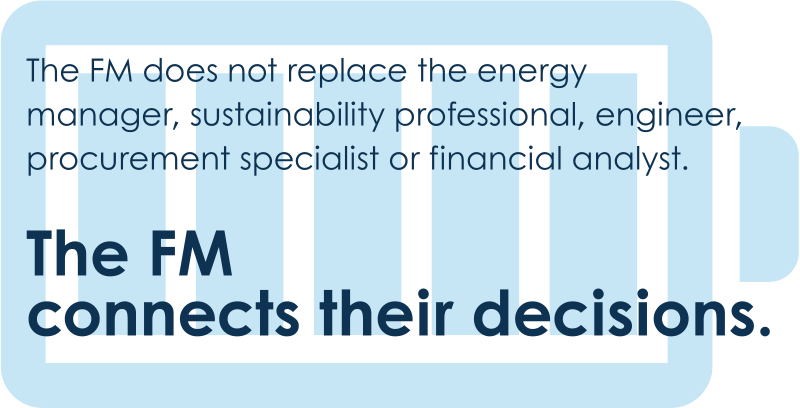
That role prevents an efficiency project from undermining a generation project. It ensures procurement reflects future load changes, tests carbon strategies against infrastructure capacity, aligns capital investments with equipment condition and operating risk, and distinguishes modeled results from changes that can be implemented and sustained.
Comprehensive energy management depends on that integration.
The FM may lead the initiative or support other specialists but should never be treated as a downstream recipient of energy decisions. By the time a project reaches operations, the most important assumptions may already be fixed.
Facility involvement must begin when the problem is defined, not after the solution has been selected.

John J. Lembo, CFM, LEED AP, is managing principal of The Navitas Group, an owner-side facilities and energy management consultancy that helps organizations make informed decisions regarding infrastructure, capital planning, operations, sustainability, compliance and technology. Over a career spanning nearly four decades, he has held senior leadership roles in facilities, engineering, construction, energy, and asset management across hospitality, health care, senior living, commercial real estate and other complex built environments. He is also the author of So You Want to Be a Consultant: Hard Truths, Real Tools and the no-BS Road to Consulting Success, which draws upon his experience as an executive, advisor, and consultant. Lembo serves as vice president of Professional Development for IFMA Greater New York and contributes to the advancement of the FM profession through writing, speaking, mentoring and industry education.
Read more on Facility Operations , Communication , Leadership & Strategy and Sustainability or related topics Strategic Planning , Sustainable Facility , Operations and Maintenance Planning , Communication Management and Energy
Explore All FMJ Topics