
 Membership
 Network
 Regional Sites & Affiliates


 Events
 Participate
 Resources
 Training
 Credentials
 Government


 Content Channels
 Tools
Tools


 Business Overview





The Green Office Boom
Why it’s happening & how to capitalize
Gen Z entered the working world as video meeting platforms gained prominence and commutes were reduced to a few steps from a bed to a desk. Work was more flexible than ever, forming expectations around work-life balance that remain today.
As a result, Gen Z wants to bring elements of working from home to the office – including gym facilities, meditation zones and, above all else, access to premium, manicured green spaces. These spaces are about to take off like never before and will become the biggest driver of high-end leases across the global office market this year.
 That is because this generation is incredibly self-aware when it comes to their mental health and well-being. They have long been able to connect the dots between their working environments and their state of mind, and if anything, the COVID-19 pandemic amplified this lesson even louder.
Employees’ homes became their workplaces and, for many, the only real escape from their to-do list came in the form of socially distanced exercise or a walk outside. The pandemic made a clear association between spending time outdoors and maintaining work-life balance for young workers, and it has left a lasting impression on what they believe their office spaces should deliver.
Some will disagree and say that younger workers are addicted to their screens, uninterested in changing their environments. However, the opposite is true.

There is another strong narrative that often sweeps through these conversations, and that is that corporate headquarters is tired of trying to cajole 20-year-olds back to the office. They view these workers as demanding rather than productive. Now, there is definitely some truth in that, and there is no denying that some major firms have been vocal with their frustrations, but that does not negate the good work those same firms are doing to make office spaces more flexible, engaging environments.
J.P. Morgan is a case in point. CEO Jamie Dimon did not pull any punches when addressing Gen Z workforce trends, telling young employees that “you can’t learn working from your basement.” He has rallied against hybrid work, enforcing a full-time in-office policy; but even as one of the most outspoken critics of working from home, J.P. Morgan has still made a huge effort to adjust their offices for the post-pandemic world.
In late 2025, the firm opened its new 60-story HQ in New York City, USA, packed full of perks and amenities to attract employees back to in-person work: a health center, gym, meditation spaces, even an Irish pub; but on top of all those perks, one of the most noticeable focuses for this development was extending green spaces and bringing an outdoor environment inside.
Not only has J.P. Morgan more than doubled the HQ’s outdoor space, but they have also gone a step further by bringing 30 percent more daylight into their indoor spaces and adding circadian lighting to build a healthier inside environment, more in tune with its external surroundings.
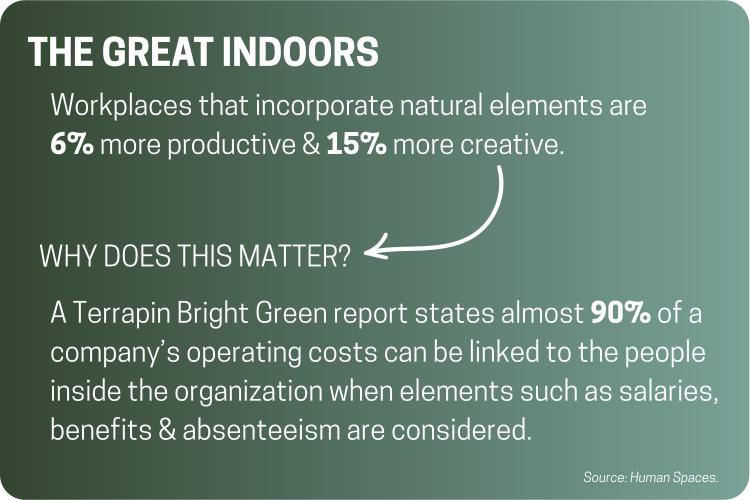 They have recognized that green spaces do not just benefit workers’ well-being but also support corporates in meeting their objectives. Studies show that workplaces with natural elements enjoy a 6 percent productivity boost and are 15 percent more creative, so there is a real ROI opportunity to be had.
J.P. Morgan’s development is a true case study for a trend that will continue to take the world by storm this year. Their flagship HQ may be located in the U.S., but this is a pattern unfolding across the world.
Take The Perennial office building in Austin, Texas, USA, for instance. Set to open this year, this building will have lush green spaces at its core, featuring a 30,000-square-foot sky garden and a 28-foot waterfall.
The Anis building in Nice, France, has tree-lined balconies on each floor, and Tokyo’s Pasona Urban Farm building features nine stories of workspaces surrounded by indoor crops, and an exterior covered in vibrant greenery.
Courtyards, balconies, gardens and rooftop terraces are all growing in popularity, and considering the global office market is heating up – leases across the U.S. are at a decade-long high, for example – 2026 will likely be their best year yet.
 These spaces will fast become a deciding factor in which office units secure tenants, and which do not. Well-maintained green spaces can add a premium of up to 7.1 percent to leases; so, it will not be long before opportunistic facility managers, commercial real estate owners and investors capitalize on the momentum.
As they look to transform their office stock to offer healthier, greener workspaces, a few practical factors will decide whether they succeed. In particular, their approach to maintenance will decide whether an outdoor space becomes a true asset or ends up detracting from the office’s overall value.
 With that said, one of the key common mistakes facility and property managers should avoid is failure to implement tailored infrastructure and maintenance programs that keep them ahead of the curve. It is essential that property managers stay in proactive mode wherever possible – trying to save a penny in the near-term almost always results in costly issues down the line. Whether that is by introducing automated sub-surface irrigation, sensor-managed water features or just an ideal service-provider partner, there are countless tools that can help reduce the maintenance burden.
However, all these tools need to be examined at the start of every season. Sprinkler nozzles can become clogged, batteries can weaken or die, and pipes can crack. Letting these problems go unnoticed can lead to serious damage that becomes a lot more time-consuming to fix later on.
A second key, common mistake is an attempt to create a landscape that might be found elsewhere in the world. In some cases, it can be done, but it is only ever possible if management is committed to relentless maintenance and monitoring. FMs can make life much easier by mirroring natural outdoor environments and keeping the office’s geography and climate front of mind. The best route is always to mimic the office’s surroundings and choose native plants that are designed to thrive in them. This does not mean creativity goes to the wayside; it just means simplifying the growing environment for the new asset.
Finally, keep things simple and work with the space available. There will always be a few examples of office buildings that bring the extraordinary to their outdoor spaces – The Perennial’s waterfall, for example – but most successful green offices focus on getting the fundamentals right. They nurture strong, full trees that offer plentiful greenery, base their spaces on hardy evergreens to ensure year-round verdancy, and choose a handful of flower species suited to their climate for that pop of color at key, high-visibility locations throughout the property.
 The beauty of this approach is that it can be applied to all manners of spaces. Whether the office has a tiny courtyard or a huge roof terrace, relying on these fundamentals creates a premium outdoor area regardless of how many square meters a property manager is working with.
If office facility, property and asset managers, and end ownership groups take these steps, building aesthetic and verdant areas that they can protect through consistent maintenance steps, green spaces will boom across the office market.
The crucial drivers are all in place: the demand, the appropriate workplace culture and the ROI potential will ensure that green offices win big this year. This global trend is only just getting started.

Kade Thomas is the founder and CEO of Emory Oak Partners, an operationally-focused, technology-enabled firm transforming the home and commercial property services space. Thomas has built his career on almost 20 years of success in the property services sector and has brought together his learnings and experience to redefine the industry.
References
Top image via Getty Images.
Read more on Real Estate and Leadership & Strategy or related topics Workforce Development , Real Estate Management and Occupant Services
Explore All FMJ TopicsRelated articles
-

Plugged In
Solving the data disconnect in real estate and FMBy Amanda Muzzarelli & James Waddell07.01.2024 -
Food for Thought
Installing pop-up food programsBy Stafford McKay09.18.2024 -

Guarding Against Graffiti
Protocols that help prevent & remove graffiti on college campus buildingsBy John Lesak & Sarah Brummett11.26.2024