 Membership
 Network
 Regional Sites & Affiliates


 Events
 Participate
 Resources

 Training
 Credentials
 Government


 Content Channels
 Tools
Tools


 Business Overview





The Ins & Outs of RCx
A 4-phase process

There is no better feeling than stepping into a newly constructed building. Everything is clean, visually appealing and functioning as designed. HVAC systems should be fully commissioned, controls finely tuned and operations running smoothly. However, only a few years later, the same building can still look the same on the outside while becoming quite the opposite internally.
While spilled liquids and broken light fixtures are easily addressed, hidden system degradation is not as visible. Complex building automation systems can become overridden or misconfigured. Failed sensors and control devices can drive up energy consumption. Airflow stations can corrode and lose accuracy. Although a building may appear pristine, internal controls and mechanical components erode.
Frequently, the actual end use of a building or space changes over time, which means existing controls and HVAC design may no longer be applicable. This gradual decline is widely known as building drift. The solution is retro-commissioning.
Retro-commissioning (RCx) is the systematic process of studying, analyzing and gathering field data to evaluate how a building’s HVAC system currently operates, comparing it both to the original design intent and to the building’s present-day needs (often documented as current facility requirements).
When an RCx engineer is engaged, the goal is to understand the physical condition and distribution of HVAC systems, assess control-system performance, and document how temperature, pressure and airflow are managed throughout the facility. Sometimes the focus is energy savings, sometimes it is indoor environmental quality, and often, building operators simply need to know: Where do things stand and what needs to be done?
RCx continues to gain traction because it is one of the most cost-effective methods for improving system performance in existing buildings. For many facilities, RCx provides actionable insight at a fraction of the cost of capital upgrades and often uncovers issues that traditional maintenance routines miss.
For clarity, the RCx process is divided into four distinct phases: discovery, planning, investigation and implementation.

One of the most important steps in any retro-commissioning project is determining whether it should be pursued and if the building is the right candidate. This matters for several reasons.
First, an RCx project places significant emphasis on the building automation system (BAS) and related controls. A facility with limited or no BAS infrastructure is typically not suitable. Additionally, if HVAC equipment is extremely old or already scheduled for replacement, retro-commissioning may offer little information beyond what operators already know. As a general benchmark, facilities that still have at least 10 years of expected equipment life and a building-wide BAS are typically the best candidates.
It is equally important to identify why the RCx effort is being undertaken. Is the facility experiencing high energy consumption? Humidity or pressurization problems? Indoor air quality concerns? Or is the intent to perform a routine, proactive operational assessment? Regardless of the driver, the reason must be clear. A defined goal serves as a compass for the RCx provider throughout the investigation. Whether the objective is reducing energy consumption by 10 percent or maintaining tighter temperature control, the facility team must be able to define success: If the RCx provider solves this problem, can the project be considered successful?
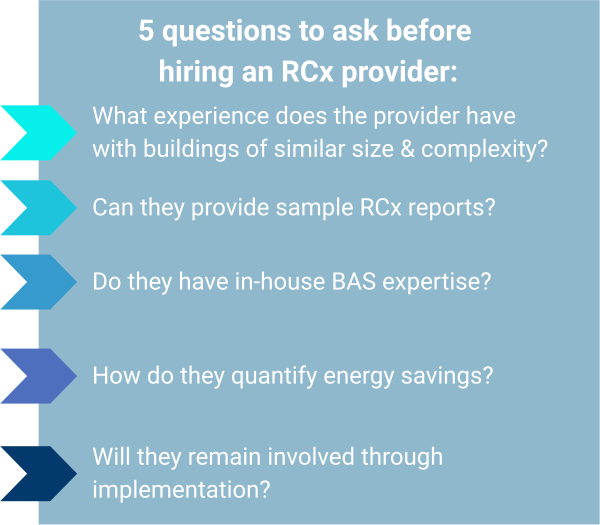
 Once the facility and goals have been identified, the next step is to develop a structured plan. A qualified RCx provider must be selected. Whether chosen through a formal RFP or pre-existing relationship, it is recommended that the owner and RCx provider hold a scope review meeting before engagement. Aligning expectations early ensures that the RCx provider’s approach, methodology and deliverables match the owner’s objectives. A reputable RCx provider should be able to reference similar past projects matched in size, scope and complexity. If previous RCx projects have not consistently produced positive results, the value of the service becomes questionable.
Once engaged, the RCx provider should develop and present a comprehensive RCx plan to the project team. This plan typically includes a clearly defined list of systems to be included in the process and a detailed project schedule. It should also identify any subcontractors required, such as a BAS programmer or testing, adjusting and balancing (TAB) contractor, who may support field data collection.
Site logistics are equally important. RCx projects occur in occupied, fully functioning buildings. Some environments such as laboratories, operating rooms or manufacturing spaces require strict coordination. Downtime may be restricted or need to occur during off-hours. There should always be a dedicated point of contact from the owner’s team to coordinate assessments, escort requirements and facility access.
 After the schedule and plan have been approved, the RCx team begins an investigation.
Every investigation should start with the building interview process. Interviewing facility staff and end users is one of the most informative steps, as it provides historical context and details on previous system modifications. These interviews often reveal issues not documented anywhere else and help the RCx provider understand the building’s lived experience. While interviews typically involve the facility team, they can also include department heads or occupants who can provide additional insight.
At the same time, the RCx provider reviews all available as-built documentation, including mechanical drawings, controls submittals and TAB reports. Even partial documentation can be extremely valuable in understanding original design intent and system expectations.
The next step is the development of functional testing procedures for each system. These are typically based on as-built automatic temperature control (ATC) submittals, using the latest sequences of operation and control diagrams. Where documentation is incomplete or unavailable, the test sheets may be more exploratory, focusing on field verification and data gathering. In these scenarios, the RCx provider will need to rely on on-site discovery and past experiences and knowledge to guide them. Regardless of format, the intent is the same: to provide an organized, thorough record of functional testing and to document any deviations between original design intent and current programming.
Functional testing is the heart of any RCx investigation. To fully understand a building, testing should include:
-
BAS review and trend analysis
-
Physical inspection of all equipment
-
Complete controls point-to-point verification
-
Verification of device calibration and installation
 At the conclusion of functional testing, the RCx provider should be able to clearly answer the following questions for each piece of equipment:
-
What is the physical condition of the equipment?
-
Where is it located and what systems or spaces does it serve?
-
What is the condition of all associated control sensors and devices?
-
How are the current sequences of operation programmed and executed?
-
What improvement recommendations can be made to address the primary project goal?
Once functional testing is complete, the RCx provider develops the final RCx report. This is typically split into two parts.
One deliverable should be a complete list of all observed deficiencies. These issues may not always relate directly to the primary project goal, but they are valuable for facility teams. For example, a failed supply fan discovered during an energy-focused project should still be documented. While it may not influence energy savings, it affects operational reliability. These items are often shared through a punch list, spreadsheet or issue-tracking platform.
The final RCx report should focus on the main project goal. This portion of the report explains why the RCx provider was engaged, summarizes relevant history and presents all recommendations to improve performance. Recommendations should be clear, technically accurate and understandable to the full project team. Energy calculations may also be included to quantify savings and support cost-benefit evaluations.
 Once the RCx report has been fully reviewed, the team collectively determines which recommendations should be pursued. If implementation of the measures is to be pursued, it is often worth rewriting the RCx findings into a biddable document format. The final RCx report may have various superfluous information that may not be applicable to a bidding vendor. Biddable documents should be developed and include critical information such as site logistics, schedule, document delivery and training as needed.
The RCx provider may remain engaged to assist with reviewing contractor quotes, evaluating implementation costs and answering technical questions. Because the RCx provider has extensive first-hand knowledge from the investigation phase, their continued involvement during implementation helps ensure design intent is maintained and final system performance aligns with project goals.
Final takeaway
While the phases above describe a typical retro-commissioning project, no two facilities are identical. Every building has unique designs, layouts, control systems and end-user needs. The most important step is identifying the reason for undertaking the process in the first place. Retro-commissioning is a powerful tool, but it must be aligned with clear goals to deliver the greatest value.
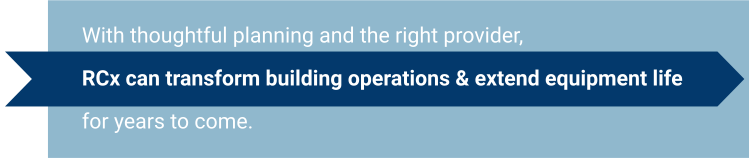
Retro-commissioning offers facility teams a structured, data-driven path to restoring performance, reducing energy waste and improving occupant comfort. With thoughtful planning and the right provider, RCx can transform building operations and extend equipment life for years to come.

Brian Messerschmidt is a mechanical engineer and commissioning professional specializing in whole-building commissioning, retro-commissioning, and energy performance optimization. He has led commissioning programs across higher education, laboratory, healthcare, and commercial facilities, including major VA medical centers and university campuses throughout the Northeast. His work focuses on identifying system deficiencies, resolving operational issues, and verifying measurable improvements in reliability, comfort, and energy efficiency. Messerschmidt is known for a field-first, data-driven approach that emphasizes practical energy management, clear communication, and close collaboration with facility staff and project teams. He is a licensed professional engineer in Connecticut and Rhode Island, Certified Energy Manager, Certified Commissioning Professional and currently serves as President-Elect of the Connecticut ASHRAE Chapter.
Read more on Facility Operations , Quality and Sustainability or related topics Retrofitting , Building Systems and Quality Improvement
Explore All FMJ Topics