 Membership
 Network
 Regional Sites & Affiliates


 Events
 Participate
 Resources

 Training
 Credentials
 Government


 Content Channels
 Tools
Tools


 Business Overview





Case Study: The New Adaptive Reuse
Rebuilding the soul of a neighborhood, not just a building
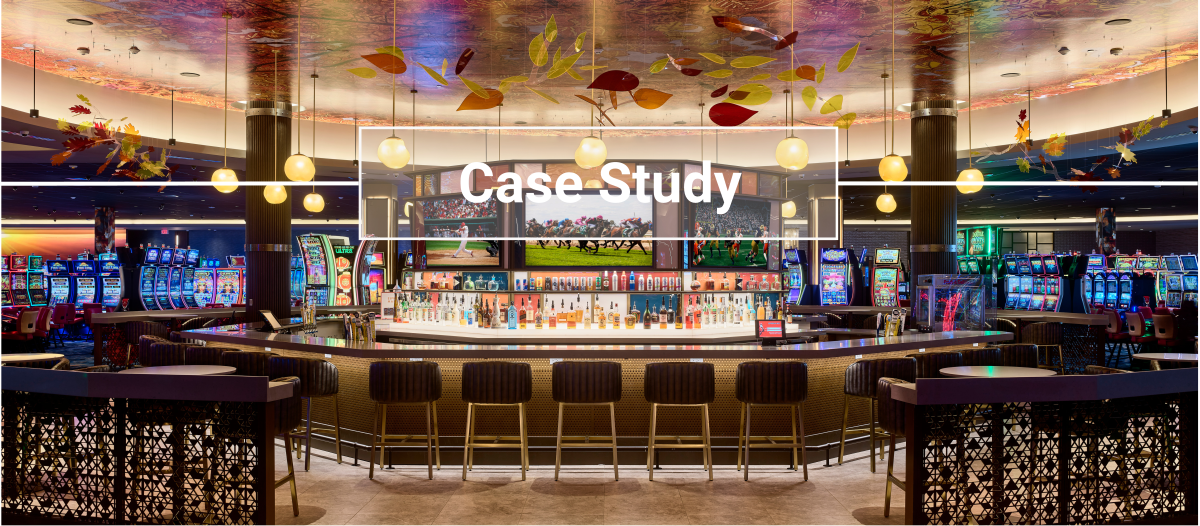
Adaptive reuse has long played a role in the evolution of the built environment — the practice closely associated with preservation. Think reworking historic factories, warehouses and civic buildings to extend their usefulness while maintaining architectural character.
While that tradition continues, its scope has expanded dramatically in recent years. Today, the conversation is less about preserving the past and more about responding to present-day realities. Market disruptions, changing consumer behaviors and growing sustainability expectations have all contributed to a new wave of adaptive reuse projects that reach far beyond traditional historic structures.
Increasingly, underutilized commercial properties — particularly big-box retail buildings — are being evaluated not for what they once were, but for what they could become.
 A changing retail landscape
The transformation of retail has been one of the most visible forces shaping the built environment over the past decade. The rapid growth of e-commerce, combined with evolving consumer preferences, has significantly altered how and where people shop. Many large-format retail locations that once served as anchors for suburban commercial corridors have struggled to maintain occupancy.
As a result, communities now face a growing inventory of vacant or underutilized retail properties. These buildings — often massive in scale and strategically located near major transportation routes — represent huge (no pun intended) opportunity. For developers, designers and facility management professionals, the question has shifted from whether these buildings will be replaced to how they might be reimagined, in large part thanks to their surprisingly adaptable physical characteristics.
Most feature expansive floor plates, minimal interior columns and high ceilings — qualities that can accommodate a wide range of new uses. Large parking areas and accessible locations near highways or commercial centers add another layer of value.
From a design perspective, though not exactly glamorous, these attributes provide a beautifully blank canvas.
Organizations have been increasingly applying adaptive reuse strategies to buildings that would not traditionally be considered “worth saving.” One such example involved a former big-box-style shopping center in a Philadelphia, Pennsylvania, USA, suburb, explored as a potential biotech and life sciences facility. While the project remained conceptual, it illustrates the broader opportunity embedded in these overlooked structures.
From an environmental perspective, the advantages were immediate. Reusing the existing structure dramatically reduced demolition waste and eliminated the need for large quantities of new construction materials, significantly lowering embodied carbon.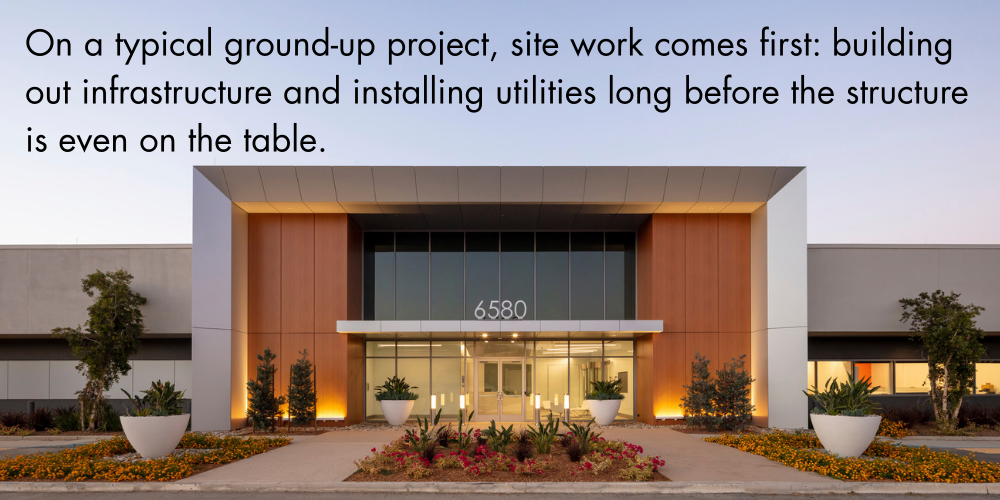
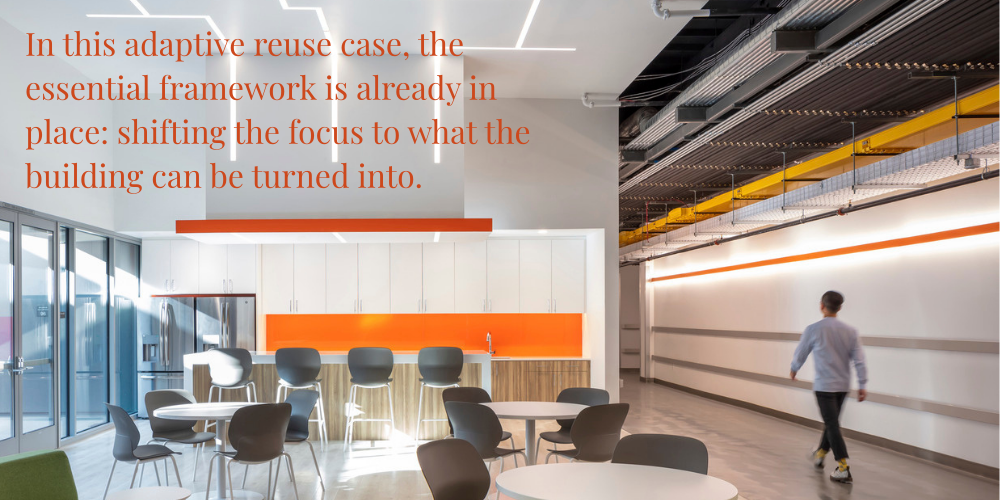
From a development standpoint, the site already offered major advantages:
-
access along a primary corridor,
-
existing utilities and stormwater infrastructure,
-
transit proximity, and
-
extensive parking.
These are elements developers often spend months, or years, assembling from scratch. In adaptive reuse projects, much of that work is already done.
There are also benefits that are less quantifiable but no less important. Reusing an existing building can shorten project timelines, reduce permitting hurdles and minimize disruption to surrounding neighborhoods.
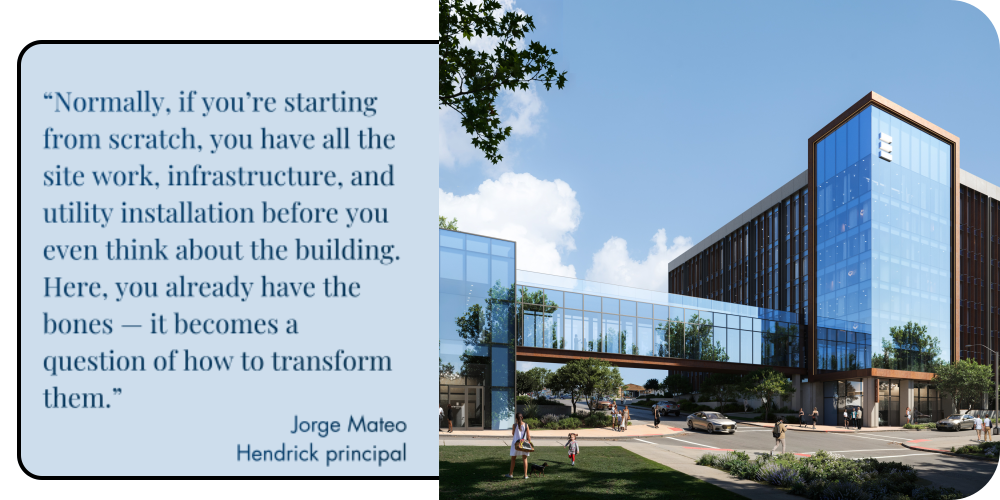 In the Philadelphia-area study, that meant reimagining the former retail façade to read as a contemporary corporate and office presence, while placing laboratory and manufacturing functions toward the rear of the building to leverage existing loading docks and storage infrastructure. The result demonstrated how a structure designed for retail could, with careful planning, support highly technical uses.
The expanding demand for data centers
As organizations increasingly rely on cloud computing, artificial intelligence and digital services, the demand for data centers, with their specialized and critical needs, has grown at an unprecedented pace, making it an emerging yet challenging market for the practice of adaptive reuse.
“Data center requirements have become dramatically more specialized,” explained Tom Kruger, Associate Principal and Data Centers Studio Leader at Corgan’s LA office.
These facilities serve as the backbone of modern information systems, housing the servers and networking equipment that support everything from streaming platforms to enterprise applications. Big-box buildings often provide the square footage necessary to house server rooms and supporting infrastructure, and their open interiors allow designers to configure server halls efficiently.
But modern data centers demand higher floor loading, greater ceiling heights, proximity to robust power infrastructure, and increasingly complex cooling systems — often liquid-based rather than air-cooled. These requirements can clash with the structural and spatial limitations of existing buildings. While retail properties may have access to existing electrical services, the scale required for data infrastructure may necessitate substantial utility upgrades.
Developing new data centers, however, can be both costly and time-consuming. Identifying suitable land, securing sufficient power capacity and navigating permitting requirements often extend project timelines.
In this context, adaptive reuse offers a compelling alternative. Existing manufacturing, telecom or distribution facilities, for example, often offer heavier floor loading and taller floor-to-floor heights that today’s data centers require. Success depends on careful due diligence: reviewing as-built drawings, conducting site walks, assessing structural capacity and planning for reinforcement where necessary. Even with extensive analysis, unknown conditions are inevitable, requiring contingency planning and flexibility throughout the design and construction process.
Obsolete offices to timeless hospitality
That same reality plays out in office-to-hospitality conversions, where constraints often reveal themselves only after design work begins. According to Tiffany Woodson, Founder and CEO of Ink + Oro, these projects are “always a balance between constraint and creativity.”
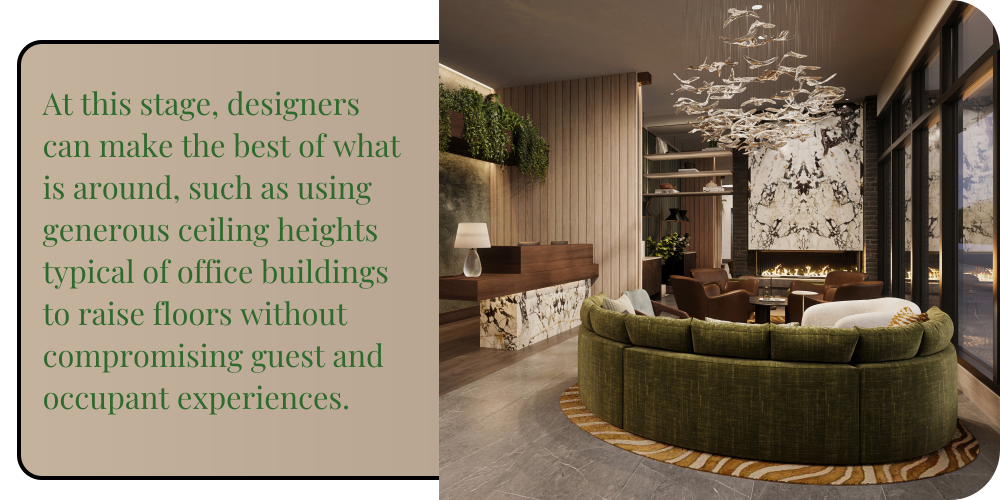
“You’re often adding float floors to accommodate plumbing and mechanical systems that simply didn’t exist in the original office layout,” Woodson explained. “Luckily, the generous ceiling heights typical of office buildings give us the flexibility to raise floors without compromising the guest experience.”
 Circulation presents another layer of complexity. Hospitality projects require a clear separation between public and private movement — guest circulation versus staff operations — a distinction rarely considered in office buildings. “You’re suddenly designing for both public and private pathways,” Woodson noted. “Getting those flows right is critical to making the space feel intuitive and seamless.”
Yet for Woodson, these limitations are not deterrents—they are catalysts. “Office-to-hospitality projects come with real challenges — raised bathrooms, added mechanical systems, unexpected discoveries behind walls,” she says. “But those constraints often push the design in exciting directions. When approached thoughtfully, adaptive reuse can transform limitations into moments of surprise and delight.”
Looking ahead
Beyond the economic considerations, adaptive reuse also offers an overall lowered environmental footprint. So, for organizations seeking to meet sustainability goals, adaptive reuse can represent both a practical and responsible development strategy.
At the same time, many communities are looking for ways to revitalize aging commercial corridors without introducing additional sprawl. Repurposing existing properties allows development to occur within already developed areas.
Adaptive reuse is not a universal solution, and in some cases new construction will remain the most viable option. But as its priorities have shifted from simply preserving structures to preserving neighborhoods, it will always have a place in the evolution of our societies.
AnnMarie Martin tripped and fell down the design trade magazine/commercial real estate rabbit hole and never found her way out. The commercial arena is her happy place. But she’s more than just a writer. Martin is a brand builder, helping titles give their readers a lot more than just some pretty pages to look at. Think programs that strengthen communities, spark discussion, and foster the next generation of commercial design’s superstars.
References
All images courtesy of Hendrick.
Read more on Project Management , Workplace and Real Estate or related topics Planning and Design , Space Management , Project Management and Case Study
Explore All FMJ Topics