 Membership
 Network
 Regional Sites & Affiliates


 Events
 Participate
 Resources

 Training
 Credentials
 Government


 Content Channels
 Tools
Tools


 Business Overview





The Real Test of an MLB Ballpark Comes Late in the Season
How facilities teams keep a venue feeling like Opening Day after 162 games

In Major League Baseball, the true test of a ballpark is how the venue performs after months of games, concerts, weather, foot traffic, and constant use — especially as the playoffs approach and every detail comes under the microscope.
By this point in the calendar, wear has accumulated, operating teams have been stretched across dozens of games and events, and fans are arriving in heightened volumes and with expectations as pennant races intensify and postseason baseball approaches.
The standard, however, does not change. Fans still expect clean seats, polished concourses, well-maintained restrooms, and a venue that feels every bit as ready for a postseason push as it did for the first pitch of the season.
That is what makes stadium operations so demanding. Maintaining consistency over a 162-game schedule requires far more than routine cleaning. It takes disciplined proactive planning, smart staffing, connected technology, and constant coordination across the entire venue.
At the same time, operators are balancing evolving technology, sustainability goals, and tighter budgets. Every delayed response, unnecessary task or missed maintenance issue can affect efficiency, cost, and fan experience.
One of the biggest shifts in recent years is the move from reactive facilities management to proactive, data-informed operations. Real-time performance platforms can give teams greater visibility across engineering, maintenance, and cleaning, while data-driven scheduling helps direct resources toward the areas that need attention most.
Proactive Planning for the Long Season
By September, successful stadium operations are less about following the plan created before Opening Day and more about continuously adjusting it. Long homestands, concerts, weather disruptions, playoff preparations, and equipment wear all require facilities teams to adapt while maintaining consistent standards.
That adaptability becomes especially important late in the season when the margin for disruption gets smaller. A weather delay, equipment issue, or unexpected staffing need during a postseason push can have an outsized impact, making contingency planning and clear communication across teams essential.
The postseason also creates a different kind of staffing challenge. During much of the baseball season, venues may have limited competition for the same event workforce. By October, however, MLB facilities can be competing for talent with college and professional football, MLS, NBA, and NHL venues -- sometimes all within the same market and on the same day. That makes workforce planning, retention, and scheduling even more critical as demand peaks.
In this fast-paced environment, staying ahead of curveballs is critical. Rather than reacting to problems as they arise, the focus should be on identifying ways to be just one percent better each day. That steady progress can make a major difference when adapting to unexpected challenges, whether it is severe weather, scheduling changes, equipment issues, or supply chain disruptions.
Overhead and elevated assets present another challenge. Roofs, scoreboards, video boards, and lighting systems frequently require specialized work at height, making training, PPE, and clearly defined safety procedures essential. Strong processes reduce downtime, protect teams, and help keep operations moving during the busiest parts of the season.
A System, Not a Schedule
An important lesson learned from working across major venues is that consistency cannot depend on cleaning crews and checklists alone. It must be built into an operating system designed for scale, flexibility, and reliability. That rigor extends across concourses, stadium seating, and restrooms, with staffing models calibrated to attendance forecasts and event type.
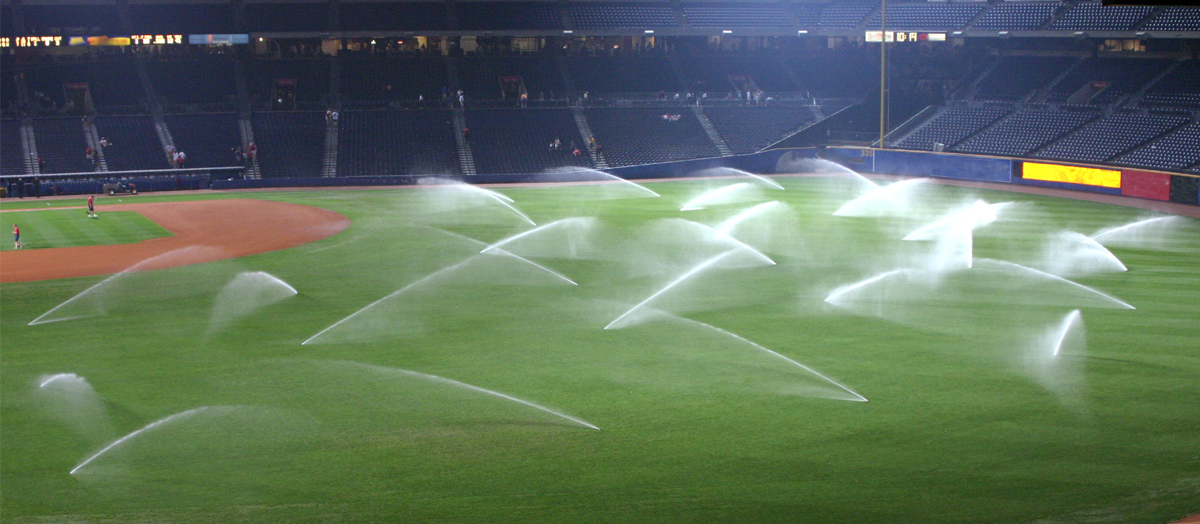
Nightly deep-cleaning routines cover floors, glass, restrooms, concessions, suites, and luxury areas. Rapid turnarounds between games rely on pressure washing, disinfecting, and detail finishing to restore that "wow" first impression fans expect at every entry. Given their high-capacity use, restrooms must receive consistent stocking, sanitization, and monitoring throughout each event.
The footprint itself can also change as the season progresses. Seating areas or support spaces that saw limited use during portions of the regular season may suddenly need to be fully activated for postseason crowds. Preparing those areas can require coordinated work across cleaning, plumbing, electrical, food and beverage and other teams, sometimes after months of limited activity.
For facilities teams, that means constantly asking not only how a space has been used, but how it may need to be used differently during the next event.
None of this happens by chance. It requires teams trained to move quickly without cutting corners, along with staffing models that can flex with homestands, concerts and special events. Just like a ball club adjusts its roster throughout the year, facilities teams must continually match talent and resources to changing demand.
Postseason games can also upend routines that teams have followed for months. Additional branding, television production, and media activity can change when and where work happens throughout the venue. A cleaning sequence that worked for 81 regular-season home games may need to be completely reworked if broadcasters are live from the field or concourse, requiring crews to work around camera positions, minimize noise or change the order in which areas are serviced.
That kind of operational pivot sounds simple on paper, but asking teams to change deeply ingrained processes at the most important point of the season requires clear communication, preparation, and experienced leadership.
That need for flexibility is also why data and real-time visibility are becoming increasingly important. Rather than relying solely on static routines, facilities teams can use real-time information to adjust staffing, prioritize high-traffic areas, and respond more quickly as conditions change.
At Citizens Bank Park, for example, the Philadelphia Phillies have taken a more integrated approach to facilities operations, bringing greater visibility across engineering, maintenance, and cleaning.
The broader lesson is not about any one platform. It is about giving teams better information so they can identify issues earlier, coordinate resources more effectively, and maintain consistency across a large, complex venue.
Increasing Sustainability
During the homestretch of the long season, efficiency matters in another important way: sustainability. Stadium operations can influence everything from water consumption and paper use to waste diversion and recycling, and increasingly, the most effective sustainability strategies are being built directly into day-to-day facility operations.
Cleaning teams play a vital role in that equation. When operations are supported by better data, teams can track supply usage, identify high-traffic areas, adjust cleaning routines, and verify results in real time. Those insights can help venues conserve resources while maintaining the service standards fans expect.
At Chase Field, for example, the Arizona Diamondbacks have incorporated sustainability initiatives spanning reusable cups, data-informed bowl washing, smart restroom technology, and expanded recycling. The results show what happens when facilities operations and sustainability strategies work together.
In the first month of its water conservation program alone, the venue saved approximately 198,000 gallons of water, while smart restroom technology helped reduce paper waste to 8 percent, compared with a typical average of 15-20 percent. Over two seasons, the reusable cup program has also diverted more than 42,000 single-use cups, representing approximately 3,430 pounds of waste, from landfills.
The larger lesson is that sustainability does not have to compete with operational performance. When it is embedded into everyday decisions about cleaning, staffing, supplies, and technology, it can help reduce waste and resource consumption while supporting a more efficient operation overall.
What High-Performing Venue Operations Require
The highest-performing stadium operations models we've seen share a few characteristics: enough staffing capacity to handle high-volume, fast-turnaround work; clear processes before, during and after events; technology that improves decision-making; and the ability to scale resources as schedules change.
Just as important is accountability. Venue leadership should not have to manage every operational detail themselves. The strongest facilities teams create confidence that daily execution is being handled consistently, allowing venue leaders to focus on broader priorities such as guest experience, revenue, sustainability, and long-term capital needs.
Technology plays an increasingly important role, but it should remain an enabler rather than the end goal. The objective is not to replace people; it's to give skilled teams better information so they can work faster, identify issues earlier, and make better decisions.
The Real Test Comes Late in the Season
By September, every ballpark has more than a few miles on it. The difference is whether fans can tell.
That is the real measure of strong stadium operations. After months of games, weather, concerts, crowds and constant use, the venue should still feel ready for the biggest moments of the season.
Technology will continue to improve how teams communicate, deploy resources, and maintain facilities. But the fundamentals remain the same: disciplined planning, skilled people, clear accountability, and a relentless focus on the guest experience.
As postseason baseball approaches, that work becomes even more visible — and more important. The goal is not simply to keep a stadium operating for 162 games. It's to make sure that when the stakes are highest, the venue is every bit as ready as the team taking the field.

Brian Grant is vice president of Sports and Entertainment at ABM. He joined the ABM team after previously serving as senior director of operations at SoFi Stadium and the senior associate director for facilities and project Management at the Los Angeles Memorial Coliseum over the last 10 years. His expertise in all aspects of venue and facility operations has positioned him uniquely to service national sports and entertainment accounts. Grant was a part of the leadership team that opened SoFi Stadium and YouTube Theater at the Hollywood Park site in 2020 as well as a facility renovation at the Los Angeles Memorial Coliseum in 2019 that brought in premium seating and amenities. As a venue operator, Grant has overseen the housekeeping and facility maintenance at all his venues over the last 13 years. During that time, he focused on delivering a first-class experience for the guests within those venues while emphasizing integration of technology into the workforce intended to drive efficiencies and cost savings. His understanding of the holistic approach to venue management provides a unique perspective on how to guide teams toward client goals. As an avid sports and entertainment consumer, he derives his passion from the opportunity to lead and develop teams toward self-sustaining leadership and execution. The development of talent and leadership within the workforce is an important part of that drive.
Read more on Facility Operations , Sustainability and Facility Technology & Data Management or related topics Operations
Explore All FMJ Topics