
 Membership
 Network
 Regional Sites & Affiliates


 Events
 Participate
 Resources

 Training
 Credentials
 Government


 Content Channels
 Tools
Tools


 Business Overview





Turning Data Into Insight
Applying digital twin technology to improve the occupant experience
Why do smart buildings still underperform?
Modern buildings generate enormous volumes of operational data every day, from occupancy sensors to energy meters and indoor air quality monitors. Yet much of this data remains underused across the global built environment. Research from CBRE shows that more than one third of workstations go unused on a typical workday, and almost one third are occupied for less than three hours, pointing to a persistent gap between how buildings are designed and how they are used in practice.
At the same time, AI adoption across commercial real estate has accelerated sharply. JLL’s Global Real Estate Technology Survey shows the proportion of organizations piloting AI tools rising from under 5 percent in 2023 to more than 90 percent in 2025.
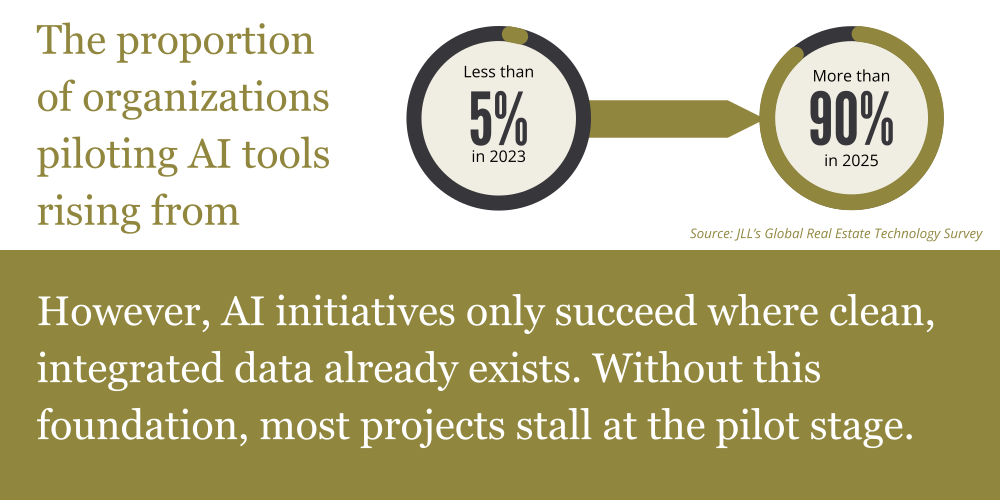 Without this foundation, most projects stall at the pilot stage. This disconnect reveals a deeper structural problem as buildings are data-rich but remain insight-poor, and the gap between data collection and actionable intelligence continues to widen. Digital twin technology is positioned to close this gap, turning fragmented building data into a living, responsive model that supports real-time decision-making and proactive occupant-centric service delivery.
What is digital twin technology & why does FM need it?
A digital twin is defined as a dynamic, real-time virtual replica of a physical asset, system or environment, continuously updated through connected sensors and data streams. Originally developed within the aerospace and manufacturing industries to monitor equipment performance and predict failures, this concept has since expanded into multiple industries including the built environment, enabling facility managers to visualize, simulate and forecast building performance with far greater precision than traditional monitoring systems allow.
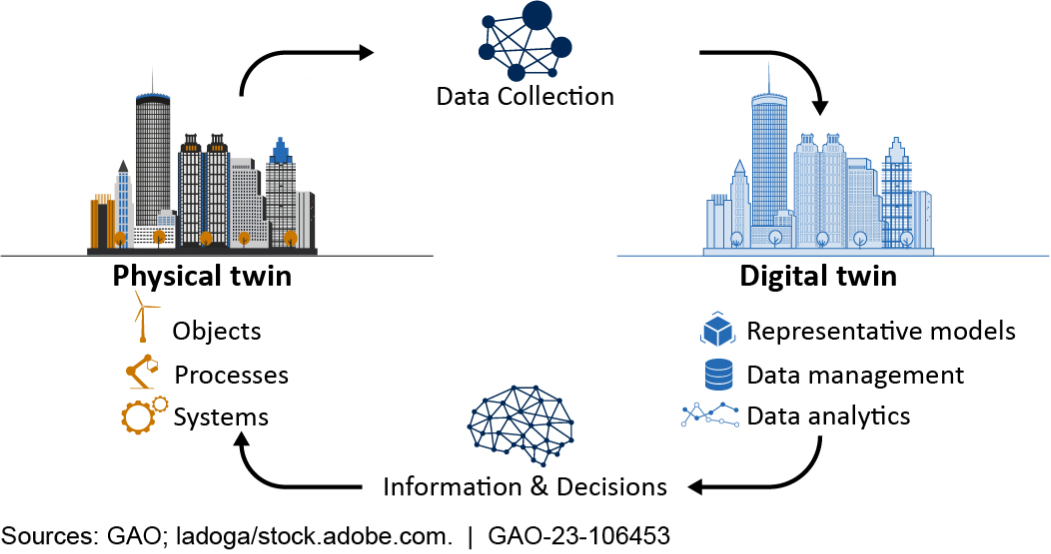 It is important to distinguish digital twins from related technologies that are often used interchangeably. Building information modeling (BIM) provides a static or semi-static digital representation of a building’s design and construction, while basic Internet of Things (IoT) dashboards typically display isolated, real-time data points without deeper analysis.
A digital twin goes further, integrating data from multiple connected systems into a single, continuously updated model capable of simulation and prediction. This combination of real-time monitoring, scenario simulation and predictive analytics positions digital twins as a transformative tool for FM, rather than simply another reporting layer.
The key distinction lies in the bidirectional nature of a digital twin. Unlike passive monitoring systems, a digital twin does not merely reflect a building’s current state. It also enables FMs to test interventions virtually before implementing them in the physical environment, significantly reducing operational risk and enabling faster, more confident decision-making across the facility management function.
How does digital twin technology transform occupant experience?
The most compelling case for digital twin adoption in FM lies in its direct impact on occupant experience, which has become a strategic priority for organizations seeking to attract and retain people within their physical spaces. Three core applications demonstrate this potential most clearly in the context of the global built environment.
 Environmental comfort is one of the clearest applications enabled by a digital twin model. By integrating temperature, air quality and lighting sensors into a unified platform, FMs can identify discomfort patterns across building zones and adjust conditions proactively, rather than waiting to receive occupant complaints and responding reactively. Research consistently shows that indoor environmental quality is among the most influential factors shaping occupant satisfaction and cognitive productivity in workplace settings globally.
 Space utilization represents a second major opportunity. Occupancy data captured within a digital twin model allows FMs to understand how spaces are actually used, as opposed to how they were originally designed to be used, enabling evidence-based decisions on layout, capacity and resource allocation. JLL’s 2025 Workforce Preference Barometer found a strong link between employees’ positive experience of their workplace environment and their willingness to comply with office attendance policies, reinforcing that environmental and spatial quality directly shapes occupant behavior and engagement, not just physical comfort.
 Predictive maintenance closes the loop. Digital twin technology can flag developing faults in HVAC, lighting or access systems before they cause visible disruption, allowing maintenance teams to intervene before occupants are affected.
Together, these three applications shift FM from a reactive, complaint-driven function into a proactive, experience-driven discipline. Across diverse building types, the ability to prevent service failures before they occur represents a measurable improvement in the quality of the occupant experience.
Real-world barriers
 Despite its considerable potential, adoption of digital twins within FM functions remains limited globally, and the barriers deserve honest acknowledgment. Cost and legacy infrastructure present the most immediate obstacle. Many existing buildings were not designed with extensive sensor networks in mind, and retrofitting older assets can require significant capital investment. Without a phased investment strategy, the upfront cost of implementation can appear prohibitive, particularly for organizations managing large, aging property portfolios across multiple locations.
Data silos and interoperability issues compound this challenge, as building systems are frequently supplied by different vendors using incompatible data formats and protocols, making integration into a single unified model technically demanding.
A third and often underestimated barrier is the skills gap within FM teams. Industry estimates point to a shortfall of around 30 percent emerging across FM and building engineering roles in the coming years, as experienced technical staff and their institutional knowledge retire faster than new talent enters the field. Operating and interpreting a digital twin requires a blend of facilities expertise and data literacy that many FM professionals have not yet had the opportunity to develop. Organizational change management can also be slow when new technology demands significant shifts in established workflows, and this human dimension is as critical to address as the technical one.
A phased framework for DT adoption
Given these challenges, a phased approach offers a practical and lower-risk pathway for FM teams considering digital twin adoption, regardless of building size or budget.
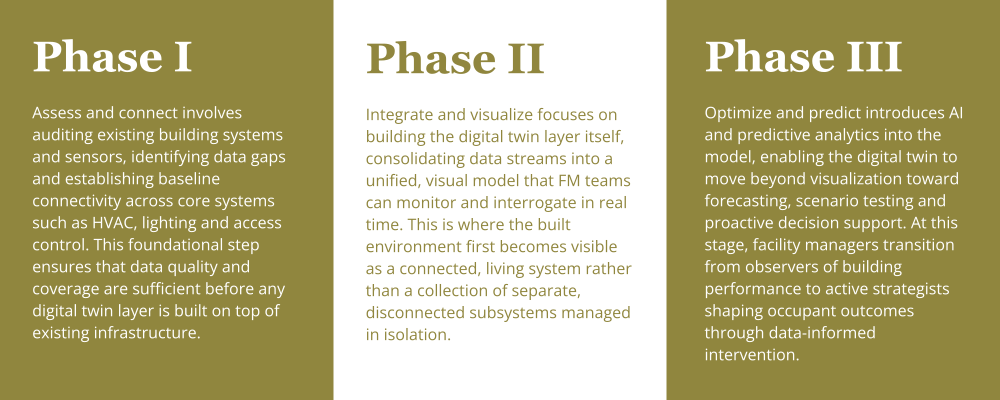 This phased structure allows organizations to build internal capability incrementally and demonstrate measurable value at each stage, rather than treating DT adoption as a single, high-risk technology investment.
FM’s next frontier
Digital twin technology should not be regarded as a futuristic luxury reserved for flagship smart buildings. As occupant expectations rise and organizations compete globally to create workplaces that genuinely support productivity and well-being, the ability to understand and anticipate building performance in real time is becoming a strategic necessity in the FM field rather than an optional enhancement. FMs who begin building foundational data connectivity today, even through small, incremental steps, will be far better positioned to lead this shift than those who wait for the technology to mature further on its own. The FM profession’s next frontier lies not in collecting more data, but in finally putting it to work for the people who occupy and depend on the built environment every day.

Pavani Pabasara, FMP, holds a BSc (Hons) in facilities management from the University of Moratuwa, Sri Lanka, alongside professional credentials from RICS and IFMA. She has more than two years of experience as a facility executive, specializing in operations management, space coordination and service delivery across the built environment. Her professional interests span digital twin technology, smart building systems and data-driven approaches to proactive facility management.
References
Top image via Getty Images.
Figure 1 courtesy of the author via Adobe Stock.
Read more on Facility Technology & Data Management and Workplace or related topics Facility Technology and Workplace Utilization
Explore All FMJ TopicsRelated articles
-

Artificial Intelligence in FM
The stakeholder’s perspectiveBy Dr. Jake Smithwick & Dr. Kenneth Sullivan & Nneka Ubi05.01.2024 -

Don’t Drop the Ball
How a CMMS can make or break an FM organization’s successBy Michael Carmean09.17.2024 -

Beware of Growing Cyberthreats
Why it’s time for stronger facility cybersecurityBy Andrew Harris & Eric Headington10.30.2024