
 Membership
 Network
 Regional Sites & Affiliates


 Events
 Participate
 Resources

 Training
 Credentials
 Government


 Content Channels
 Tools
Tools


 Business Overview





What is Strategic Asset Management?
And why should FMs care?

1. Bring to mind for a moment a popular local school. A question is asked about one of the buildings, “How much life is left in this roof?”
The CFO answers: “Around 12 years, based on its age. It was built 18 years ago, it’s expected useful life is 30 years, so therefore its remaining life is forecast at 12 years.”
The FM counters: “Hang on, our engineers have done a health assessment on the roof. It’s an E+ — it’s only got five years left, and I need $80,000 in the next five years to fix it.”
Concerned citizens are left increasingly anxious whether the school they send their children to is safe and serviceable.
Why are there two answers to one simple question? The CFO is referring to the financial register based on historical data, while the FM refers to the current health assessment. It’s very likely work crews have an entirely different view based on day-to-day experience. There should only be one correct answer to this valid and simple question, which would unite the team and alleviate the citizens’ concerns.
2. Next, picture the neighboring city, which has already embarked on strategic asset management (SAM). Citizens ask the same question is about the local school.
Everyone says: “That roof has five years remaining, based on the health assessment.”
The CFO chimes in: “We’ve allocated budget for fixing it in this five-year period.”
The team is united: “We’re taking a holistic view of our portfolio, its condition and required service into the future. We’ve stopped chasing our tails and we’re confidently optimizing our facilities.”
The citizens sighs in relief: “My city is in control. My kids are safe at school.”
FM professionals should consider:
-
Which city is more livable?
-
Which city is more accountable?
-
And which city is the more attractive workplace as CFO or FM?
Enter strategic asset management
FMs are the custodians of countless essential assets – buildings, schools, hospitals, roads, water, power, community centers and more. They all face a similar challenge, not just to one another, but to their counterparts in other asset-intensive industries: roads and streets, rail and transportation.
Regardless of asset type and industry, these professionals are striving to manage budgets, deliver services and works programs, mitigate risk and balance funding allocation. Across all industries, research and experience show that assets are degrading at a staggering rate, often from an already compromised point. In the U.S. alone, the cumulative ranking of the country’s infrastructure across all assets was a D+ by the latest American Society of Civil Engineers Report Card. This statistic is alarming for asset managers, who are universally driven to keep their communities safe, moving and productive.
Consider for a moment a facility portfolio valued at $1 billion replacement cost – meaning if that entire portfolio was hypothetically wiped from the face of the earth, it would cost $1 billion to replace. Evidence, experience and international benchmarks show that these assets are being “consumed,” or are degrading, at a rate of 2-3 percent a year. That’s $20-30 million a year, every year.
What is SAM & why should FMs care?
SAM is a future-focused modeling methodology specific to long-life facility and infrastructure assets. It balances budgets, community needs and asset conditions to deliver sustainable and safe services. It does this by providing options or scenarios of what the future may hold if certain levers in decision-making were pushed or pulled differently.
In the U.S., facility and asset management professionals are focusing on fixing the assets at E levels and worse. These are potentially dangerous assets, and the industry is driven by a need to keep communities safe. It’s easy to understand this focus, but it’s a focus worth questioning.
SAM shifts this focus by empowering objective assessment of which asset requires which treatment at which time to achieve the defined service goals communities need. Sometimes, it’s OK to simply make an “E+” asset safe and serviceable without having to improve it. Other times, it makes sense to treat a “C” or “D” asset – it’s cost-efficient, faster and more effective to give that asset a metaphorical coat of paint to stop it from entering the dreaded penultimate phase of life, where it costs potentially up to five times more to revive it.
So why should FMs care?
First there is the economic rationale. For a portfolio of 10 buildings, the decision to treat an asset graded "E" versus "C" is quite simple. But most portfolios have significantly more than 10 buildings and accurate treatment decisions are made at the component-level rather than overall asset condition state. Take a hypothetical portfolio of 100 buildings, and suddenly the potential size exceeds 10,000 unique and competing components. Extrapolate this over 10 years to ensure funding is allocated in the right spaces, on the required components, in the optimal year, and SAM presents a great opportunity to unlock significant, hidden dollars. For an organization with 300 or more buildings, or 1,000 km of roads or pipes, solving this problem becomes increasingly relevant as potential savings are in the millions.
Secondly, consider the service level rationale – assets do not exist for their own sake. Simply put, they exist only to serve community and user needs, which shift and change. SAM is the data-driven approach empowering the professionals responsible for these assets with the systems and framework to manage change transparently, confidently and efficiently – and ensure services are delivered.
And the kicker? It has been shown to reduce asset degradation rates by up to 50 percent. Applied to that US$1 billion asset portfolio, this equates to US$10-15 million saving every year.
It’s not rocket science & it’s happening today
SAM gives the organization one voice and answers to the important questions like:
-
How much funding is needed?
-
Where will funds be spent?
-
Which assets are likely to fail?
-
With 5,000 competing assets, how is scarce funding allocated to get the best result over 10+ years, not just the next one to three years?
For example, in embracing this approach the city of Topeka, Kansas, USA was able to answer questions about removing a tax from a particular roadway and its potential impact. This wasn’t based on historical assumptions; it was based on forward prediction. Local officials not only presented evidence that a reduction of funding would have unacceptable impacts on pavement conditions, but also how the city would achieve outlined service goals at that funding allocation. The tax remained in place and everyone understood why.
The Department of Education (DoE) in Tasmania faced a classic challenge – manage cost and mitigate risk to essential school facilities knowing they were reaching critical aging point, but lacking evidence-based data to prove that inherent knowledge. Through a truly strategic approach, the DoE put meaningful, actionable insights into senior decision-makers’ hands within a month of very simple data collection and was effectively stimulus-ready with compelling data-driven strategies to present when funding submissions were requested in the early days of COVID-19 recovery packages.
The city of Wichita, Kansas, USA demonstrated prudent fiscal planning by bringing the best engineers and finance managers to a common goal of preserving the city's buildings. Using objective condition data and return on investment metrics, they were presented future scenarios to their leadership team and board, reset proposed strategies and altered funding allocation based on data-driven modeling.
Answering the important questions
Industry bodies such as the Government Finance Officers Association and Governmental Accounting Standards Board in the U.S. are asking these important questions on long-term financial planning. In Australia, planning for infrastructure provision beyond the 10-year horizon is mandated for all local governments. Canada has followed suit. Regardless of legislative and industry pressures, FMs know there is a need to justify why and where money is spent to ensure essential infrastructure assets are optimized and protected.
These are fantastic questions to be asked by citizens and industry alike. Engineers can be proud that these questions are being asked. They were hard questions to answer, but SAM provides the tools to confidently answer these incredibly important questions. Evidence and data are shared with politicians, stakeholders and citizens in real-time to demonstrate control of what is spent, where it’s spent and how it’s spent to get a significantly better outcome.
Change the game: Protect the future
If 2020 has brought anything into focus, it is the need to be prepared for change. The year brought unprecedented change – in the fundamental way of life, the nature of work and to already-constrained budgets. Managing the uncertainty of change comes from understanding options and having solid data-driven plans to support them.
Aligning that asset management story – where a CFO and FM are united and confident in a credible, data-driven approach – brings new efficiencies to the outcomes that can be delivered. Teams can focus on the outcomes that ultimately matter where every dollar and treatment has maximum impact for communities.
It prepares organizations for the unexpected. Whether a global pandemic, a natural disaster or unplanned budget expenditure, FMs are ready and can confidently show proof of wise spending to secure essential stimulus funding.
It means future generations are not left with an infrastructure cost that eats into the ability to innovate and solve even bigger problems – health services, space travel, vaccines, robotics and things not yet even imaginable.
This next generation is coming from an era of media connectedness and objective learning that means they will always question why. In the next five years, guardians of assets will be driven to answer the “why” to important questions about the future like:
-
If my grandparents are admitted to this hospital, how can I trust that this facility is the right one?
-
When was the virus recovery plan reviewed?
-
When was the last audit and inspection?
-
Where does this facility operate as compared to the international benchmarks?
Embracing SAM empowers FMs to welcome these important questions, knowing they have the systems and tools to confidently answer them and support those answers with data and evidence.
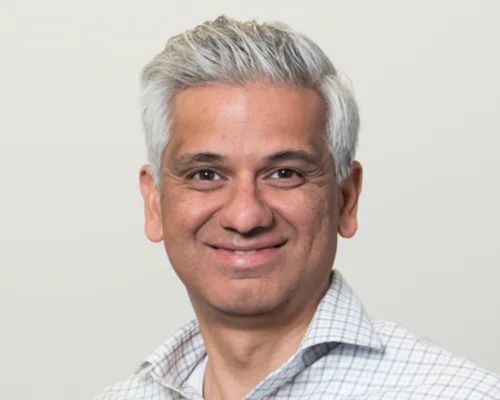
Ashay Prabhu is the vice president of strategic asset management at Dude Solutions and co-founder of Assetic. With more than 20 years of experience in strategic asset management, he has led the development of condition algorithms, asset valuation methods, lifecycle prediction analytics and is passionate about applying this science to close the global infrastructure renewal gap. Prabhu has a Directorship at the Asia Pacific Institute of Asset Management, is an adjunct professor of strategic asset management at Bond University, a Bachelor of Engineering (Hons) and is a chartered professional member of the Institution of Engineers Australia.
References
Top image via Getty Images.
Podcast – All About Strategic Asset Management: https://shows.acast.com/operate-intelligently-podcast/episodes/strategic-asset-management-ep-125
Infographic – strategic asset management framework: https://www.dudesolutions.com/resource/strategic-asset-management-framework
Case study – Topeka, KS Closes Pavement Funding Gap with strategic asset management: https://www.dudesolutions.com/resource/Topeka-KS-Client-Success-Story
Case study – Rancho California Water District Realizes Massive Savings with Meter Replacement Program: https://www.dudesolutions.com/resource/Rancho-California-Water-District-Client-Success-Story
Case study – Department of Education, Tasmania Justifies Future Funding: https://www.assetic.com/case-studies/department-of-education-tasmania/?portfolioCats=215%2C213%2C214
Read more on Real Estate or related topics Asset Management
Explore All FMJ TopicsRelated articles
-

Plugged In
Solving the data disconnect in real estate and FMBy Amanda Muzzarelli & James Waddell07.01.2024 -

Food for Thought
Installing pop-up food programsBy Stafford McKay09.18.2024 -

Guarding Against Graffiti
Protocols that help prevent & remove graffiti on college campus buildingsBy John Lesak & Sarah Brummett11.26.2024